

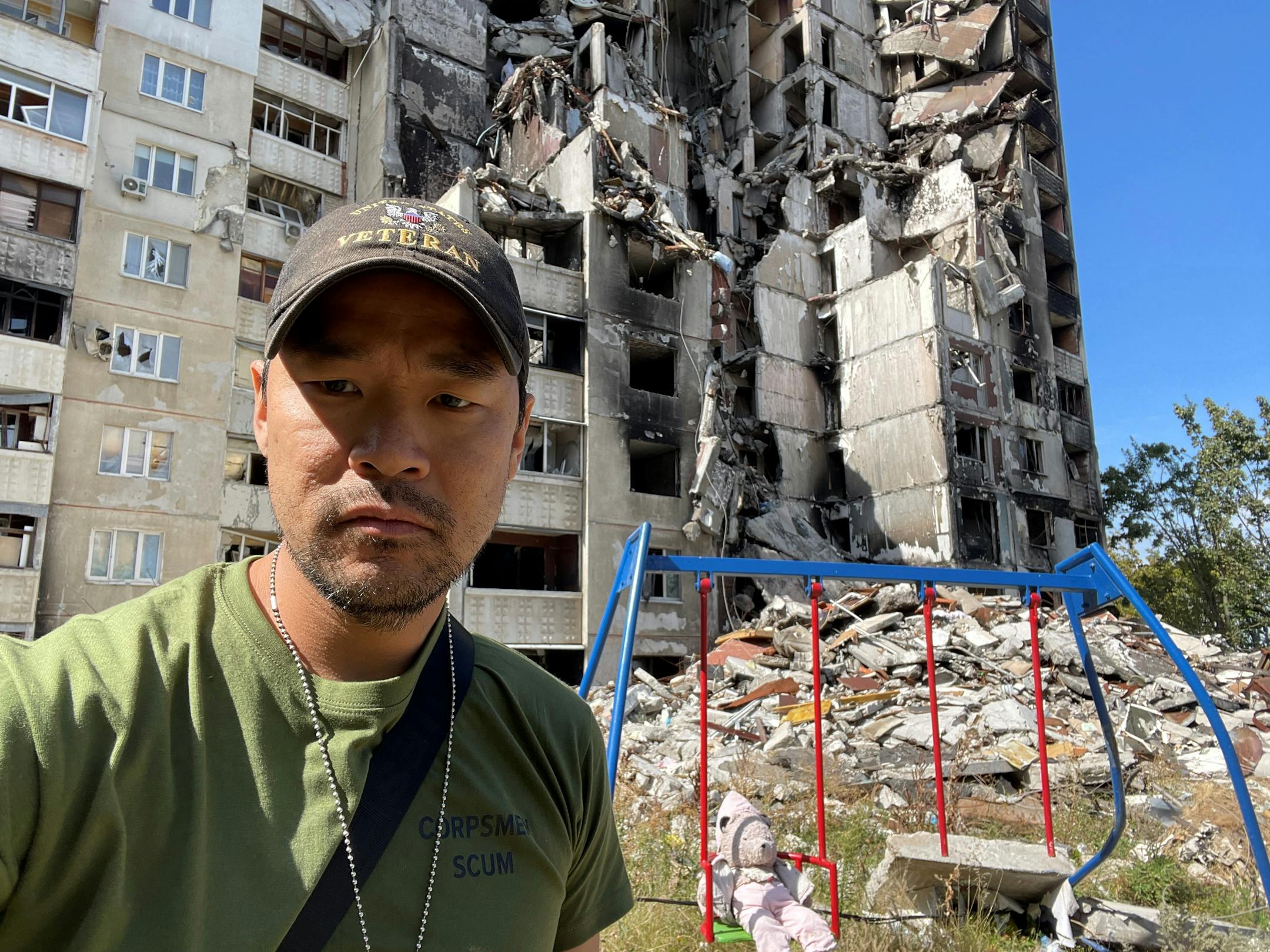
He'd never been to Ukraine. He didn't have any connections to the country. But when Russian bombs began falling, Mark Lindquist knew he had to do something.
After all, he'd been given so much in life: A loving home on a family farm in Ortonville, Minn., after being adopted at 8 months old. A chance to travel the world with the U.S. military, first in Hawaii as an intelligence analyst and then using his golden voice to visit 22 countries as an Air Force entertainer.
And most of all, a heart to help. Perhaps that was instilled by his adoptive father, who'd been a Peace Corps volunteer in Malaysia; perhaps it was a natural outgrowth of being given a new life in America after being orphaned in South Korea. Either way, the same heart that led Lindquist to join AmeriCorps and the military also led him to help when he saw devastating images from Ukraine.
So, a few months before the Fargo man's 41st birthday, he purchased a plane ticket to Warsaw. He bought $5,000 worth of military gear on Amazon: A rucksack, boots, body armor, a helmet, thermals. He connected online with fellow U.S. veterans headed to the war zone.
When he landed in Poland on March 29, Lindquist didn't know how he'd help. After Ukrainian President Volodymyr Zelenskyy called for foreign fighters, tens of thousands of military veterans from 52 countries volunteered. But Lindquist hadn't experienced front-line combat, so he didn't expect to be accepted. Maybe he could help war orphans instead.
"All my veteran friends, our ears perked up: 'The cause of freedom is being threatened,'" Lindquist said. "It doesn't matter to us veterans if the person we're fighting for is in Arkansas or Ukraine. It's not just the cause of American freedom — it was the cause of freedom globally we were called to defend."
Since March, Lindquist has spent about eight months in Ukraine, he said. He soon learned Ukraine's orphans were well cared for, so he switched gears to help with the logistics of moving much-needed supplies across the country. He sourced supplies in the United States, figured how to ship them to Poland, then got them to the right spot in Ukraine.
There may be few more boring words in the English language than "logistics." But in the chaos of war, few things are more important.


