

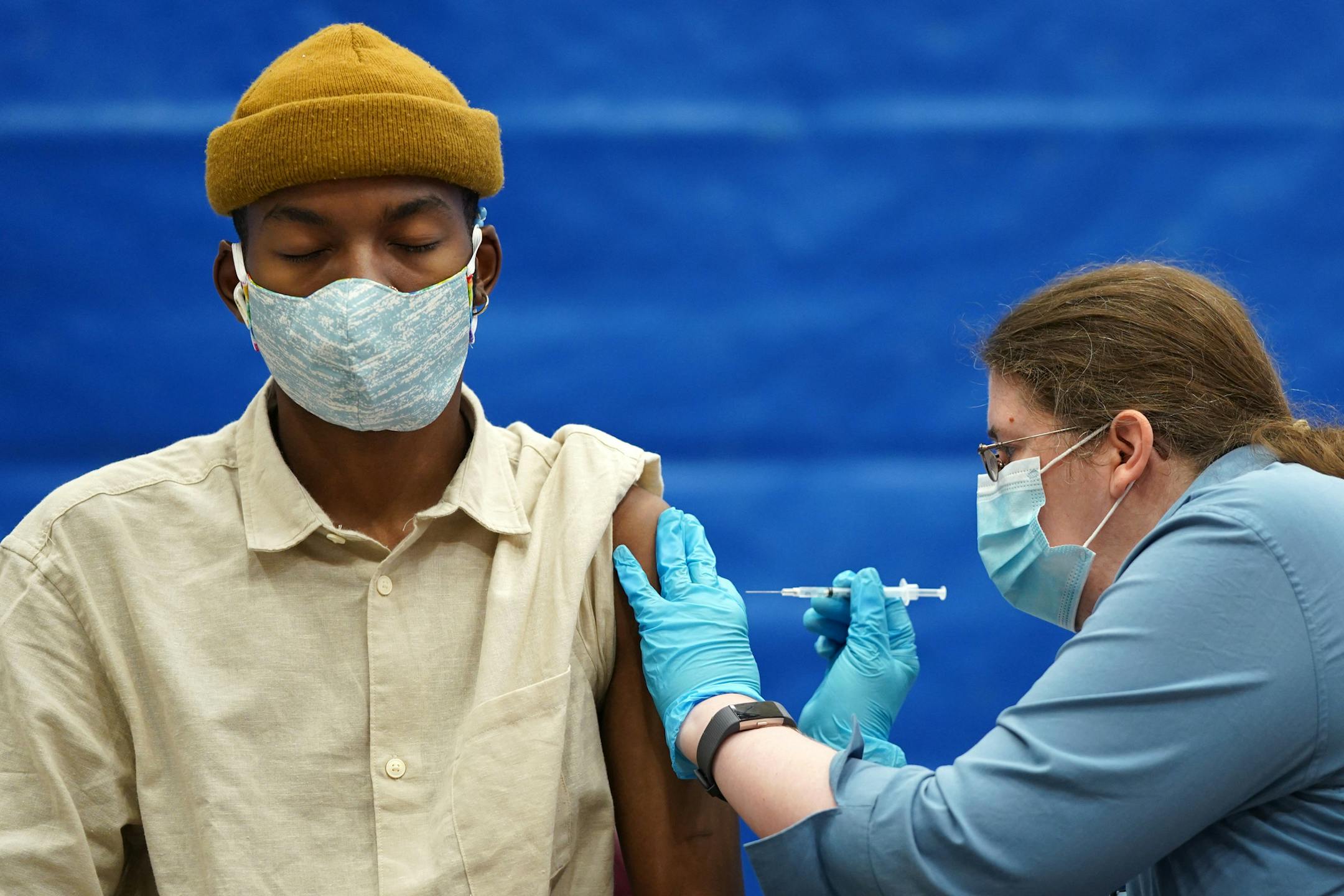
Minnesota is on pace to fall just short of its goal to provide COVID-19 vaccine to 70% of people 16 and older by July 1 — despite new incentives to boost interest and new evidence that the shots prevent viral transmission and reduce the severity of illness.
Nearly 3 million people 12 and older have received some vaccine in the state, but the seven-day rolling average of new recipients per day has fallen to 6,203. While the pace could pick up, Minnesota needs to provide more than 8,000 first doses per day — just among people 16 and older — to reach its goal.
Gov. Tim Walz chose the goal based on scientific guidance that a 70% vaccination rate would stifle spread of the coronavirus that causes COVID-19. At at event Friday in Rochester, the governor commended people in Olmsted County, where almost 80% of those 16 and older have received vaccine.
"That is exactly what we need," Walz said. "That translates into the inability of the virus to move in our population, the inability of the virus to mutate. [Getting vaccinated] almost absolutely guarantees you are not going to end up in the hospital, and it's as close to 100% as possible that you're not going to die."
Two of three approved COVID-19 vaccines also appear 91% effective at preventing fully vaccinated people from being infected — a question that couldn't be completely answered during clinical trials last year but could be addressed by real-world usage this year.
Researchers in Duluth and seven other U.S. sites tracked effectiveness of the two-dose Pfizer and Moderna vaccines among health care workers and first responders who submitted to regular testing and found minimal infections or illnesses.
Initial results came out in March, but the Centers for Disease Control and Prevention on Monday issued updated findings with four more weeks of data — including that vaccinated workers who ended up with infections suffered milder illnesses. They also carried less virus in their noses for shorter periods of time, suggesting that vaccinated people might be less likely to spread the virus to others.
"The few illnesses that were documented in partially vaccinated or fully vaccinated individuals were shorter in duration, had fewer symptoms, and a lower viral load — that's what's new here," said Dr. Harmony Tyner, an infectious disease specialist at St. Luke's in Duluth, who is part of the research team.


