

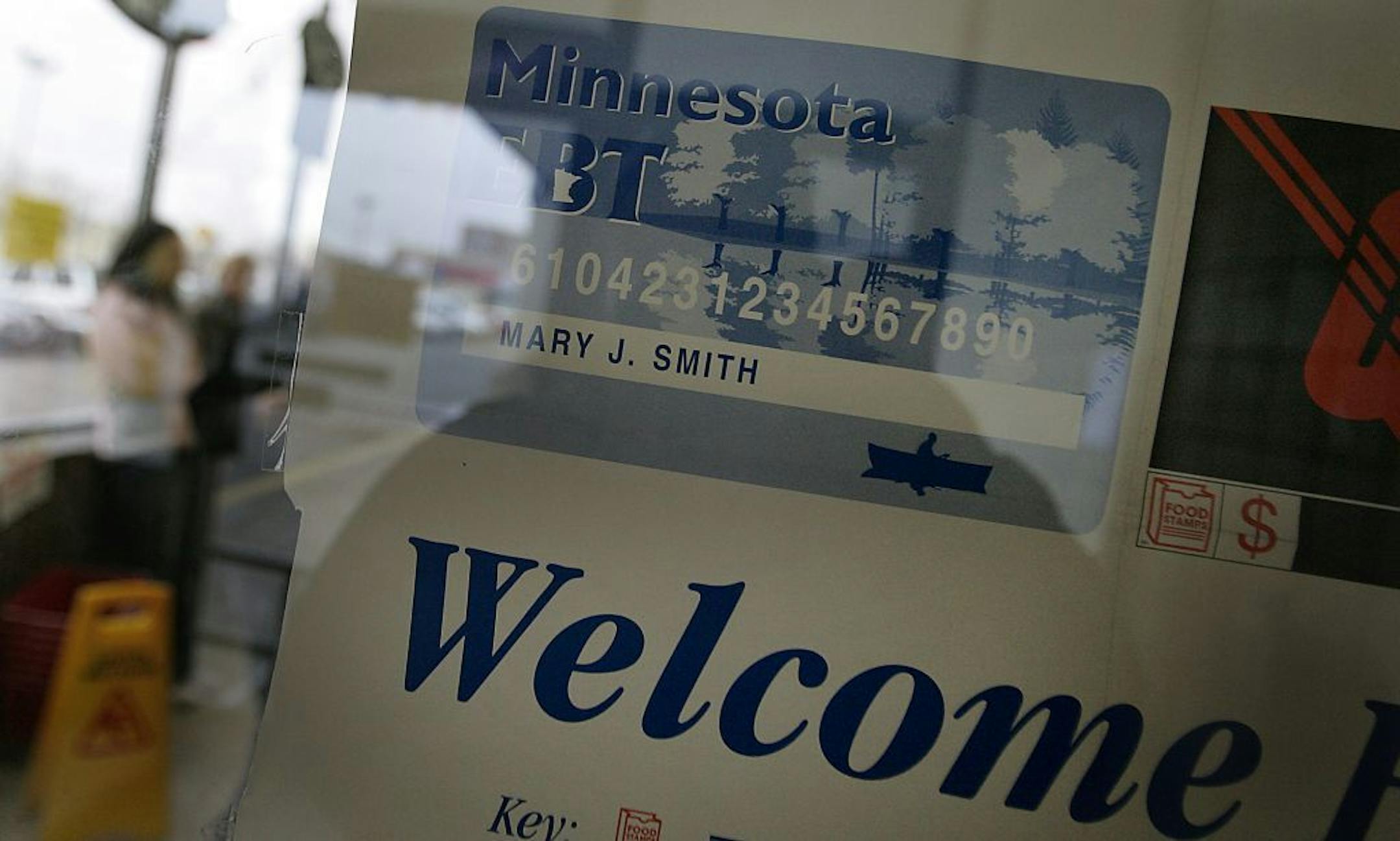
It's simple to scam the food stamp program in Minnesota: Sell a benefit card for cash, walk into a county social services office, report the card lost or stolen, and get a new one on the spot.
The state issues so many replacements -- ranking fourth in the nation for the number of food benefit recipients requesting at least four new cards in a year -- that the federal government sent a letter to the Minnesota Department of Human Services this spring highlighting the high numbers as a sign of possible illegal behavior.
Minnesota is moving to address the problem. By September, the state will ship food benefit cards by mail -- rather than providing them over the counter -- and those cards will include the recipient's name. The state also supports the U.S. Department of Agriculture's proposal to allow states to more closely monitor recipients who ask for an excessive number of replacement cards, known as EBT cards.
"One of the reasons we rank high is that in our state we've made it very easy to get replacement cards," said Jerry Kerber, inspector general for the Department of Human Services.
But, he said, even with the changes, "there is still a very strong directive to replace the card ... the interest is in making sure that individuals get the cards when they need them."
Fraud in the Supplemental Nutrition Assistance Program, commonly known as food stamps, costs the federal government an estimated $750 million a year, or 1 percent of the program's budget.
Minnesota provides food stamps for 535,520 low-income residents. And though just under 3 percent have sought four or more new cards in the past year, the federal government considers any level above 2 percent significant.
Minnesota is one of at least 10 states that primarily provide new cards over the counter, while at least 29 primarily send them in the mail. Other states use some combination of the two. Replacement cards in Minnesota maintain the level of benefits that existed at the time they were reported lost or stolen.


