

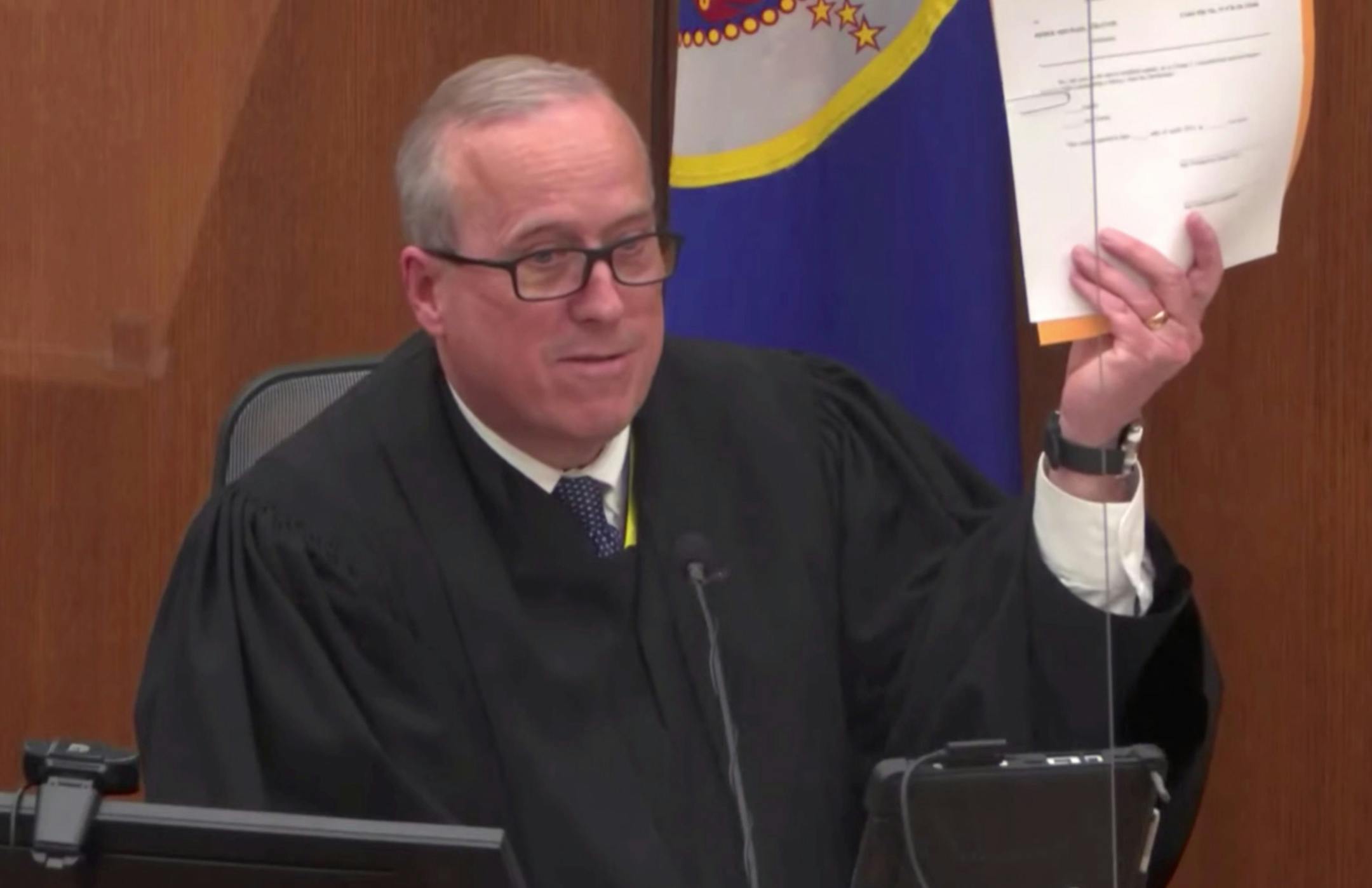
The trials of ex-police Minnesota officers Derek Chauvin and Kim Potter were viewed by millions of people around the globe. But for the last three decades it's been up for debate whether cameras should have a permanent place inside Minnesota courtrooms.
The argument has been settled in a majority of states — including neighboring Iowa, Wisconsin and North Dakota — that routinely allow audio and visual coverage of criminal proceedings. The Minnesota Supreme Court will hear arguments Tuesday in support of joining the majority.
An advisory committee made up of Minnesota judges, attorneys and court personnel is recommending the court continue keeping cameras out — with a few exceptions. Organizations representing hundreds of local and national Minnesota media outlets, including the Star Tribune, as well as groups that support government transparency say that 21st century technology inside courtrooms is long overdue.
First Amendment attorney Mark Anfinson said the issue of cameras in the court was brought to national awareness in 1979 when the Florida Supreme Court issued an order allowing "very broad and liberal audio and video access."
"And that was a real bell ringer because up to that point virtually nowhere in the country was that allowed," Anfinson said. "The news media in Minnesota attempted several times to convince the Minnesota Supreme Court to join that movement, but it didn't happen."
For the high-profile trials of Chauvin for the murder of George Floyd, and Potter for the killing of Daunte Wright, the presiding Hennepin County District Court judges were initially opposed to cameras in the courtroom. Both judges, Peter Cahill and Regina Chu, were convinced in the end that it was the right decision, in part because of immense public interest and COVID-19 limitations.
Media and government organizations, along with Cahill, submitted letters to the Supreme Court in support of expanded camera access, but victims' rights groups, public defenders, defense attorneys and prosecutors are opposed.
"The fact of the matter is that these are incredibly emotional times, difficult times for all the parties that are involved," said Minnesota State Public Defender Bill Ward. "Justice should not be a spectator sport and should not be something that's sensationalized in the news media."


