

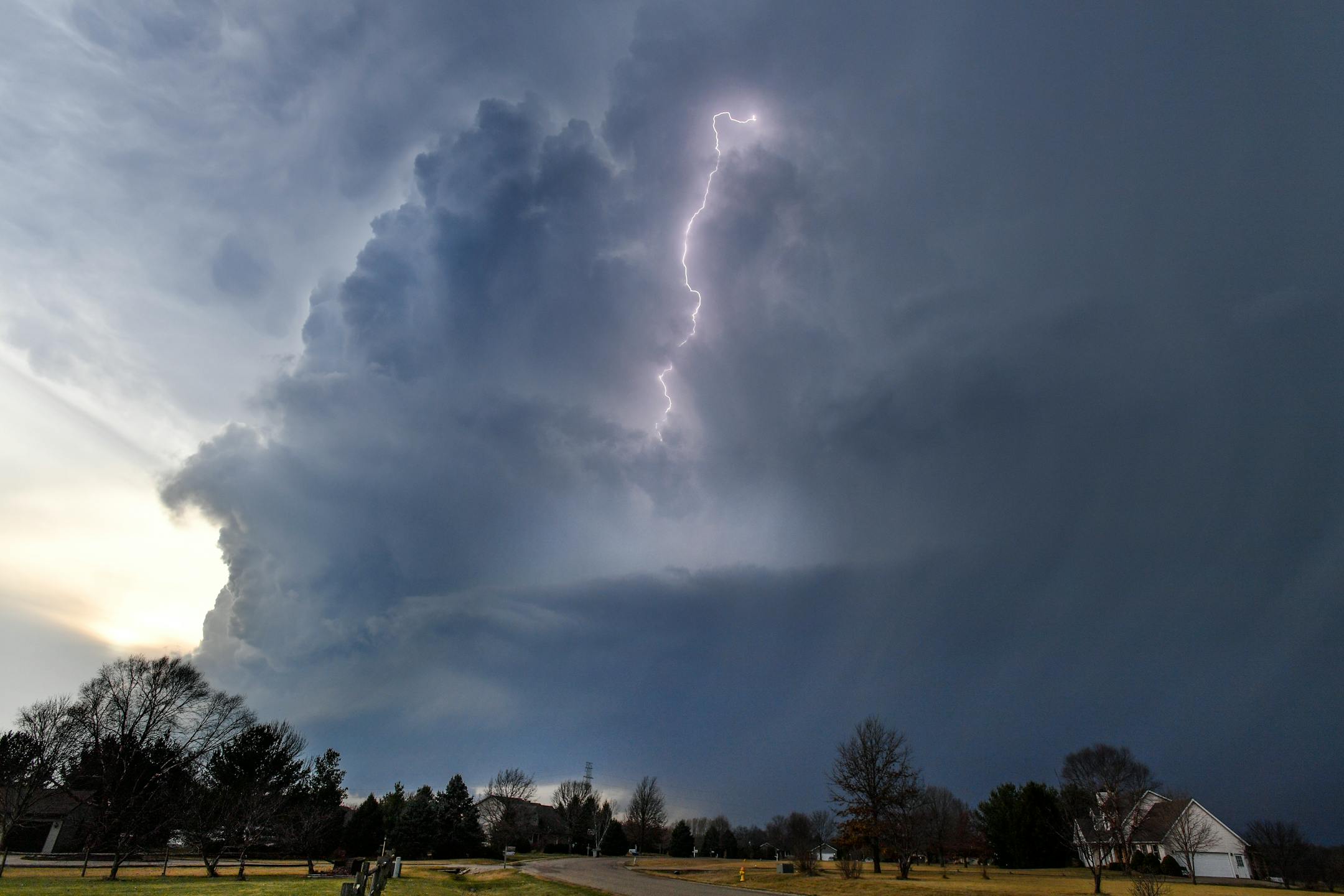
In Waconia, where I live, we had a thunderstorm Independence Day and our first good soaking rainfall (.77 inches) since May 11. Within a day our garden and yard plants perked up.
Rainwater is better than hose water thanks to lightning.
Lightning is a visible electrical discharge produced by thunderstorms. The booming thunder sound is generated by rapidly expanding gasses along the channel of lightning discharge. Hundreds of people are hurt or killed by lightning every year in the United States. It also can start forest fires and disrupt electrical services, yet lightning plays an important role in natural processes.
Tons of nitrogen compounds are produced by lightning breaking down the air, which is composed of about four parts nitrogen to one part oxygen. The nitrogen is deposited on the soil and acts as a valuable fertilizing agent for plants.
For people outdoors, when you first see lightning or hear thunder, take shelter in a building house-sized (or bigger) or in an all-metal vehicle with rubber tires.
Listed below are a few more lightning safety tips:
- Avoid being on an open area such as a golf course, beach, or athletic field. And don't take shelter under a tall tree. The leader of the negative charge from a thundercloud seeks out the shortest path to positive charges on the ground, and tall objects such as trees are the shortest path.
In a forest, seek shelter in a low area under a thick growth of small trees.
Get out of and away from open water, whether swimming or boating. While the chances of a swimmer being hit directly are slim, the flow of current carried by the water from a bolt striking at some distance can cause electrocution.

