

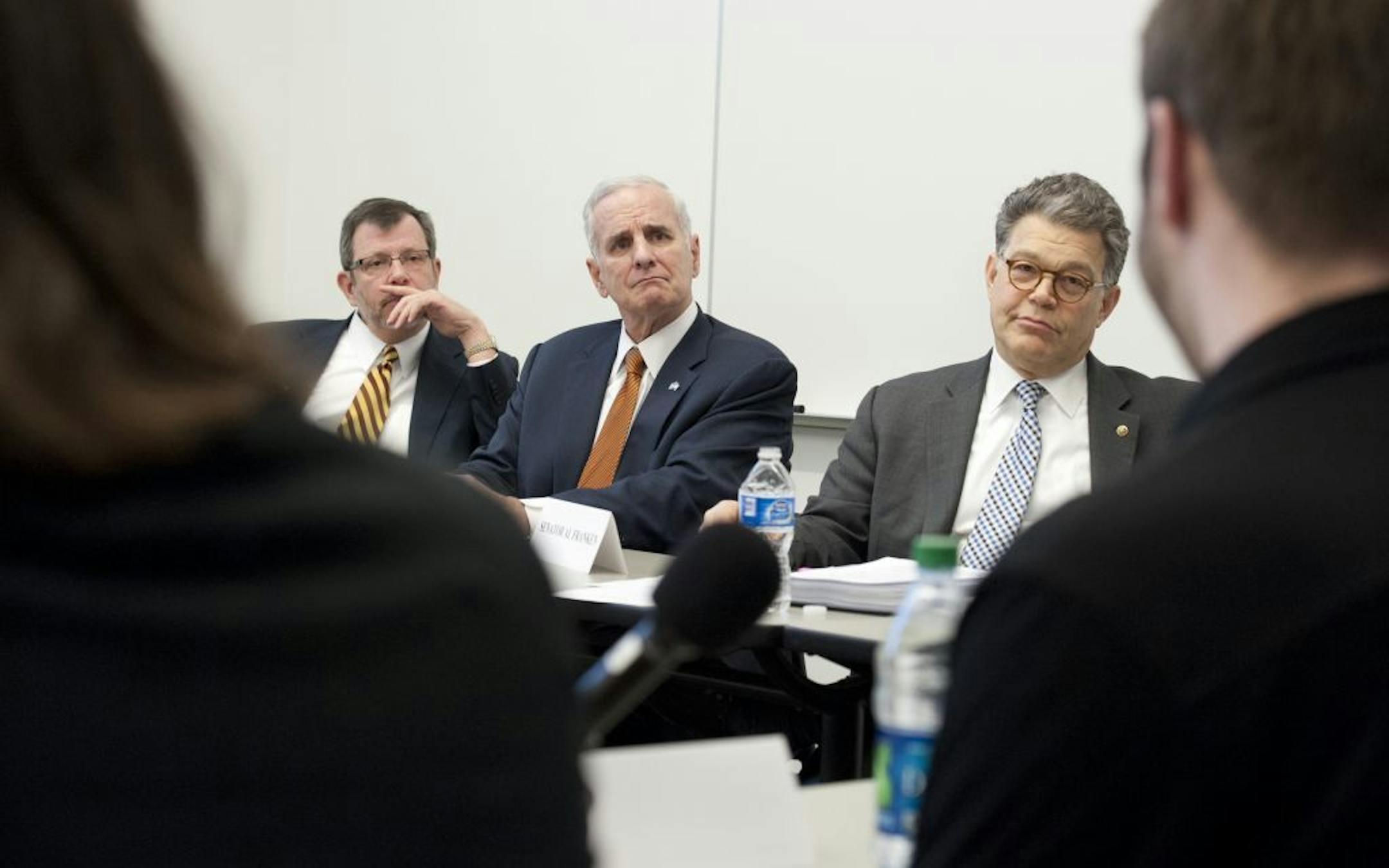
They are the faces of Minnesota's future, Gov. Mark Dayton and U.S. Sen. Al Franken told the nine impressive students assembled around a table at St. Paul College on Tuesday. They're high academic achievers, campus leaders, community volunteers — and debtors.
Each of them told a story of financial struggle and resourcefulness in pursuit of their dreams. An undocumented immigrant, in Minnesota since age 3, works nearly full time and scrambles for scholarships because she's ineligible for government-sponsored financial aid. A daughter of Texas migrant workers started a business to support three generations of family members while she pursues her master's degree. Several undergrads used advanced placement, International Baccalaureate and the state's postsecondary option to take college classes at little or no cost while in high school to reduce college costs and shorten their routes to a full-time paycheck.
Despite those efforts, each of them is racking up debts that will run into five figures when their college careers end. A University of Minnesota pharmacy student said six-figure debt is common in her graduate school cohort.
Their drive to achieve is inspiring, Franken said. But so much student debt is "not good for America, and it's certainly not good for the young people who will be saddled" with it for years to come.
That sentiment should guide the Legislature in coming weeks as it sets state higher-education spending for the next two years. Minnesota college graduates ranked third in the nation in 2011 in the average $29,793 debt with which they left campus.
That much debt, borne by 71 percent of the state's college graduates, is a drag on both young lives and the state's economy. It also contributes to a troubling lag in college completion rates. The latest longitudinal study, following the high school class of 2003, found that 75 percent of those 56,351 Minnesotans had enrolled in a postsecondary educational program by age 25, but only 48 percent finished.
Dayton is proposing a big step in a better direction. The DFL governor recommends respectable biennial increases of $80 million apiece for the University of Minnesota and Minnesota State Colleges and Universities — an amount sufficient to tamp down tuition increases in the next two years.
Better still, he is seeking an $82.5 million increase in the State Grant Program. That 30-year-old supplement to the federally funded Pell Grant now accounts for 11 percent of total state support for higher education. Dayton is asking that it receive about 35 percent of this year's new higher-ed money — the biggest increase in dollar terms in the program's 30-year history, and the largest percentage increase in 25 years.


