

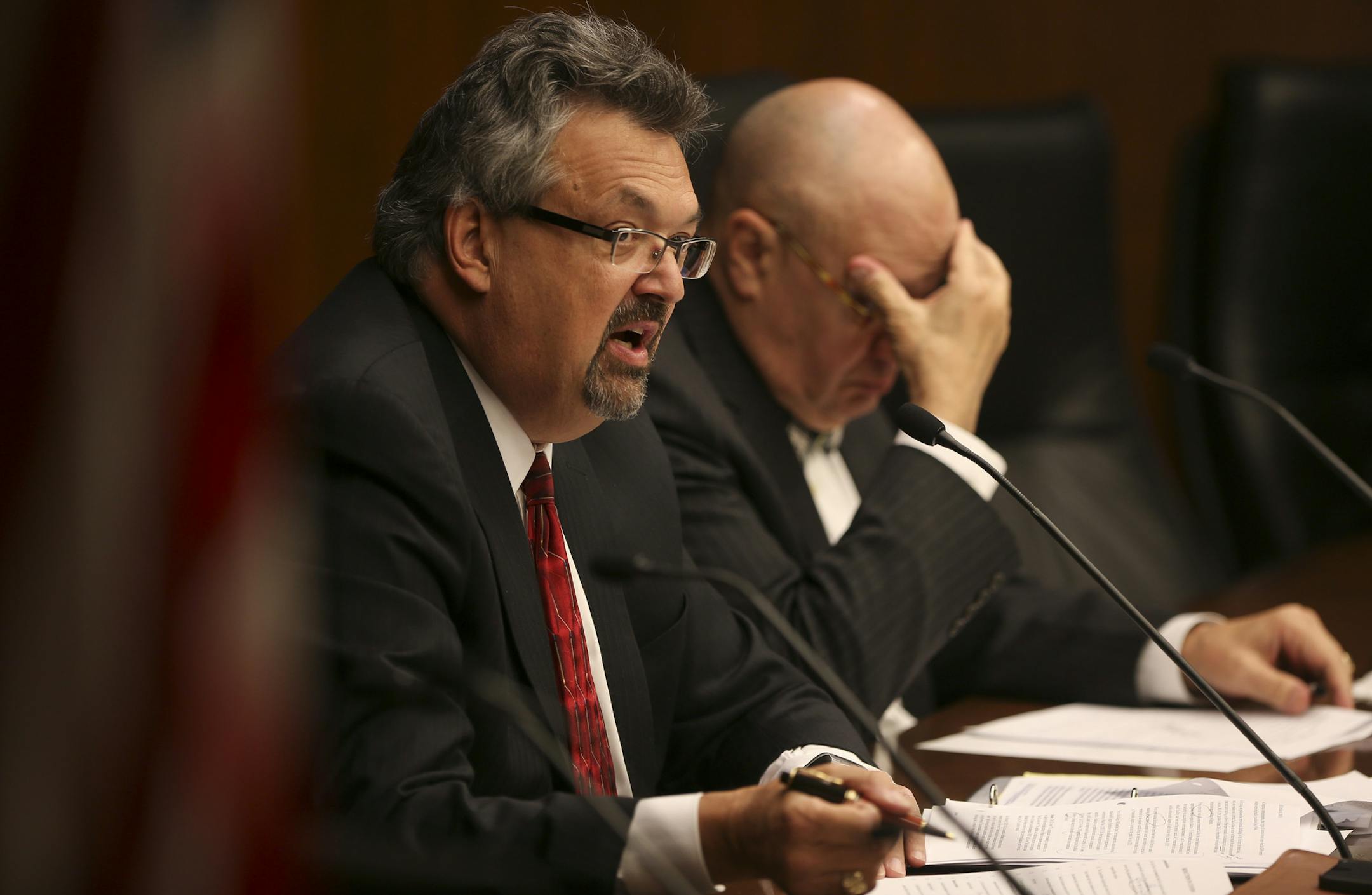
Minnesota's sex offender treatment program — under fire in federal court and at the Capitol — needs dramatic changes to insulate it from politics and create more rigorous rules for committing and discharging offenders, an independent task force said Monday.
The state-appointed panel said Minnesota should create a centralized court to oversee the civil commitment of rapists, pedophiles and other sex offenders, and develop options for less violent offenders to be placed in less restrictive settings, among other measures.
"There is broad consensus that the current system of civil commitment captures too many people and keeps many of them too long," according to task force's 18-page report.
Taken broadly, the recommendations seek to remove decisions over the most dangerous sex offenders from the political process by empowering professional experts and judges to oversee the process. About 700 sex offenders are being held indefinitely in high-security treatment centers in Moose Lake and St. Peter, which on average cost three times more than confining sex offenders in prison.
Within hours of the report's release, two influential legislators said they were already in discussions with colleagues on ways to transform the recommendations into legislation for the 2014 session.
Sen. Kathy Sheran, DFL chair of the Senate Health, Human Services and Housing Committee, and Rep. Tina Liebling, DFL-Rochester, said the state needs to find alternatives to locking people away indefinitely, in what many argue is a de facto life sentence.
But the idea of creating another layer of government supervision over sex offenders could be a tough sell in the Legislature, where lawmakers are reluctant to even discuss the politically charged issue of treating serial rapists and child molesters.
The well-publicized, proposed discharge of Thomas Duvall, 58, has the potential to politicize any debate when lawmakers convene in February. Duvall has admitted to attacking at least 60 women, and once tied up a teenage girl with an electrical cord and beat her with a hammer while raping her, according to court documents. An evidentiary hearing on Duvall's proposed discharge is slated for early April, which means his case will reach well into the next legislative session.


