New experiences make Minnesota a more sensory-friendly place

Organizations such as Fraser and the Autism Society of Minnesota seek to create more spaces for people who need a quieter option.

For the Minnesota Star Tribune
November 24, 2025 at 12:00PM
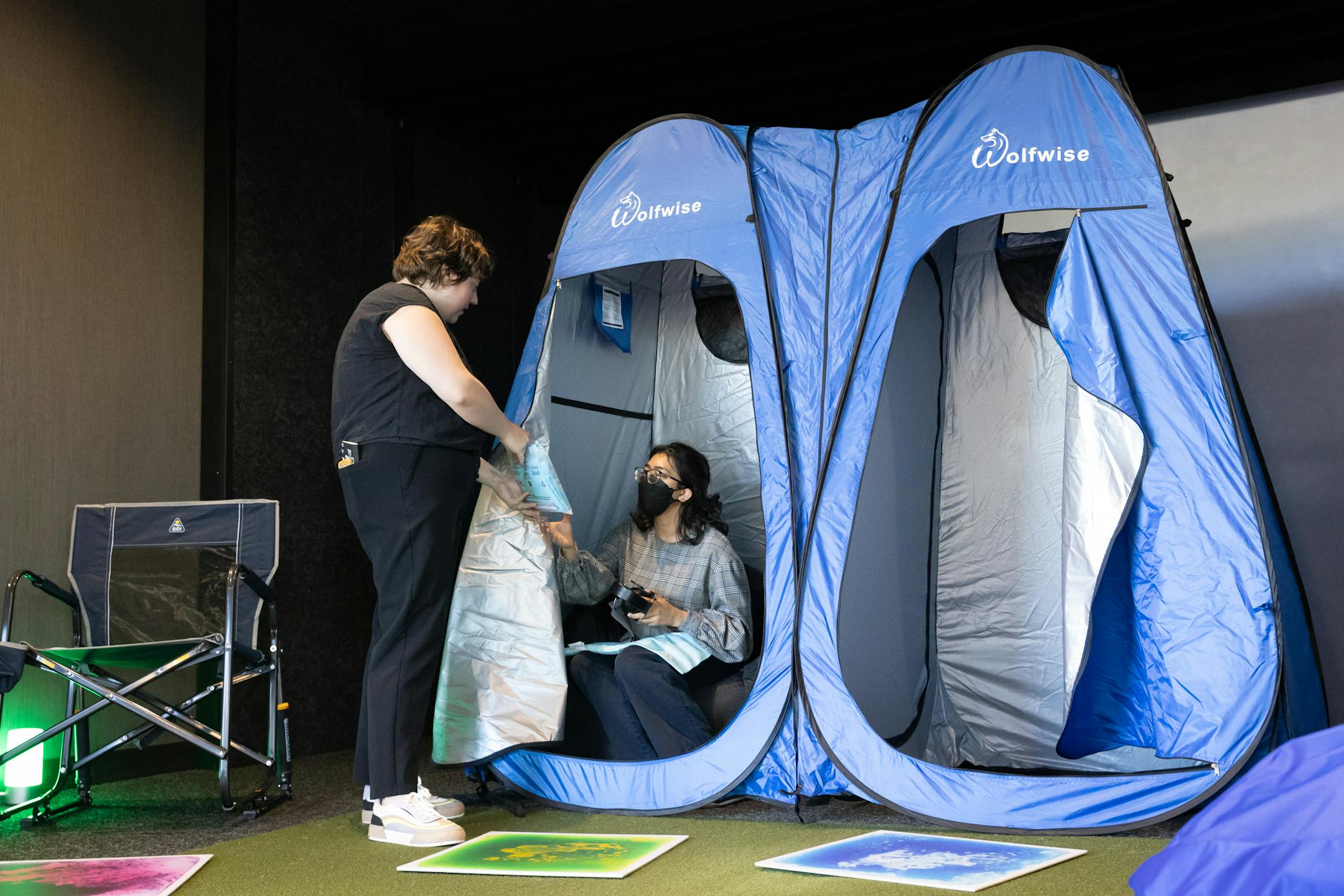
At Fraser Sensory Lending Library's launch party in September, an attendee tests out a pop-up tent that can create a sensory area when a physical room is not available. (Provided/Fraser)

For some Minnesotans, a Vikings game, a trip to the Science Museum or even a stop at Costco can be overwhelming due to the noise and crowds.

But a statewide initiative, Sensory-Friendly Minnesota, aims to make everyday spaces more accessible for people with sensory processing differences.

Fraser, a Minnesota nonprofit that provides autism, mental and behavioral health and disability care, leads Sensory-Friendly Minnesota. The initiative hopes to create “10,000 Ways to Belong,” inspired by the state’s “Land of 10,000 Lakes” nickname.

Sensory processing differences, such as sensitivity to bright lights, loud noises or crowded spaces impacts not only people with autism, but also people with ADHD, anxiety, trauma or other neurodivergences.

Jillian Nelson, policy director of the Autism Society of Minnesota, said a few years before the pandemic, more people started asking the organization how to make their events more accessible.

“As communities are starting to identify larger neurodivergent populations within their existing communities, they’re really recognizing the need and that importance to make everyone feel more accepted and included in those spaces,” Nelson said.

According to the Minnesota Autism and Developmental Disabilities Monitoring Network, 1 in every 28 8-year-olds in Minnesota were identified with autism in 2022 based on health and education records in three metro counties. That was up from 1 in 34 8-year-olds identified with autism in 2020.

Rep. Mike Freiberg, DFL-Golden Valley, is the parent of a child with autism and has attended sensory-friendly events at the Minnesota Orchestra. He said he often works with the Autism Society of Minnesota to advocate for places to be more inclusive.
“It’s helpful to parents of kids on the spectrum to have options for that,” Freiberg said. But he knows that not every place has the resources to provide these options.

Nelson said organizations are not required to have sensory-friendly spaces.

Earlier this year, Freiberg sponsored a bill that would require permit applications for large events on public property to include a plan to accommodate those with sensory differences.

Nelson said while the legislation did not receive a hearing this year, he plans to reintroduce it.

Getting sensory tools into the community

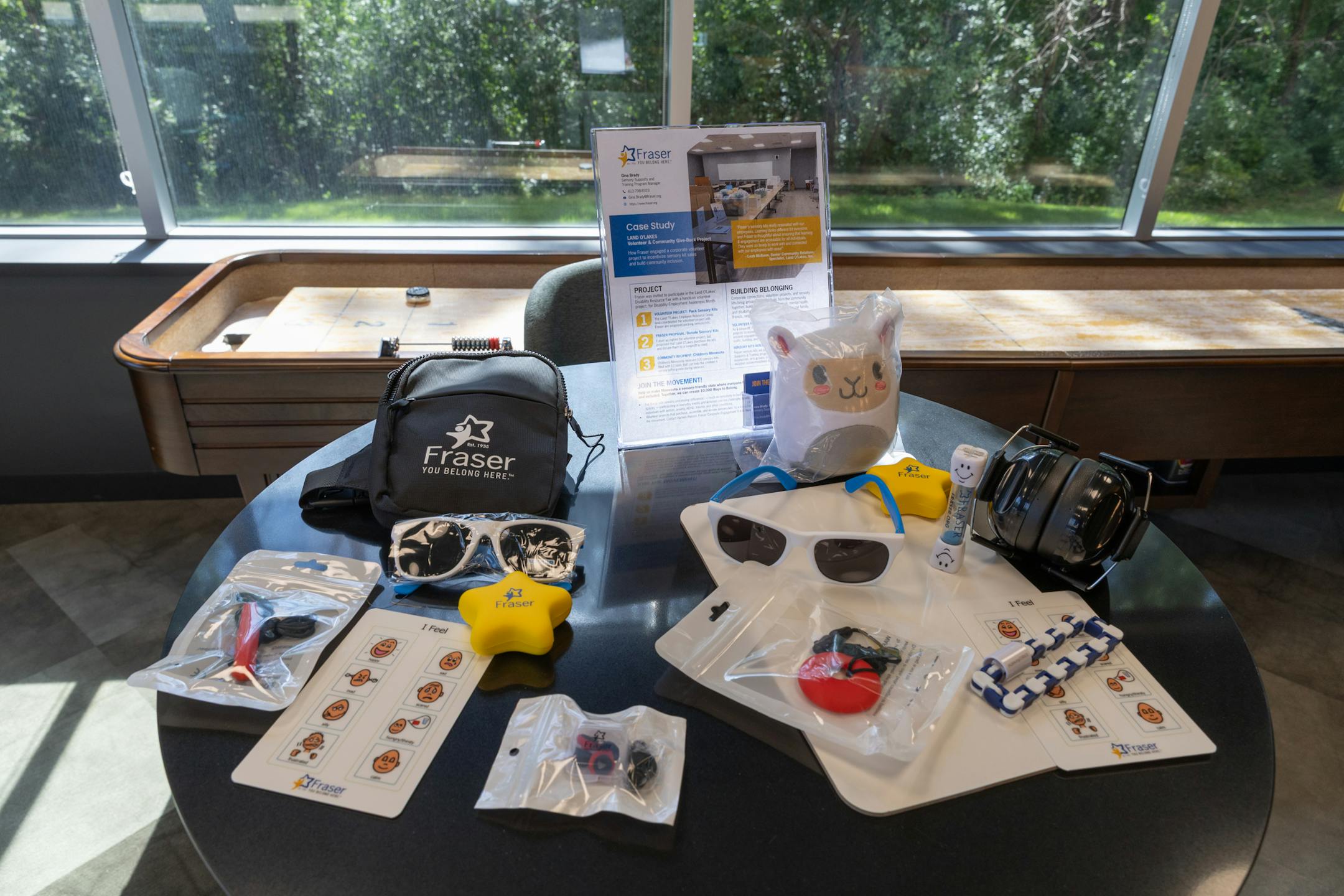
Some of the items people can borrow from the Fraser Sensory Lending Library in Eden Prairie. (Provided/Fraser)

Families and organizations can borrow weighted blankets, noise-canceling headphones and other items from the new Fraser Sensory Lending Library in Eden Prairie.

While so far mostly organizations have been using the library, sensory support and program manager Gina Brady said Fraser wants individuals and families to know that this is a service for them as well.

“It’s a way to get sensory tools and supports out into the community more for those who might not have the budget to buy the items themselves,” Brady said. “It’s also a way where if individuals are interested in maybe trying some items before investing in them, they have the option to do that.”

Fraser received a grant from Eden Prairie AM Rotary Foundation this summer to create the library.

After ordering items, creating a catalog and a check-out system, Fraser soft launched the library in early fall. The official launch occurred at the end of September, where attendees suggested other sensory items to be added to the catalog.

“That was really great to hear from the community, who might be the ones borrowing from us in the future,” Brady said.

Going to large public events or even medical appointments can be overwhelming for people with sensory processing differences, Brady said.

Sensory tools allow for people to modify the environment in order to meet their sensory needs.

“That could be something like wearing noise reducing headphones to block out some of the sounds that are too loud or too intense,” Brady said. “Could be using a fidget which provides your body with some movement and helps maintain focus and attention.”

Nelson said there is a misconception that accommodating people with autism or sensory differences means isolating them, so they do not get overwhelmed. However, Nelson said people with autism do have a wide range of sensory needs. Some people need more sensory input while others need less.

“So there’s not necessarily one-size-fits-all,” Nelson said. “It’s not just a matter of having a quiet place where someone can take a break from all the sensory input, but also having tools that can give a person sensory input that can help them regulate their sensory systems.”

Organizations can sign up to be a Sensory Business Partner and undergo training and consultation with Fraser to learn more about sensory processing differences and how to be more inclusive.

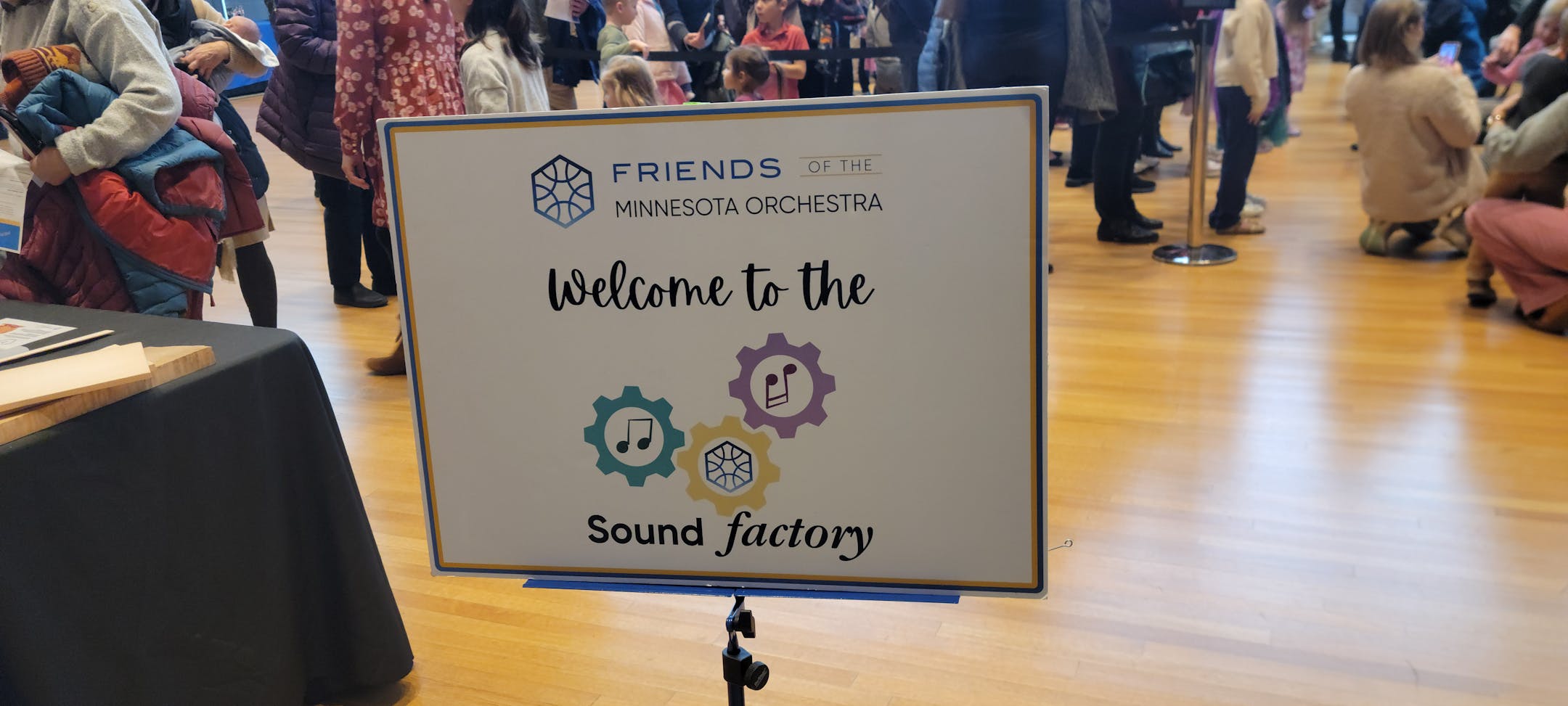
The Minnesota Orchestra's Relaxed Family Concerts includes a sound factory where children can test and learn about instruments. (Alexis Letang/The Minnesota Star Tribune)

Every year, the Minnesota Orchestra offers four sensory-friendly concerts in its Target Atrium with a variety of seating options including carpet squares and beanbags, each with a small instrument or ribbon encouraging attendees to engage with the music and not feel forced to sit still. These concerts also include a table full of fidgets.

Manager of Education Programs Jess Lowry said the Relaxed Family Concerts allow families and people with autism and other neurodivergences to experience the full orchestra in a relaxed environment. Lights aren’t fully dimmed and audience members are encouraged at the beginning to dance and come and go as needed.

Audience members receive a warning in advance if a piece will feature a loud noise, such as a cymbal crash or gong.

“It’s really about setting the tone in the space, making sure that everybody feels comfortable to be who they are, to move the way they would like to, to enjoy the music,” Lowry said.

She said many families appreciate the relaxed environment.

“They feel that these concerts are something they can bring their family to and not feel stressed out about wrangling kids and making sure they don’t move or make any sounds,” Lowry said.

Places with sensory-friendly offerings:

Minnesota Vikings

  • U.S. Bank Stadium has a sensory room staffed during home games with behavioral specialists from Fraser.

    MSP Airport

    Minnesota State Fair

    • Fraser partners with the Minnesota State Fair to provide sensory spaces and staff training.

      Target Field

      Bell Museum

      • Once a month, the museum hosts “Sensory Friendly Saturday” with the lights lowered, fewer people and quieter sounds.

        Science Museum of Minnesota

        • On the first Sunday of the month, the Science Museum offers a quieter experience with fewer people. The museum also has a sensory-friendly guide that rates the loudness of exhibits.

          Walker Art Center

          • Walker’s Sensory Friendly Sundays occur the second Sunday of each month from 8 a.m. to 11 a.m. The galleries are closed to the general public.
            about the writer

            about the writer

            Alexis Letang

            Intern

            Alexis Letang is an intern for the Minnesota Star Tribune.

            See Moreicon