

Talk about flyover land.
With the proposed merger of American Airlines and US Airways forming what could become the nation's largest carrier, a group of rural and Midwestern senators are asking new questions about the fate of midsize metropolitan areas like Minneapolis and St. Paul.
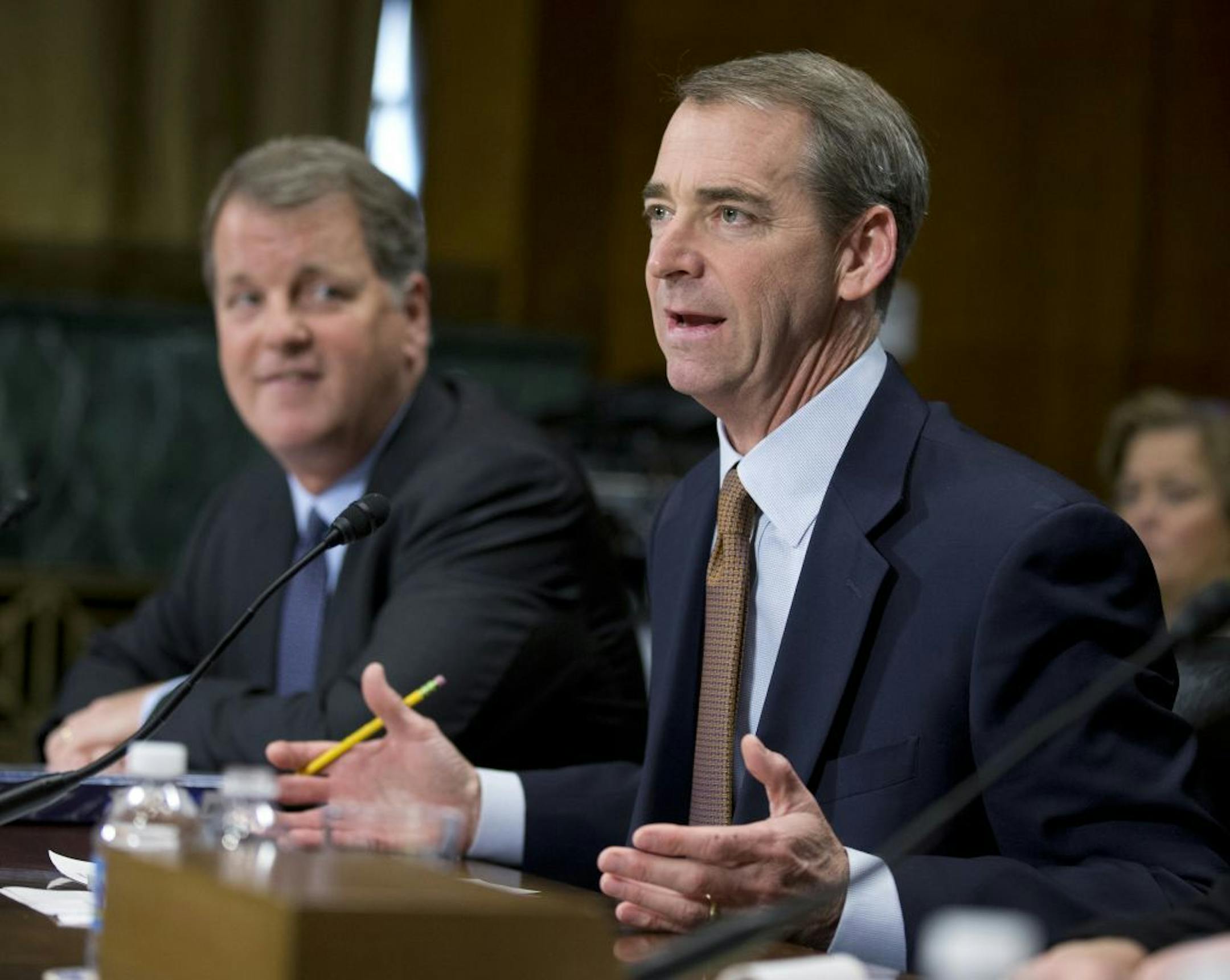
The concerns came into focus Tuesday in a Senate hearing led by Sen. Amy Klobuchar, D-Minn., who challenged top executives from American Airlines and US Airways to defend what she called the "great wave of consolidation in the airline industry" that saw Delta Air Lines swallow Eagan-based Northwest Airlines in 2008.
The proposed American-US Airways merger would result in the nation's top four airlines — including Delta, United and Southwest — controlling roughly 80 percent of the domestic airline market, a dominance that critics say could lead to higher fares, poorer service and a winnowing of less profitable routes.
"If this goes to an extreme, you'd have just a few legacy carriers competing just between the coast cities," Klobuchar said, "and then the rest of the country, especially in the Midwest, could get hurt with the fares."
The airlines, facing antitrust scrutiny from Congress and the U.S. Justice Department, say that the proposed American Airlines would actually open up new networks and routes on a stronger, more profitable carrier.
"We think this enhances competition, in that it creates another global airline on par with Delta and United," said American Airlines Chairman and Chief Executive Officer Thomas Horton. "It creates a competitive counterweight to those two big airlines."
'No substitute for competition'
For analysts watching a series of airline mergers in recent years, this is familiar ground. "No doubt, today's hearing is invoking a sense of déjà vu," said William McGee, a Consumers Union consultant who testified before Klobuchar's antitrust panel, a subcommittee of the Senate Judiciary Committee. "There is no substitute for competition."


