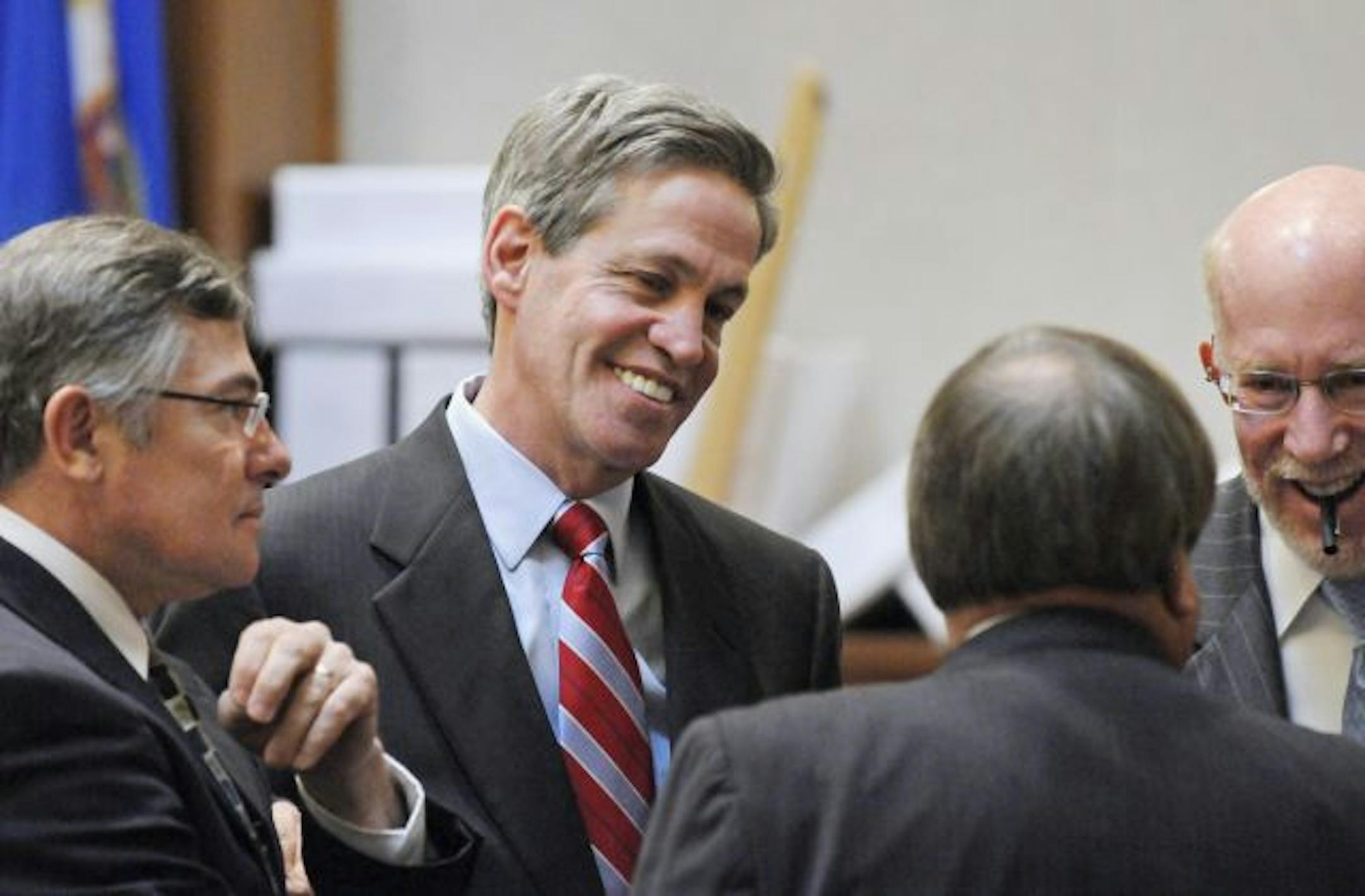
The marathon U.S. Senate trial sprinted down the homestretch Thursday as DFLer Al Franken called his final witnesses and Republican Norm Coleman posed his last challenges, setting the stage for judges to hear closing arguments today.
After seven weeks of testimony and thousands of bits of evidence, the end of the trial -- if not the final outcome -- is finally in sight.
Even as the finish approaches, one major uncertainty lingers. The panel has yet to rule on a bid by Franken to dismiss all or part of Coleman's claims.
And the judges face decisions on what to do with scores of absentee ballots that Coleman claims were wrongly rejected because of errors by election officials or voters.
Throughout the trial, the panel kept to a tight schedule and accelerated at various turns by excluding most of the evidence that Coleman cited in his bid to overcome a 225-vote lead by Franken. About 4,800 rejected absentee ballots that Coleman wanted counted were the centerpiece of his drive to find more votes. But by this week he was down to 1,360 such ballots, forced to lower his sights after a series of rulings by the judges.
The panel also wasn't moved by Coleman's argument that disparities in election practices from county to county were unfair, resulting in valid ballots being rejected and similar ballots being counted.
Coleman lawyer Joe Friedberg, sometimes feisty during the trial, posed only mild rebuttal questions to Franken witnesses Thursday. Coleman's legal spokesman, Ben Ginsberg, said after the session, "We feel very good about where we are."
Franken's lead lawyer, Marc Elias, said his review of the list of rejected ballots that Coleman wants counted show that only six included documents needed to verify them. Franken also is asking that other rejected ballots be counted, but Elias has not divulged how many.