

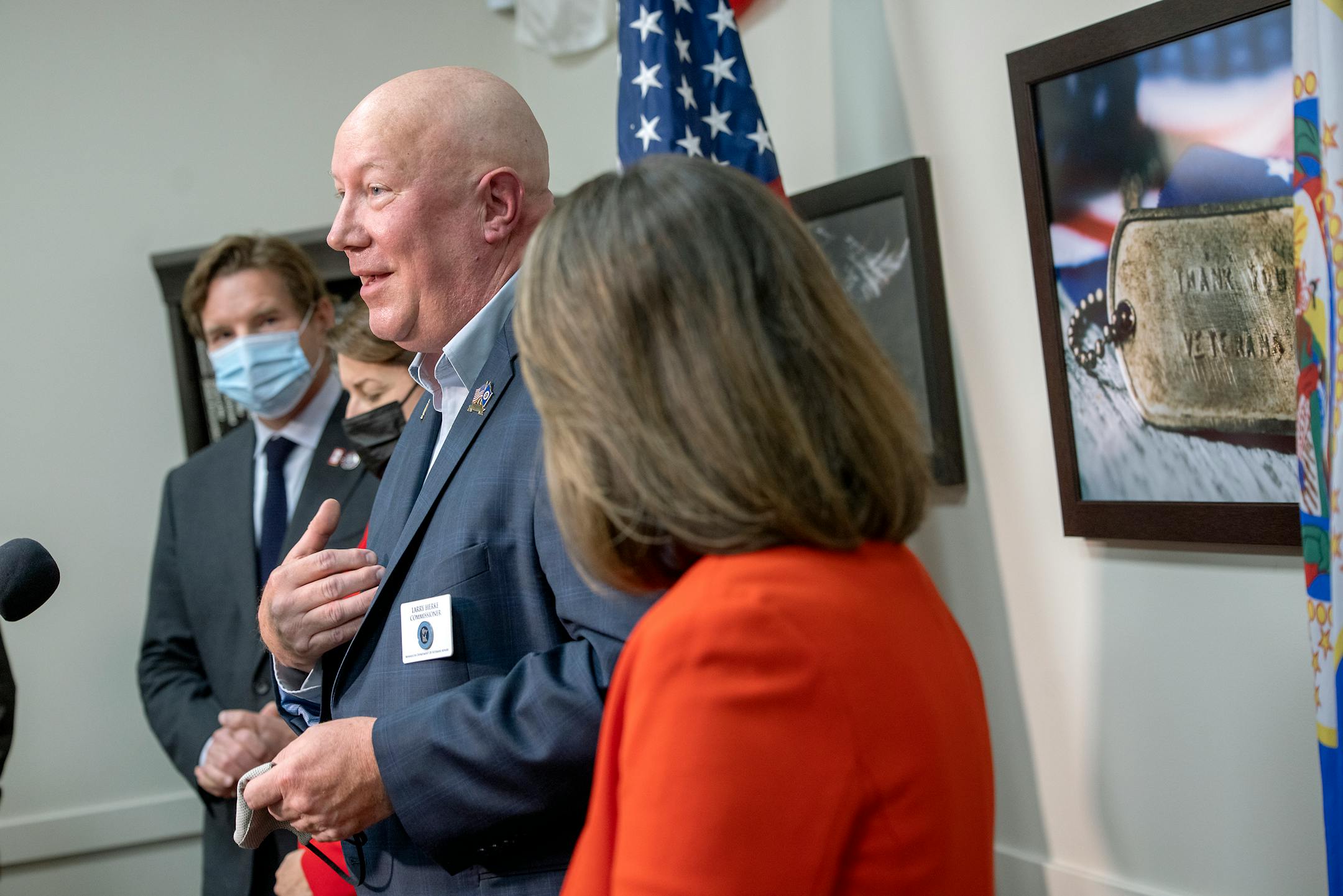
Two top officials in the Minnesota Department of Veterans Affairs lost their jobs days before a Minnesota Senate committee holds a hearing about allegations that a toxic workplace environment has hurt veterans' care at the Hastings Veterans Home for years.
The informational hearing Tuesday, where the commissioner of the Minnesota Department of Veterans Affairs will answer questions about the Hastings home, comes after the officials — Doug Hughes, the department's deputy commissioner, and Mike Anderson, administrator of the Hastings facility — were relieved of their duties. Their last day was Saturday.
"I am aware of ongoing issues that have been raised at the Hastings Veterans Home," Larry Herke, the commissioner of the Minnesota Department of Veterans Affairs, wrote in a staff-wide email sent Sunday. "We will be moving forward with new leadership at the Hastings Veterans Home, and we are looking forward to continuing to make positive changes in the service of our Veterans."
Senate State and Local Government and Veterans Committee Chair Erin Murphy, DFL-St. Paul, said her panel first started hearing in January about waiting lists for veterans to get into homes during a field hearing at the Minneapolis facility. Then she said information started to trickle in about a "series of issues" in Hastings.
When the St. Paul Pioneer Press reported the numerous whistleblower allegations earlier this month, Murphy said she knew it was time for a hearing. "We are doing our due diligence as the committee of record that has responsibility for funding and oversight and the care at our veterans' homes," she said.
Murphy, a registered nurse, said the plan is "to understand what's transpired and where the committee and others want to go."
The veterans home in Hastings is not a nursing home. The 145-bed facility's domiciliary program provides an independent living environment for veterans from all military branches who need assistance with mental health, chemical dependency issues and financial or social well-being.
The complaints allege the home's environment took what naturally was a difficult time — the COVID-19 pandemic that brought lockdowns and mental health struggles — and made it significantly worse.


