

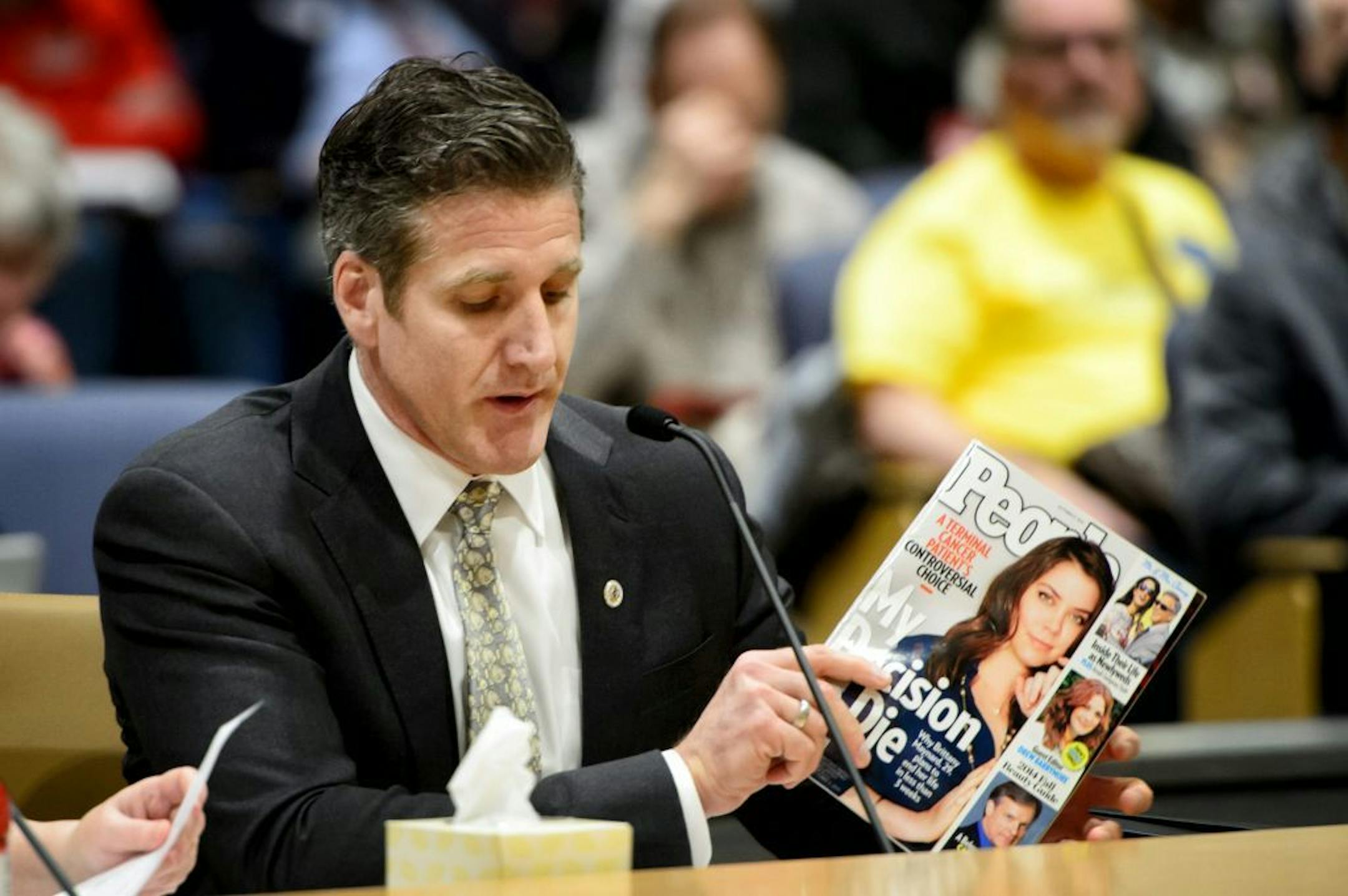
Terminally ill Minnesotans could request medication allowing them to die peacefully under a controversial proposal that drew hundreds of people to a Senate hearing on Wednesday.
Senator Chris Eaton, DFL-Brooklyn Center, is renewing her push for legislation called the Minnesota Compassionate Care Act after introducing the bill last year and holding listening sessions around the state.
"It's an alternative when [patients'] agony becomes unbearable," she told the Senate Committee on Health, Human Services and Housing.
The measure is modeled after Oregon's 1997 Death with Dignity Act and allows doctors to prescribe life-ending medication to patients who have less than six months to live and want to spare themselves and their families a painful, drawn-out death. Eaton stressed that there would be no death panels. Rather, she said the program would require doctors to determine patients' eligibility and suggest alternatives. People seeking the medication would have to be mentally sound.
Passing the legislation "does not result in more people dying – it results in fewer people suffering," Dan Diaz told legislators.
He described the suffering his late wife Brittany Maynard experienced from a brain tumor and how they moved from California to Oregon to take advantage of the Death with Dignity Act.
The Senate panel will reconvene at 4 p.m. to hear testimony from people against the measure. One of the opponents, Kathy Ware, went to the Capitol with her 21 year-old son Kylen, who is mentally impaired and suffers from cerebral palsy and epilepsy.
She believes the legislation sends the wrong message about people who are disabled and depend on others to care for them.


