

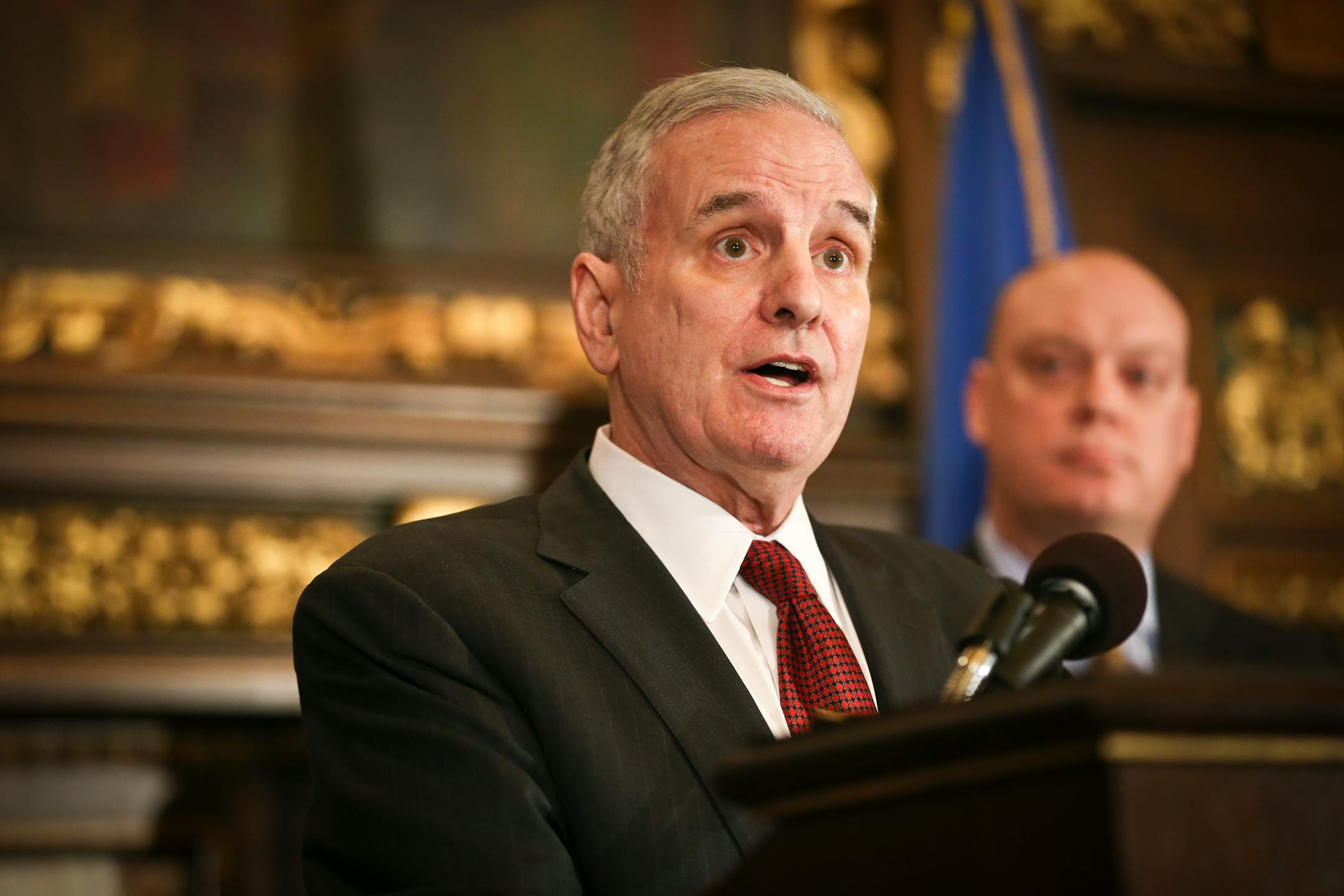
In short order the Minnesota Senate on Wednesday approved a long fought measure to hike Minnesota's minimum wage from one of the nation's lowest to one of its highest.
The measure, slated to be ready for Gov. Mark Dayton's signature this week, would increase the state's minimum wage from $6.15 an hour to $9.50 an hour by 2016. It passed on a 35-31 vote.
"This is a huge step forward," said Sen. John Marty, DFL-Roseville.
Several Republicans said the lifting the wage more than 50 percent was simply too rich. Instead, many proposed hiking the state's wage floor to $7.25 an hour, the current federal minimum. Most Minnesota businesses now have to pay that minimum.
"Why are we doing this? Politics at its worst. Higher taxes is what we've really got. This is a distraction," Sen. Dan Hall, R-Burnsville.
Some businesses would be permitted to pay their employees less than $9.50 even when the new wage is fully phased in:
- Resorts who hire summer workers on travel exchange visitor program nonimmigrant visas and give them free lodging or food would be permitted to pay those workers $
7.50$7.75 an hour. - Businesses that earn less than $500,000 in gross sales could pay their workers $7.75 an hour.
- Companies that train teenaged workers could pay their workers $7.75 an hour for 90 days as could those that employ 16 and 17 year olds.
Although the debate on the Senate floor was short, the fight the proceeded it was long.
Since last year, DFL has wrangled over how and by how much to raise the minimum wage, with particular pressure coming on the Senate.


