

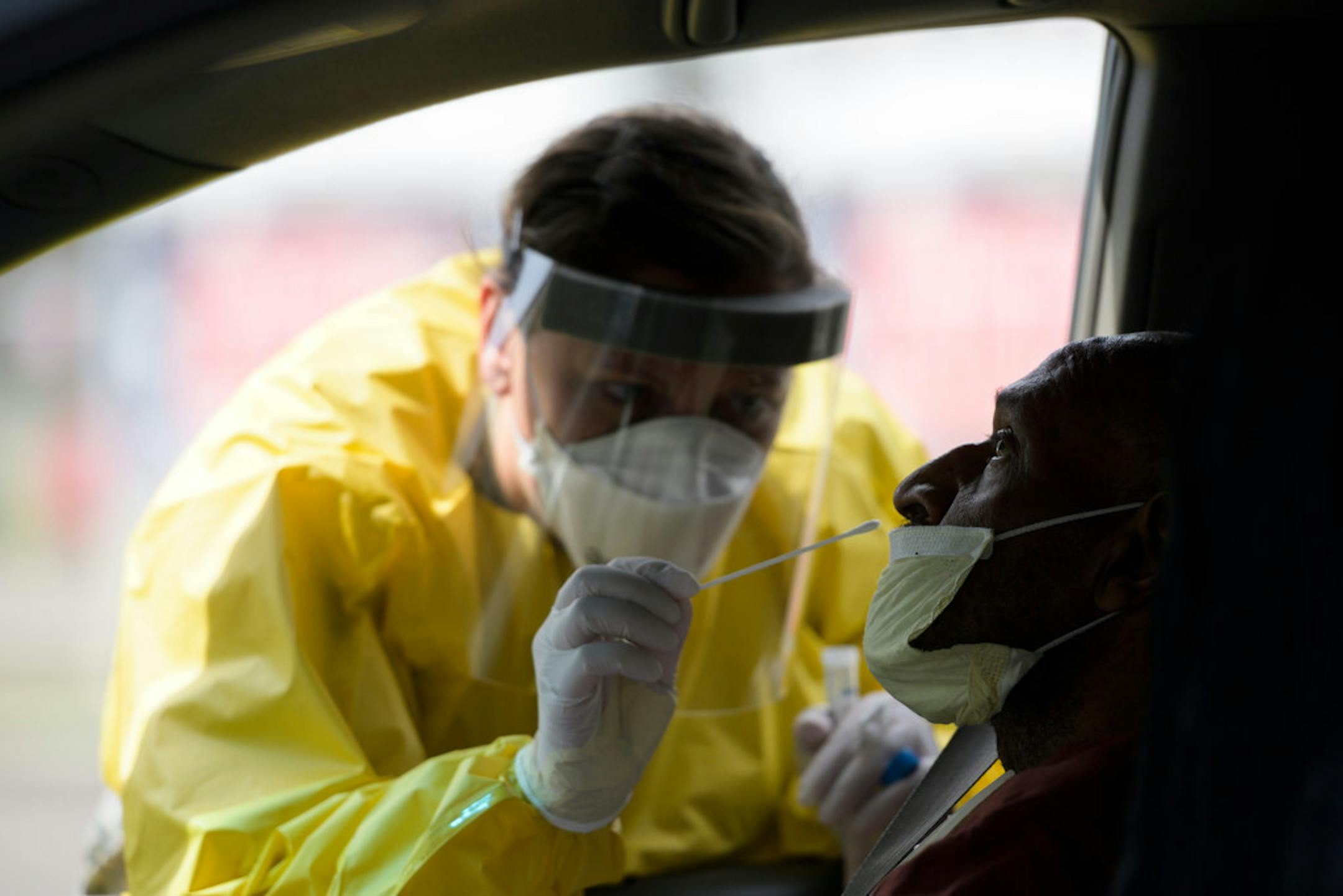
The Minnesota Department of Health is going door to door across the state to find volunteers for free COVID-19 diagnostic and antibody testing to assess the actual spread of the pandemic.
While Minnesota as of Tuesday had reported 1,927 COVID-19 deaths and 85,351 infections with the novel coronavirus that causes the disease, that doesn't include thousands of people who suffered mild or asymptomatic cases and never sought testing.
State health officials said an accurate assessment is needed to inform Minnesota's pandemic response and to identify hot spots at risk for more cases. Prevalence studies also indicate if the population is getting closer to a level of "herd immunity" that chokes the spread of the virus.
"With a new virus, we have to learn as we go and adapt our response based on new data," said Dr. Ruth Lynfield, state epidemiologist. "Information we gather in this survey will allow us to refine our recommendations to best meet the needs of our Minnesota communities in the prevention of COVID-19."
COVID-19 survey team workers will offer in-person testing this month to households in 180 neighborhoods, which were selected across Minnesota to generate a random but diverse group for research. Volunteers receive $20 gift cards per household. State health officials will contact anyone whose results indicate an active infection.
The U.S. Centers for Disease Control and Prevention this summer estimated there are as many as 10 unknown infections for every known case. That suggests that roughly 800,000 Minnesotans have been infected, whether they know it or not — but subsequent prevalence studies around the country have failed to confirm that rate.
Commercial labs from 19 Minnesota counties and nine other U.S. regions are providing antibody testing results to the CDC. The prevalence rate has gradually increased in Minnesota, according to those results, from 2.2% in late May to 4.3% in June.
Diagnostic tests are based on genomic analysis of nasal or throat swab samples and determine if people are actively carrying the novel coronavirus that causes COVID-19. Seroprevalence antibody tests are based on blood serum and assess whether people's immune systems have reacted to the virus, indicating a prior infection.


