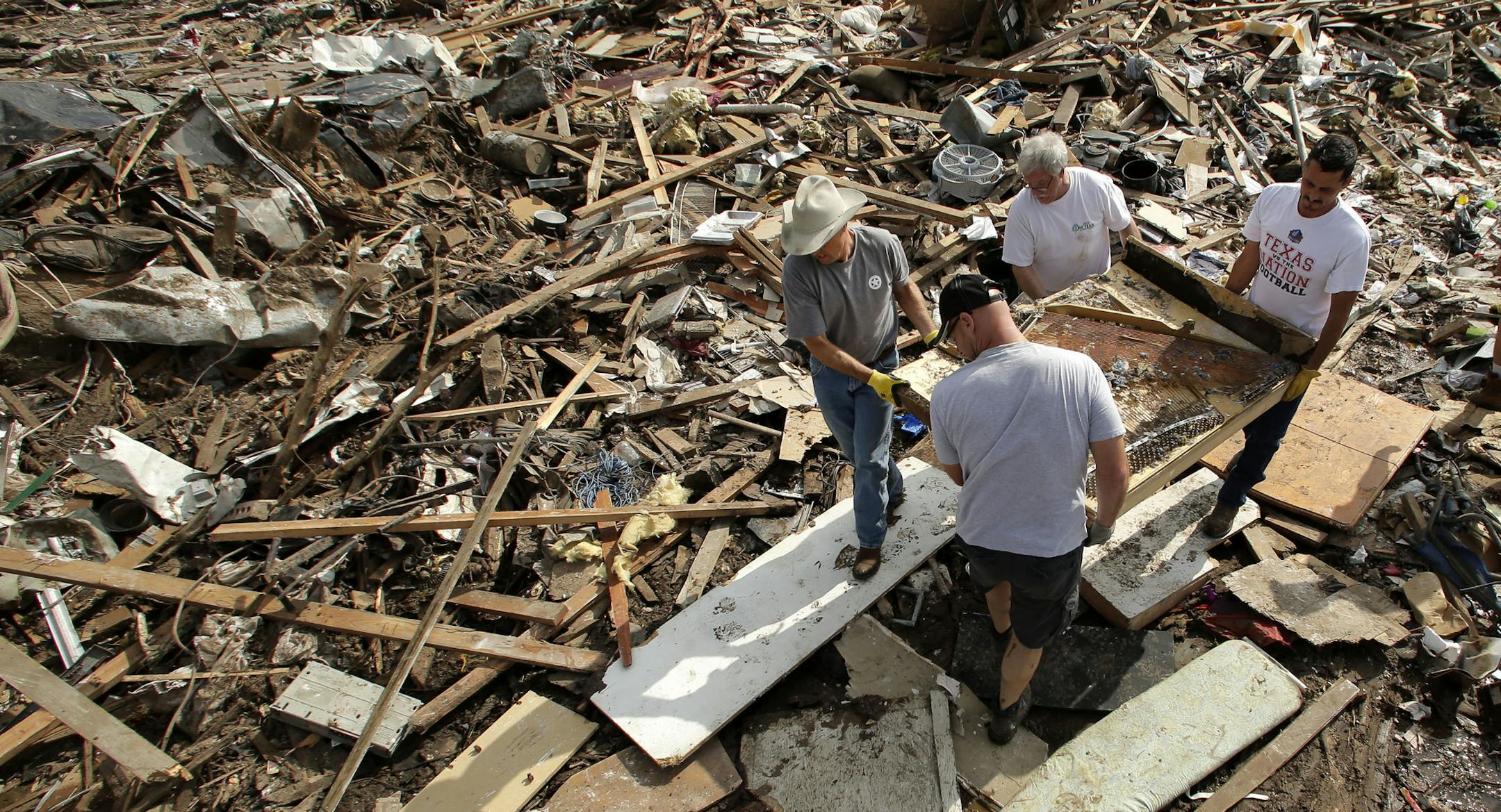
The recent tornadoes in Oklahoma, which killed more than 40 people, convinced Minnesota safety experts that they still have work to do in educating people about severe weather warnings.
The most immediate lesson:
"Your car is your enemy," said Kenny Blumenfeld, a tornado researcher and visiting professor of geography at the University of Minnesota. He was alluding to the fact that in Oklahoma City, many residents got stuck in traffic Friday as they tried to flee storms that killed at least 18 people, many of them in vehicles. Some drivers got trapped as motorists ahead of them stopped under bridges, thinking that was safe. Experts say wind speeds in tornadoes often increase under bridges.
When severe weather strikes in Minnesota this summer (there have been only two minor tornadoes so far), residents will encounter an experimental National Weather Service warning system that will emphasize the potential impact of storms. A tornado warning, for example, could state that an approaching tornado includes "a severe threat to human life and catastrophic damage."
"Hopefully, when we do get a tornado day, people will be paying attention," said Todd Krause, warning coordination meteorologist for the Twin Cities office of the Weather Service.
Krause said the five tornadoes that swept across the metro area on May 6, 1965, killing 13 people, could do even more damage today, given the expanded size of the metropolis and the massive increase in traffic.
Safe rooms
Krause added that in Moore, Okla., where two dozen people died on May 20, home might have been the safest place in a situation with few safe options.
"I was amazed there were only 24 fatalities," he said. "There was a great number of people in some kind of safe room or underground. In my mind, there's absolutely no doubt those saved lives."