

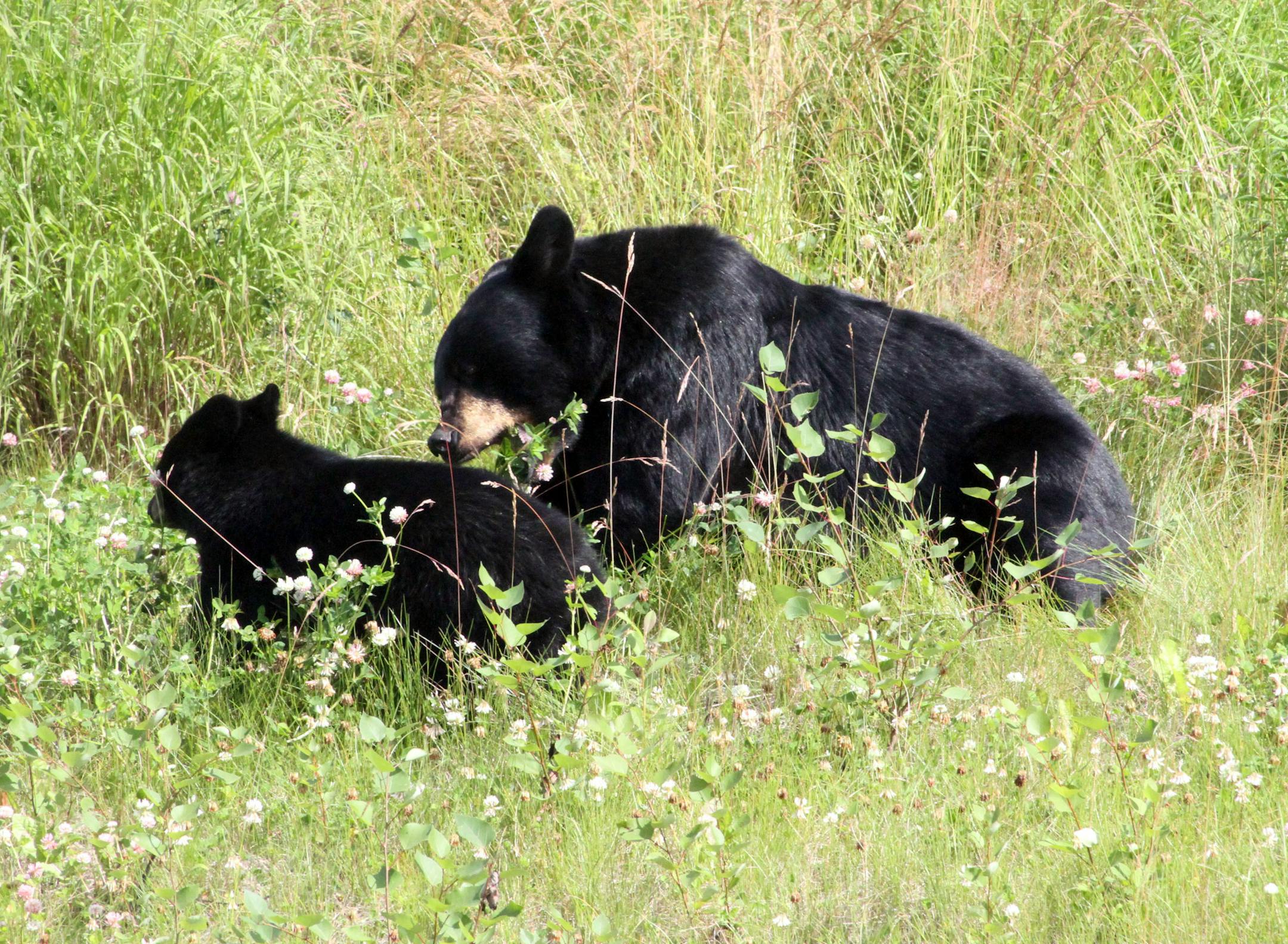
All 11 clients of Minnesota bear hunting guide Steve Battalion achieved success last year in a bountiful season that ended with an all-time record kill rate throughout the heart of the state's black bear range.
This year, too, looks promising for hunters. So many bears were openly roaming the woods last month around International Falls that Battalion could report on their density without the aid of trail cameras. The 2017 season opened Friday with Battalion and other outfitters in the northern tier of the state saying bear sightings have been plentiful.
The season runs through Oct. 15.
"When I'm driving by bears on my four-wheeler, it's like they're waiting for me'' to drop bait, Battalion said. "Our baits are getting hit well.''
But in a paradox that belies the recent ease of bear hunting in Minnesota, the actual abundance of the animals is historically low and state game managers are holding hunters back from killing more. Over the past two decades, Minnesota's population of black bears has plunged steeply, from 25,000 to an estimated range of 12,000 to 15,000. Tighter hunting restrictions have aimed, without much luck, to reverse the trend.
Some outfitters interpreted last year's record kill rate of 50 percent (in quota-restricted zones) as a bounce-back in bear numbers. But Dave Garshelis, the top bear biologist and researcher at the state Department of Natural Resources, provided a different interpretation: Bear behavior was altered by a shortage of natural foods, he said, such as acorns, wild hazelnuts and dogwood berries. Plus, fewer hunters under a lottery-controlled permit system had less competition attracting bruins.
"They were very vulnerable last year,'' Garshelis said. "They were easy to bait.''
Instead of relaxing quotas for 2017, the DNR tightened them. With natural food supplies again in short supply this year, Garshelis is relieved to have taken a conservative approach.


