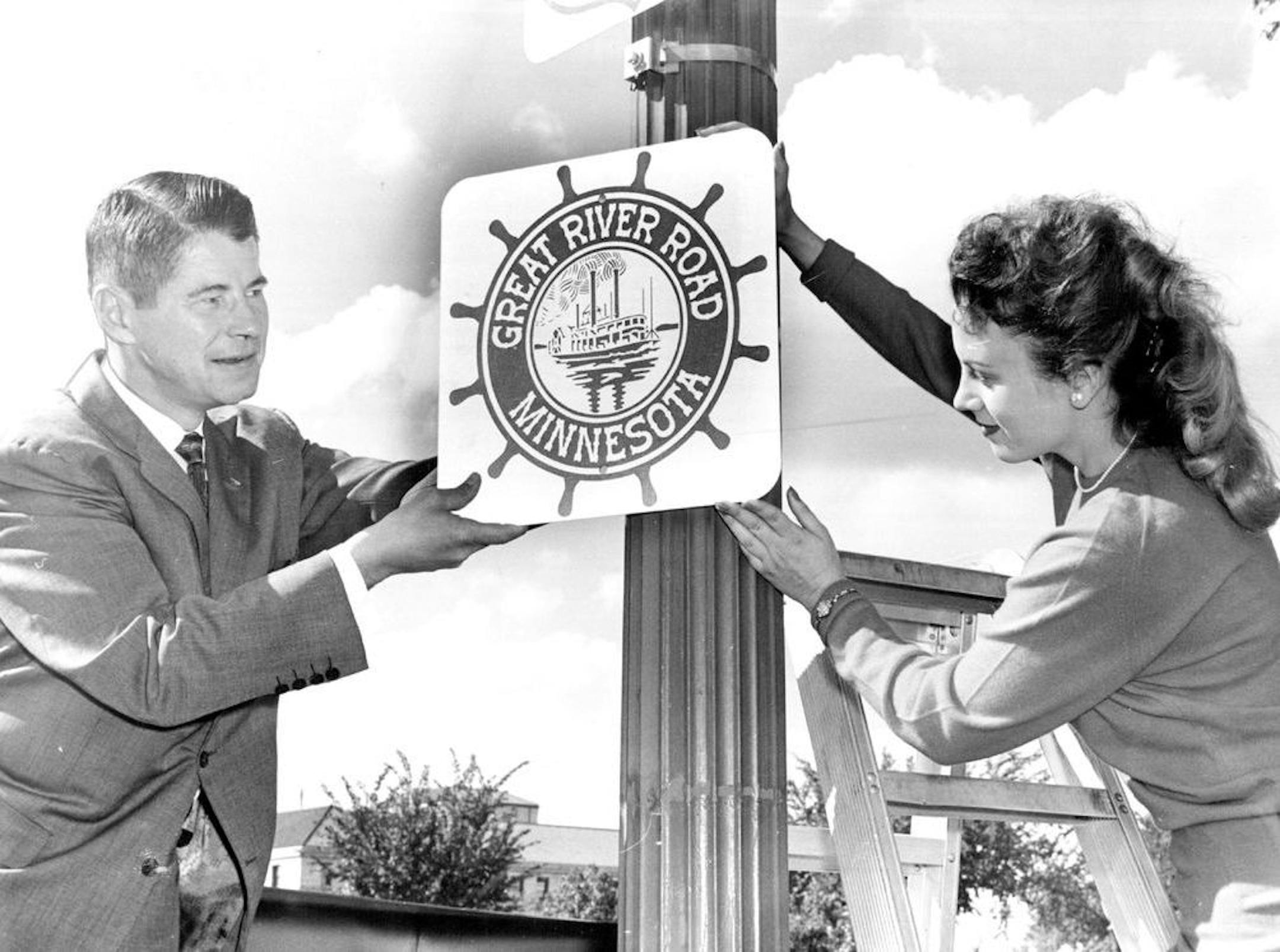
Minnesota is home to the northern starting point of the Great River Road — the remarkable scenic highway that crosses 10 states as it follows the Mississippi River about 3,000 miles from Lake Itasca to New Orleans.
For decades, the Great River Road's familiar green and white ship's wheel signs have been part of every town along its more than 500-mile route through the state — including Bemidji, Aitkin, Hastings, Red Wing and Winona — but its history is little known.
The road is the legacy of a national movement that began in the 1920s to celebrate the independence and range of car travel. For generations, American cities turned their backs on the Mississippi, using it as a dumping ground.
But with the explosion of car ownership, automotive tourism created new markets for roadside lodging, camping equipment, service stations and local attractions. The sublime and scenic beauty of the Mississippi River bluffs, geology and ecologies now had real economic value for towns and cities.
Minneapolis and St. Paul were generations ahead of their time when they created some of the first scenic river roads in the late 19th century. Thanks to the foresight of early Twin Cities park planners, such as landscape architect Horace Cleveland, the formation of roads like the East and West Mississippi River Parkways preserved and highlighted the Mississippi's beauty.
Minnesotans also helped take the river parkway idea to a national scale.
In 1938, landscape architect Arthur Nichols helped found the Mississippi River Parkway Planning Commission, which was created at a meeting in Minneapolis.
Nichols had come to Minnesota in the early 1900s to design the landscape for the Glensheen mansion in Duluth. He and his partner, European-trained Anthony Morell, stayed here and went on to design the Seven Bridges along Duluth's Skyline Drive and many Minnesota landscapes and college campuses.