
Minnesota's college students borrowing more

Grants and scholarships up, too, but state says college debt keeps climbing.

August 25, 2012 at 3:07AM
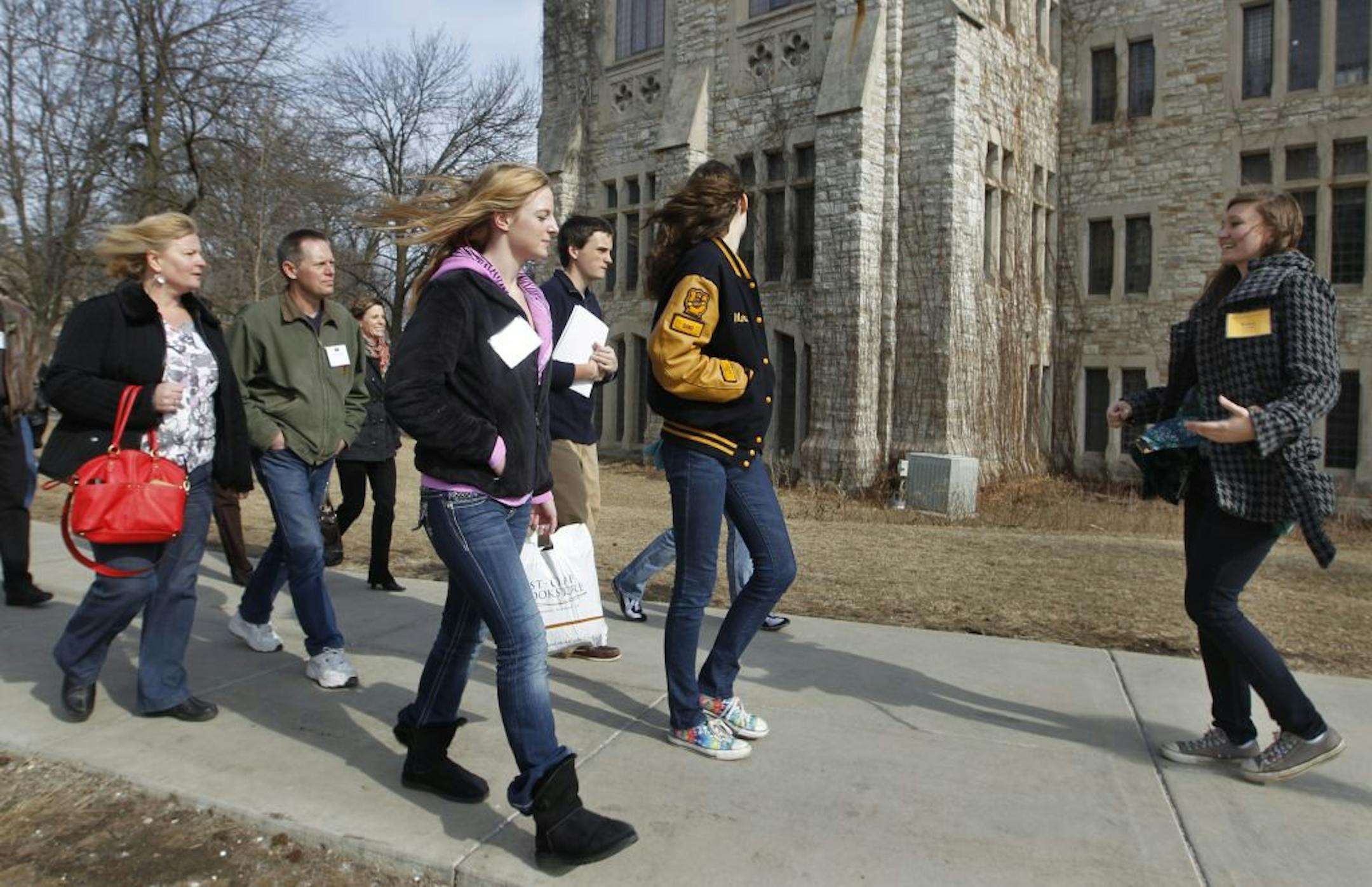
During an admissions tour at St. Olaf College in Northfield, Jody Heikkinen, left, her husband, Greg, and daughter Kirsten Heikkinen listened to tour guide Kelsey Gorman. Kirsten is considering studying math and is weighing several small liberal arts schools.
An admissions tour at St. Olaf College in Northfield, Minn. (Star Tribune/The Minnesota Star Tribune)

Minnesota students are borrowing more to pay for college -- despite growth in grants and scholarships.

Undergraduate borrowing rose by 10 percent from 2009 to 2011, according to a study released this week by the Minnesota Office of Higher Education.

Meanwhile, the total dollar amount of grants and scholarships, which students don't have to repay, rose by 40 percent. Work study earnings grew as well, by 23 percent.

Some -- but not all -- of the growth in these categories can be attributed to higher enrollment.

In a news release, the state Office of Higher Education hypothesized that "a slowdown in income growth for families due to the economy" is a big reason for more borrowing. But, the office noted, this study didn't look at family income.

Every two years, the office takes a broad look at how the state's students pay for college. Most numbers are in the millions, and even billions. Undergraduates and their parents borrowed $1.69 billion in 2011, up from $1.54 billion in 2009.

From 2001 to 2011, borrowing grew faster than tuition, income or inflation, the report shows.

The full report is at www.startribune.com/a1661.

It includes a breakdown of what percentage of students at different types of colleges and universities get grants from their school. For example, 90 percent of students at the state's nonprofit, private colleges received such grants in 2011, and the average amount was $13,800.

At the University of Minnesota's campuses, 57 percent of students got institutional grants, and the average amount was $3,200. At the four-year state universities, 26 percent of students got such grants, and the average amount was $2,200.

Jenna Ross • 612-673-7168 Twitter: @byjenna

about the writer

about the writer

Jenna Ross

Reporter

Jenna Ross is an arts and culture reporter.

See Moreicon

More from No Section

See More
FILE -- A rent deposit slot at an apartment complex in Tucker, Ga., on July 21, 2020. As an eviction crisis has seemed increasingly likely this summer, everyone in the housing market has made the same plea to Washington: Send money — lots of it — that would keep renters in their homes and landlords afloat. (Melissa Golden/The New York Times) ORG XMIT: XNYT58
Melissa Golden/The New York Times

It’s too soon to tell how much the immigration crackdown is to blame.