

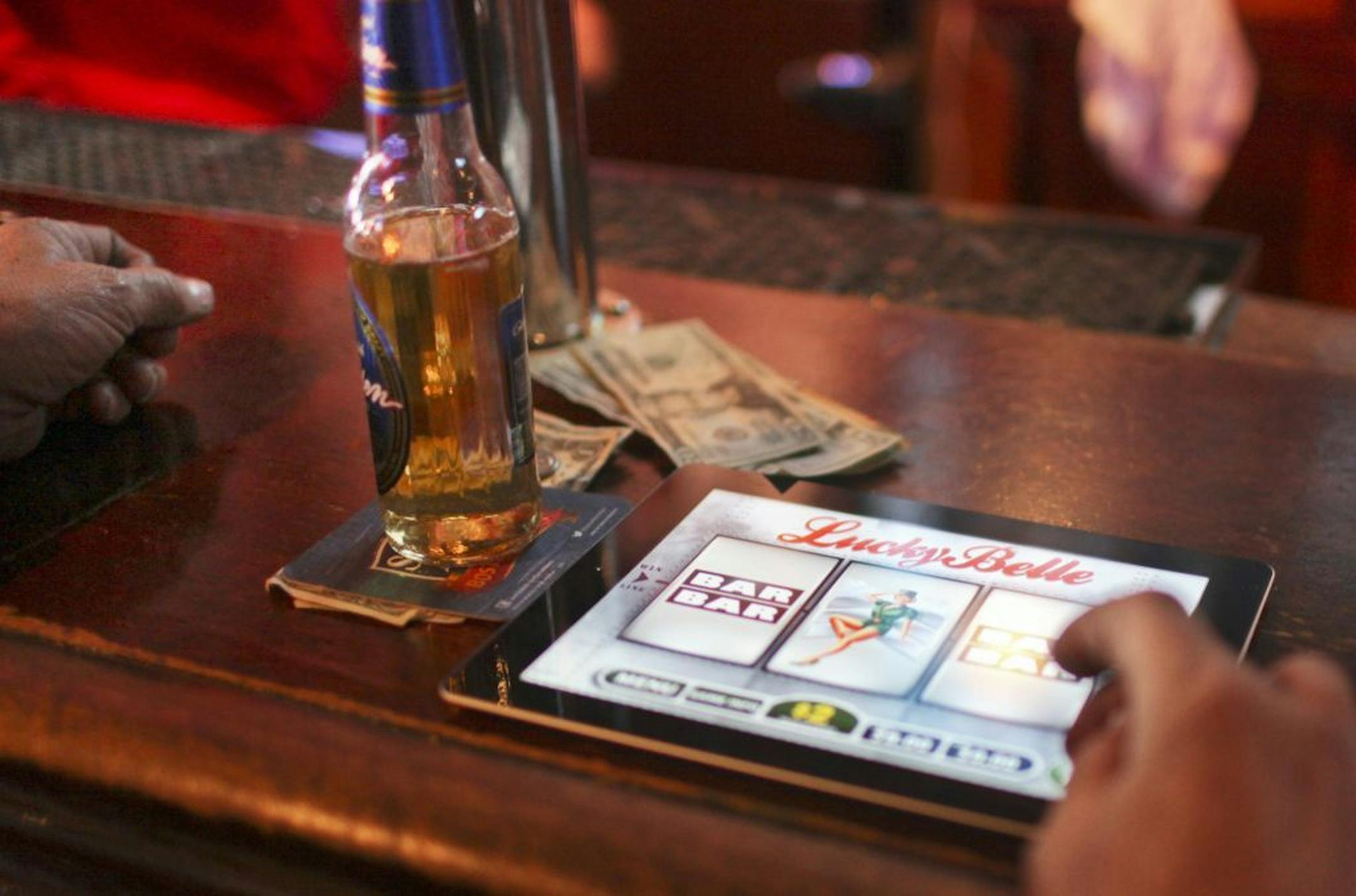
Before an effective solution can be crafted for a problem, the problem has to be correctly defined. That's the challenge with the so-called shortfall in revenue from the electronic charitable games that were approved last year by the Minnesota Legislature and Gov. Mark Dayton to help fund a Vikings stadium.
Some are suggesting that charitable organizations aren't adopting the new games quickly enough — or that Minnesotans aren't playing enough to meet the revenue goals. Both criticisms miss the mark.
We have barely started with our new electronic gambling. And the good news is that the immediate challenge is uncomplicated and easily corrected. Regulatory approval of the new games has lagged far behind what is needed to meet the economic forecasts.
The state based its revenue projections on the new games being available in 2,500 sites as soon as last fall. Six months beyond that target date, fewer than 150 sites are in operation.
Instead, some of the distributors of the new games who have the longest and most trusted relationships with operators remain on the sidelines — waiting for approval. Since the law took effect last year, only two of the five manufacturers that want to do business in Minnesota have been approved. Only three of the 10 distributors that eventually will do business in the state are currently able to do so.
The revenue expected by the state will follow when our manufacturers, distributors and machines win approval through the regulatory process, putting the games in our hands. It's that simple.
The most promising new e-game — electronic bingo linked to sites across the state — isn't yet available at all. By connecting players around Minnesota, e-bingo will generate jackpots of $25,000 or more several times a day. E-bingo promotes the social interaction that makes paper pulltabs popular. While e-pulltabs have their place, they are mainly a solitary game. E-bingo is broadcast on a big-screen TV at every site, allowing players and nonplayers to share the excitement of a big jackpot.
While we believe the approval process could move more quickly, we recognize that Minnesota is the first state in the nation to review many of the e-games. Consistent rules, efficient approval processes and sufficient staff to manage applications are just now being developed. In the long run, this cautious approach will ensure that charitable gaming in Minnesota continues to be operated with absolute integrity and security.


