

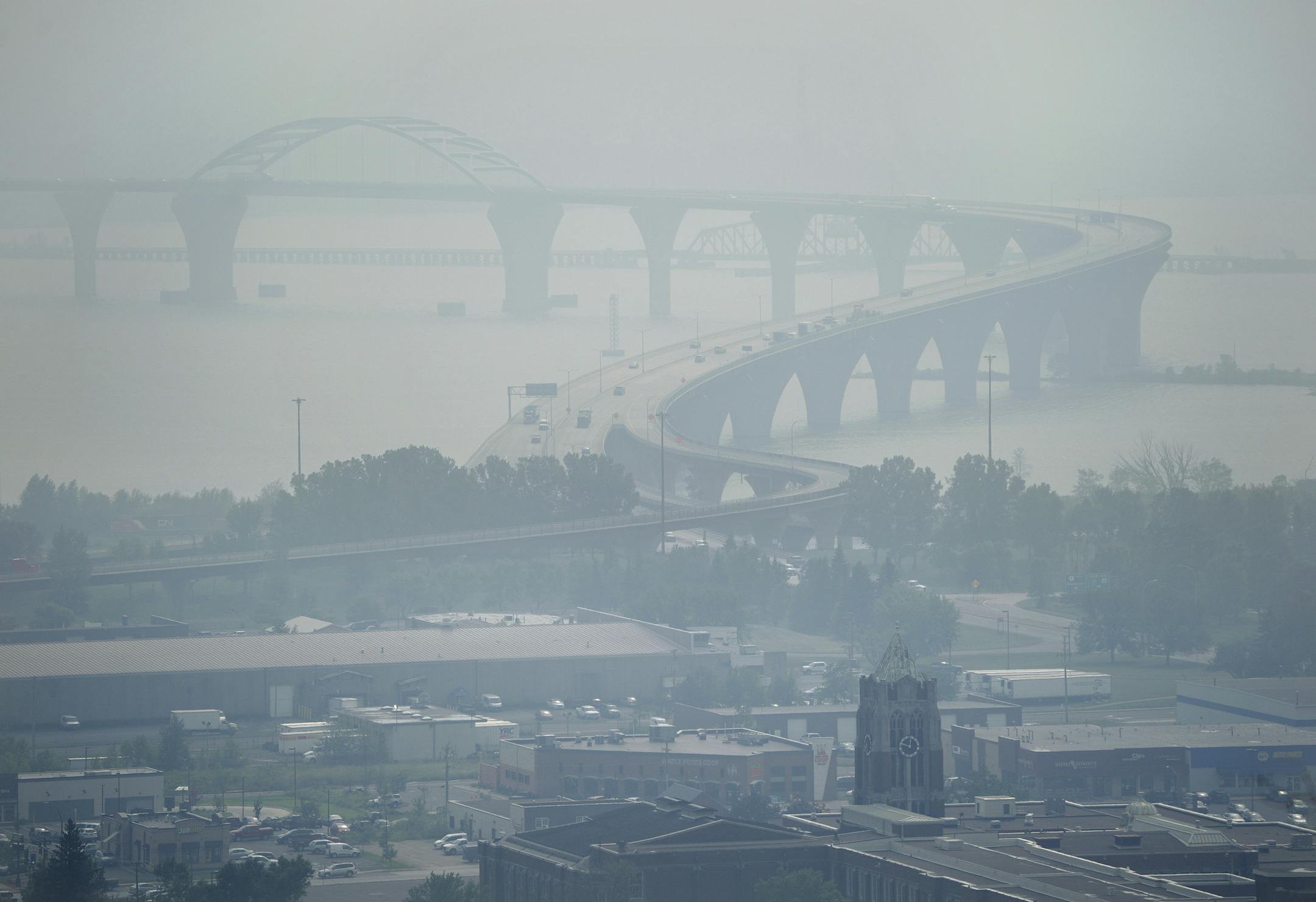
DULUTH – The smoky haze that clouded Minnesota skies for long stretches of July and August set several state records for poor air quality.
Smoke from massive Canadian wildfires and later the Greenwood fire in Minnesota's Superior National Forest, filled the air with enough particulate matter to cause serious health problems.
Twenty air quality alerts have been issued across the state this year, according to the Minnesota Pollution Control Agency (MPCA), which tracks air quality and issues alerts when air is deemed unhealthy. That tops the record of six alerts in 2018.
Air quality has reached "very unhealthy" levels a record six times this year. Such levels can cause problems for those with underlying health issues as well as otherwise healthy people.
"That's unprecedented," said Daniel Dix, who supervises the Risk Evaluation and Air Modeling Unit for the MPCA. "We did touch the hazardous category for one or two hours, which is as bad as it is in some of these California wildfires."
While 2021 has seen exceptionally bad air quality readings, researchers and health scientist say these alerts may become more common because of widespread drought and climate change across the country.
"We've seen more severe fires in recent years. We have larger fires burning hotter and covering more area," said Jesse Berman, an air pollution expert and environmental health sciences professor at the University of Minnesota. "So it wouldn't be surprising if this becomes more of a common occurrence for us in Minnesota."
Smoke-filled air can lead to coughing or itchy eyes and can cause or worsen lung disease, even with short-term exposure, doctors say. Poor air quality often leads to an increase in emergency heart attacks.


