

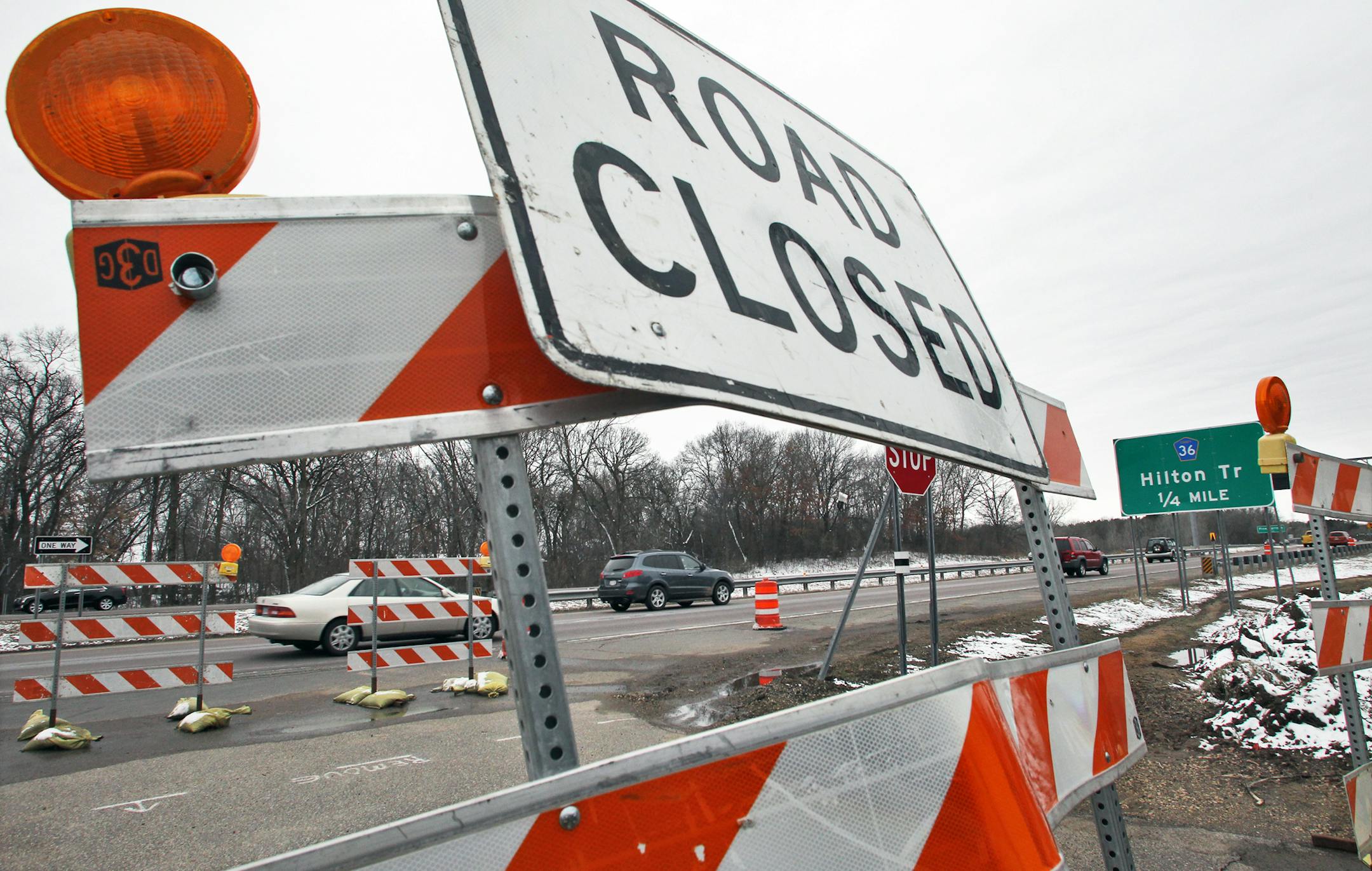
"Caution" could be a sign not just on, but about Minnesota's highways.
The perception of problems on Minnesota's roads isn't just anecdotal, but data-driven. Just one example is the recently released Reason Foundation's 20th Annual Report on the Performance of State Highway Systems. It ranks Minnesota's state highways 42nd in the nation in overall performance and efficiency. Ranked 24th in last year's study, Minnesota's slippage is the steepest for any state in the nation.
Of particular concern is a 49th-place ranking in "urban interstate congestion" and "rural interstate pavement condition."
The report, based on 2009 data, comes from a self-described libertarian think tank, whose mission is to "advance a free society by developing, applying and promoting libertarian principles, including individual liberty, free markets and the rule of law." So the report is hardly special pleading from a union-backed group hungry for more road-construction funding. Rather, it's an analysis by free-market advocates, and the conclusions suggest accelerating deterioration of Minnesota's highways that could stunt economic growth.
And it's not just because bad Upper Midwest weather beats up the pavement: North Dakota ranked first; South Dakota ninth; Wisconsin 31st and Iowa 33rd. Deliberate decisions about how much to spend on maintenance and improvements shape a state's roads.
Other data, from other organizations, including the Minnesota Department of Transportation, similarly affirm the need to invest in infrastructure.
In fact, MnDOT's new Minnesota 20-Year State Highway Investment Plan (MnSHIP) reports that 50 percent of state highway pavements are more than 50 years old, along with 35 percent of state highway bridges.
The first decade of the 20-year plan balances "preservation of existing infrastructure with investments in safety, new connections for multiple modes of transportation and other projects that advance economic development and quality of life objectives." The second decade focuses "almost exclusively on preserving infrastructure." Yet MnDOT still estimates that even if the plan is implemented the number of roads and bridges in poor condition will more than double, or even triple, within the 20-year span.


