
On Minnesota’s reservations, a housing crisis hides in plain sight

Recent reports on Native American homelessness in Minnesota highlight stark disparities.

The Minnesota Star Tribune
October 16, 2025 at 6:00PM
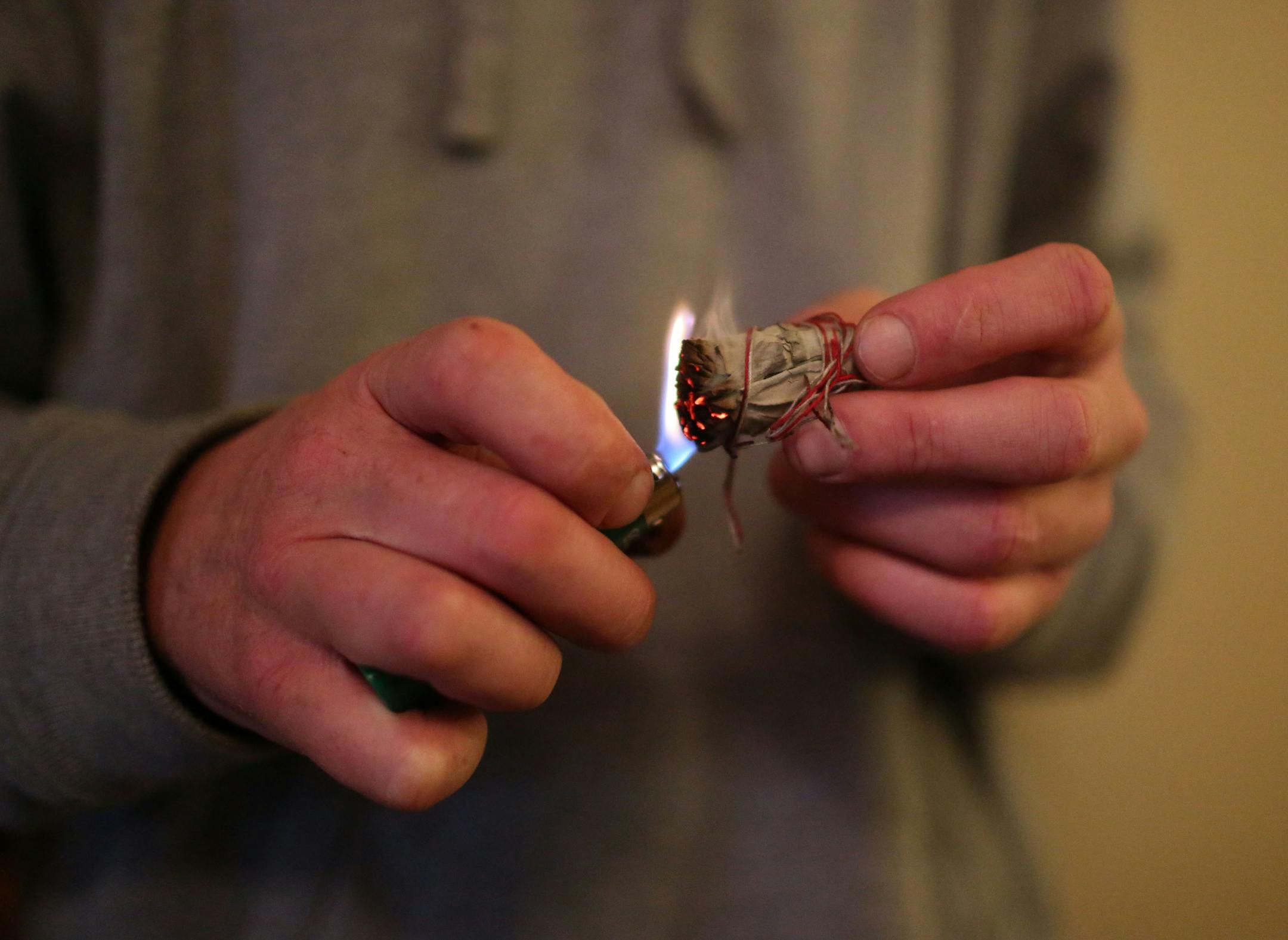
A Native American man lights sage to cleanse his new apartment, after a bout with homelessness. (David Joles/The Minnesota Star Tribune)

When Sheri Snetsinger moved back to the White Earth Reservation in 2013, she was returning home, but she had no housing for herself and her children.

Her family had a hard time finding a place on the reservation, with the apartments they toured in decrepit shape. She said other housing was off limits because her partner, who planned to join them soon, was incarcerated — a status that often leads to landlords refusing to rent and ineligibility for housing programs.

So they stayed with relatives and crashed on couches as Snetsinger worked multiple jobs and dreamed of a home for her family.

Her story illustrates the quiet nature of a statewide crisis that Native American community leaders say is hidden homelessness on Minnesota’s reservations. While Native Americans make up just 2% of Minnesota’s population, they account for 30% of homeless adults, according to two recent reports from Wilder Research, a St. Paul-based nonprofit that has been surveying homeless residents since 1991.

Homelessness among Native Americans looks different in the Twin Cities and greater Minnesota, the reports point out. Instead of sprawling encampments, homelessness is hidden in greater Minnesota, with people often shuffling among homes of relatives.

Such “doubling up” often masks deep housing instability on reservations, said Mary Riegert-Soyring, deputy director for the Minnesota Interagency Council on Homelessness, led by Lt. Gov. Peggy Flanagan.

“If you go onto many of our reservations in greater Minnesota, you’re not going to see a lot of people outside,” said Riegert-Soyring, a descendant of the White Earth Nation. “They are living in cramped conditions, doubled up, tripled up, sleeping on couches. … It’s hard for people to understand that we have a lot of homeless people."

Analysts at Wilder Research used a broader definition of homelessness for Homelessness on Minnesota Native American Reservations — one of its two reports — that included these “doubled-up” situations.
Researchers interviewed 1,046 people struggling with homelessness in 2023 at six Minnesotan reservations. At the time of the survey, 71% of respondents were doubled up with others, the survey said.

According to the report, 81% of those doubled up met the federal definition of homelessness, because their situation was precarious.

Almost 90% of those in doubled-up homes said they had moved between two different places over the last year, and 43% said they lived in four or more places. Many were not confident they could stay for another month without being asked to leave, and nearly all said they would prefer their own home, the report said.

“It’s amazing that our families connect and take care of each other without question,” said Snetsinger. “But after a month, things get difficult, families have to change their rules, and they might get evicted if any landlord finds out you have 10 people in your house.”

For workers at shelters in cities like Bemidji, a regional hub near White Earth and two other reservations, the reports’ findings match the reality of what they see every day.

“It doesn’t surprise me at all,” said Jennifer Aakre, director of the youth crisis shelter at Evergreen Youth and Family Services. The shelter takes in children up to age 17 from the entire region, not just the reservations.

The teens who come to her shelter are often couch-hopping with friends and family. But sometimes these temporary landing spots aren’t safe anymore, Aakre said. “How we might get involved is that kids will realize the place that they’re staying is not a good place to be, and then they’ll call us,” she said.

In the Twin Cities, the homelessness crisis among Native Americans is acutely visible. Community leaders acknowledge that the Native American community is overrepresented and living in encampments.

“We’re in a state of emergency and the American Indian community needs help,” said Sheri Riemers, director of the Ain Dah Yung Center, which provides programming for American Indian families and a shelter for its youth in St. Paul.

Some community leaders point to the enduring legacy of federal policies like the Indian Relocation Act in the 1950s as a key factor in the Twin Cities. Native American families were “enticed” to leave their reservations and come to big cities with the promise of a higher quality of life, only to face prejudice and housing and job shortages, said Brandon Alkire, legislative director of the Minnesota Indian Affairs Council.

“It was another whole example of broken promises,” Alkire said.

The reports suggest homelessness in the metro area and on the reservations is interconnected, drawing from the same systemic failures, such as a lack of affordable housing.

In the Twin Cities, Native Americans experiencing homelessness would need to earn 5.5 times more per month on average just to cover the median cost of rent, according to a second report, a brief titled Enduring Histories of Displacement that pulls from the broader Minnesota Homeless Study.

In greater Minnesota, there aren’t enough shelters, the reports said. Only 5% of reservation respondents were in formal shelters. The reservations also lack domestic violence shelter space, leaving those in abusive situations few options to flee.

The reports also noted the impact of substance abuse and mental health disorders, which can contribute to homelessness and make it more difficult to get shelter or stable housing.

The state is focusing on culturally specific responses and providing more direct, flexible funding to tribal governments, Riegert-Soyring said.

In the face of adversity and trauma, community leaders said there are also stories of determination and resilience.

One of them is Snetsinger. In 2017, Snetsinger put her name on a waitlist for housing in the village of Naytahwaush. It took two years to find housing that offered her and her children safety and stability. No longer with her once-incarcerated partner, she joined two community councils and won election to the township board. She said her experience “doubling up” — and in turn hosting relatives in hard times — has taught her the importance of helping those “in the same canoe.”

One evening in 2019, after a difficult day, Snetsinger sat on her porch. But then she said she heard a sound that raised her spirits: the beating of a drum. Two of her nephews were singing and playing in a drum group down the road from her home.

“I could hear them drumming, and I could hear them singing, and it was just a sense of community,” Snetsinger said. “Our kids were singing.”

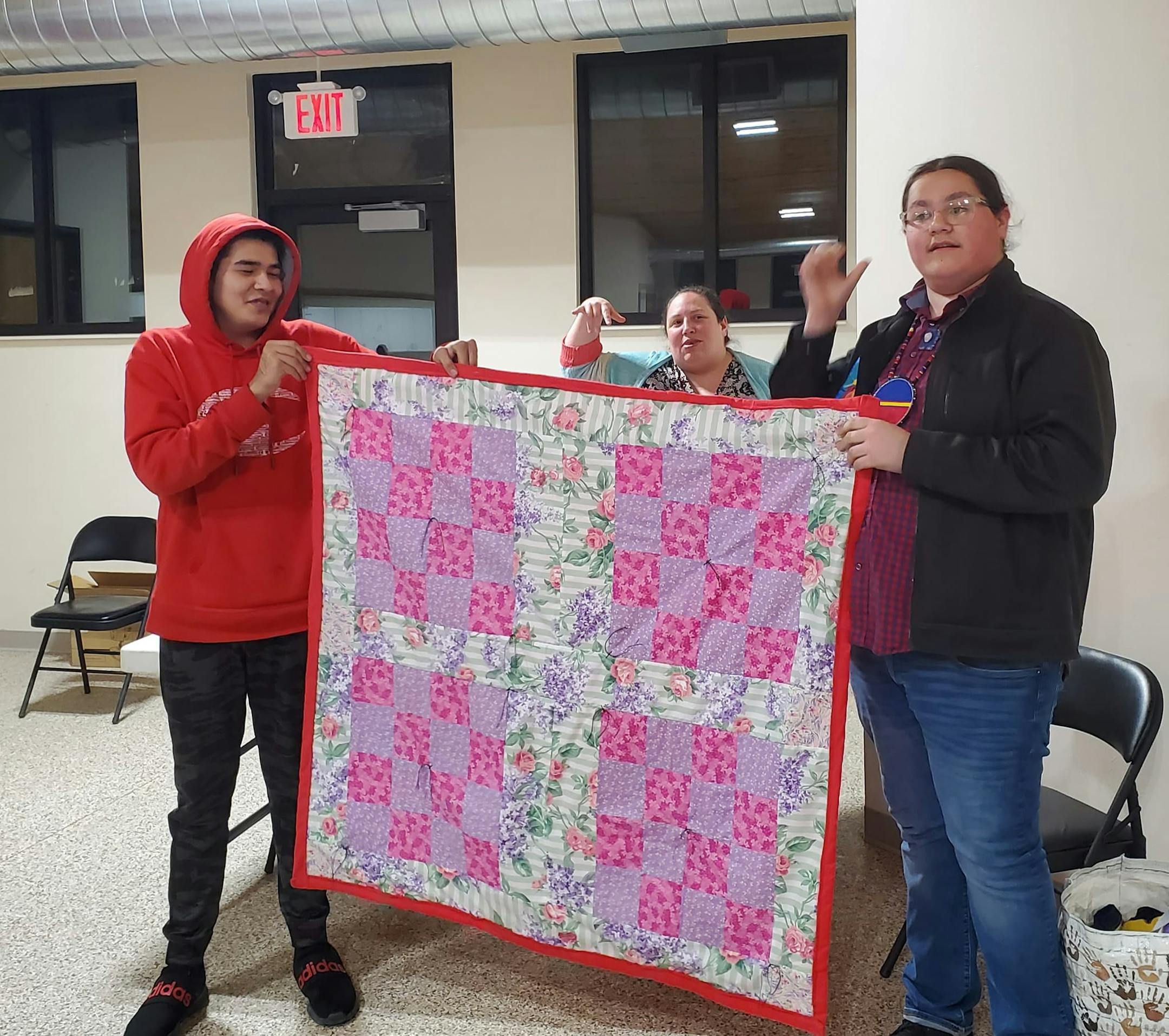
Sheri Snetsinger, middle, and her nephews Marshall Zephier, left, and Waabinoo Littlewolf show off a block quilt shortly after completing it while at a sewing circle at the Naytahwaush Drum Hall on the White Earth Indian Reservation in 2023. (Courtesy of Sheri Snetsinger)
about the writer

about the writer

Jp Lawrence

Reporter

Jp Lawrence is a reporter for the Star Tribune covering southwest Minnesota.

See Moreicon

More from Mankato

See More
card image
Carlos Gonzalez/The Minnesota Star Tribune

Minnesota State Mankato offered an intensive program to help students catch up after experiencing visa delays.

card image