

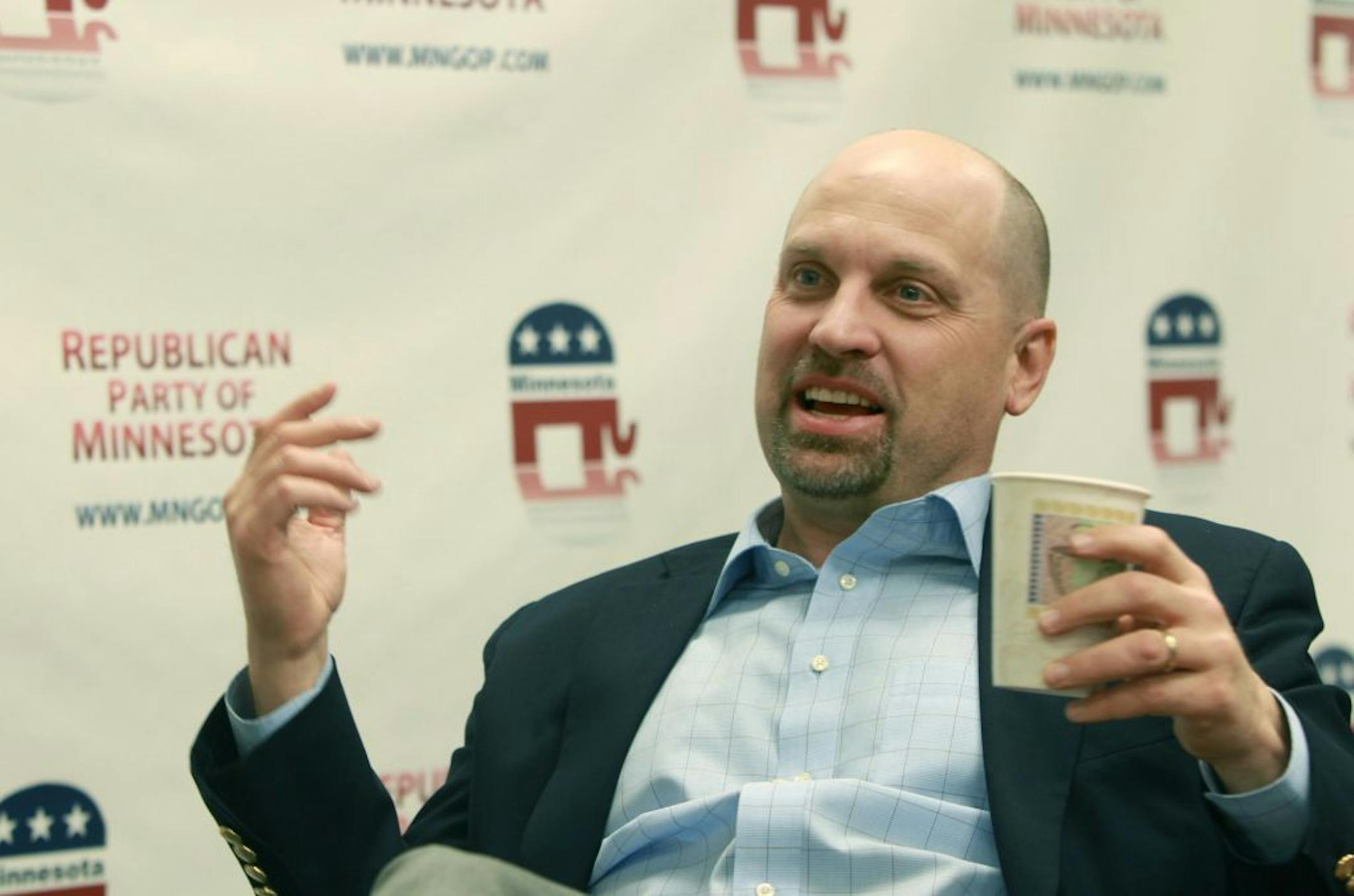
In boardrooms and coffee shops, on conference calls and in social media, Minnesota Republicans are trying to figure out what went so disastrously wrong on election night and how to make it right.
After a DFL rout that left them distinctly in the minority, powerful forces within the Republican Party are planning major changes, aware that time is already running short. In 2014, DFL Gov. Mark Dayton and U.S. Sen. Al Franken will be up for re-election, along with the Minnesota House and all U.S. House seats.
"It was ugly, from the top of the ticket to the bottom, and all across the country. It was a bad night," Republican Party Chairman Pat Shortridge said in a blunt, post-election e-mail to supporters. "We have to learn from Tuesday night and move on because the cause is important and there is no time for self-pity."
The severity of the losses nationwide has Republicans reassessing their stances on immigration, taxes, polling and organizational issues.
Among the party faithful in Minnesota, some are saying out loud what they previously only whispered: Their fiscal message was muddied by the now-failed constitutional amendments; their long-sacrosanct party endorsement system has become harmful; and the tendency to boot members who stray from party orthodoxy has to end.
Minnesota Republicans were emboldened when they took control of the Legislature for the first time in more than 40 years during the 2010 mid-term elections. But that triumph aside, party leaders must deal with a hard fact: Republicans have not won a statewide race since 2006 and even their last two gubernatorial victories were by pluralities, not majorities.
The new reality is this: Democrats control both bodies of the Legislature, the governor's office, every other constitutional office, both U.S. Senate seats and a majority of Minnesota's U.S. House seats.
"We have to look at everything ... and say, 'Does this give us the best chance to win?'" Shortridge said in an interview.


