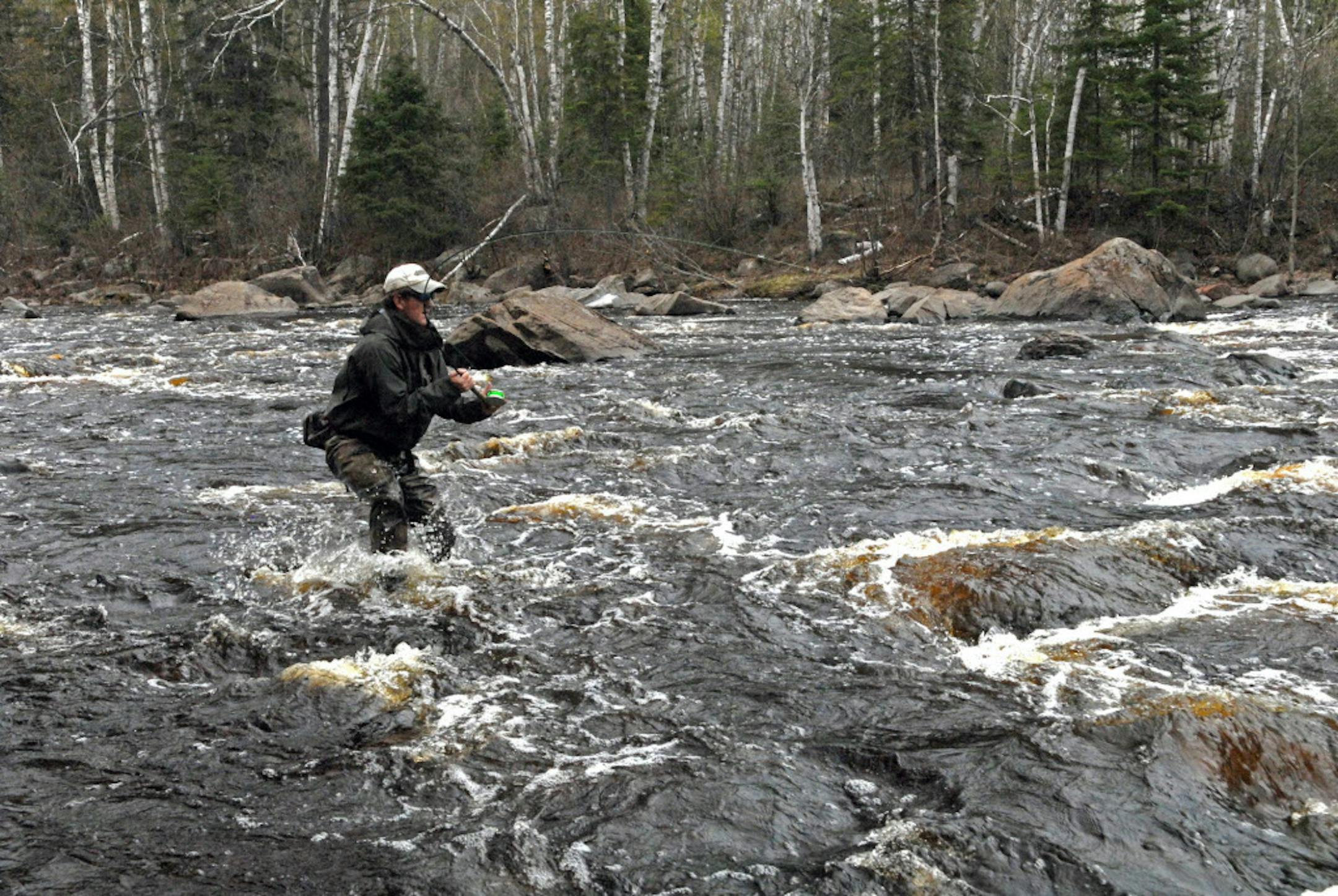
Snow piled by tempestuous winds earlier this week along Minnesota's North Shore compounded challenges faced there this difficult winter by deer, among other wildlife.
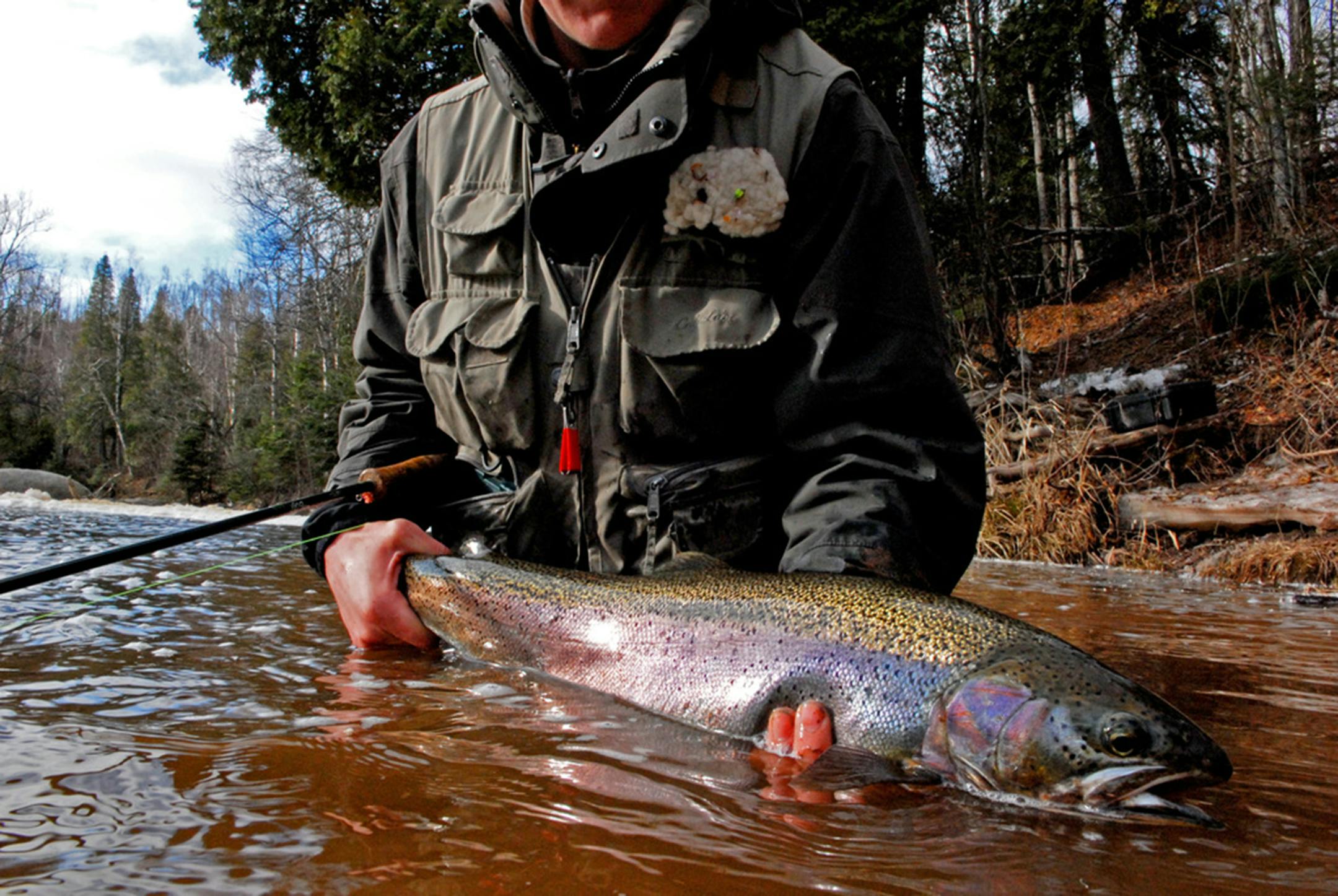
But the storm was good news for steelhead, or migratory rainbow trout.
Last year's drought nearly drained some North Shore streams, and in certain cases reduced to puddles the deep pools that welcome steelhead during their springtime spawning runs from Lake Superior into their birth rivers.
This winter's deep snow from Duluth to Grand Portage ensures the Shore's 60-odd steelhead rivers will have sufficient water in spring.
Though Minnesota has untold millions of bluegills, walleyes and northern pike, none of these abundant species is more spectacularly wild than steelhead, whose Lake Superior origins date to 1883, when a sampling of steelhead was transplanted into the Canadian side of Otchipwe-kitchi-gami.
In the intervening 140 years, Lake Superior steelhead have thrived, and at other times barely survived. Nemeses have varied, from sea lampreys to anglers' overharvests.
But steelhead were perhaps never so threatened as in the last quarter-century, when another, more milquetoast variety of rainbow trout — Kamloops — was confirmed through genetic testing to be interbreeding with steelhead.
The fear, over time, was that the wild steelhead's unique inheritances would be diluted, reducing its reproductive capabilities.