

Sometimes the measure of an orchestra is how it deals with music it has rarely, if ever, played.
By that criterion, Thursday morning's performance of Ralph Vaughan Williams' Sixth Symphony — part of a program that will be repeated Friday evening — spoke glowingly to the Minnesota Orchestra's current state of virtuosity and artistic togetherness.
Although the Sixth is unquestionably one of the great English symphonies, it has not been played by the orchestra in more than four decades (in 1975). The single performance before that came in 1948, when the great Dimitri Mitropoulos introduced the Sixth to Twin Cities audiences just eight months after the symphony's world premiere.
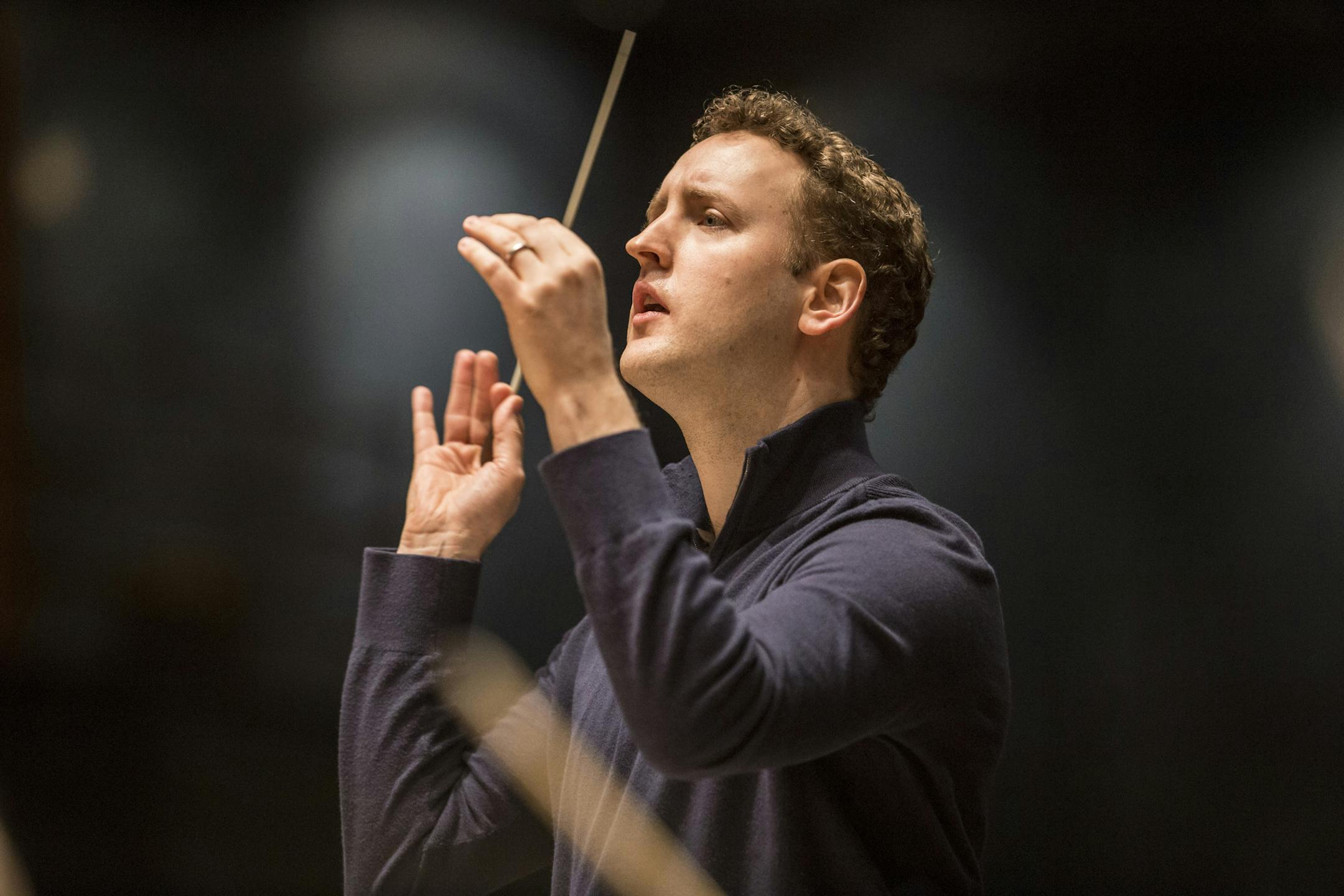
If unfamiliarity was a problem for the Minnesota Orchestra musicians at the beginning of this week's rehearsals, it had evaporated by the time of Thursday's performance. Led with great clarity by young English conductor Michael Francis, the players gave a coruscating account of Vaughan Williams' symphony.
The Sixth opens with a surgingly kinetic gesture. In Francis' interpretation it bucked and reared like a wild stallion baring its hoofs at an attacker.
And although the surging pulse-rate set by Francis never wavered, enough elbowroom was created for the upper strings to give an intensely expressive account of the lyrical string melody that the music eventually eases into. Francis built a crashing climax from the obsessive rhythmic patterns of the second movement, while in the rumbling, explosive Scherzo the heavy brass artillery shot ominous volleys of sound across the auditorium.
Finally there was the blasted landscape of the Epilogue, a spiritual autopsy sketched by Francis' patient, probing tempo. The fade to silence at the symphony's conclusion was quiveringly etched in the outstanding playing of the violins, holding a tense focus at extremely low dynamic levels.
Do English orchestras play English music best? That theory has its advocates, but it took a heavy knock in this performance of Vaughan Williams' Sixth. It was searingly authentic. It could have graced a concert platform anywhere.


