

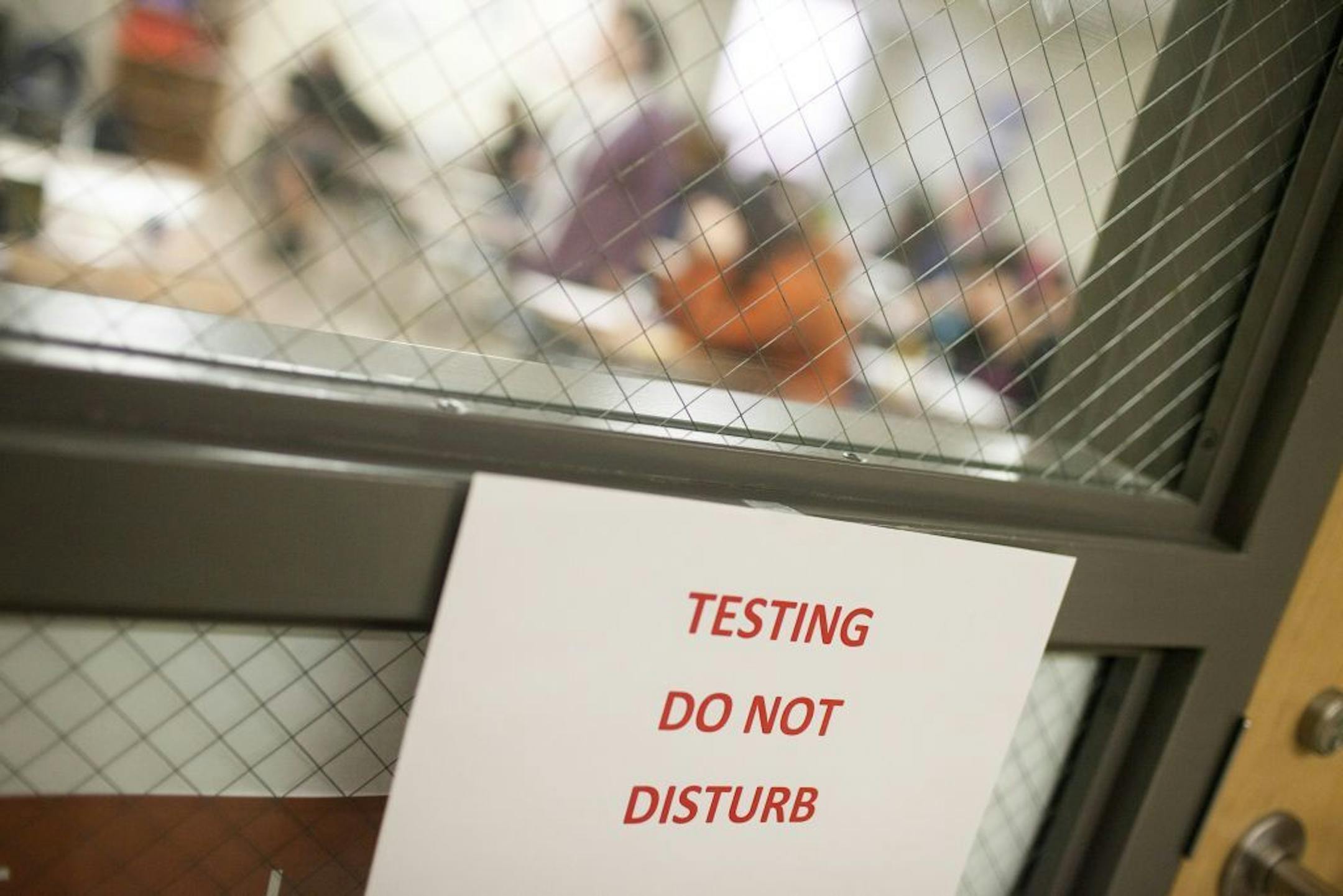
As thousands of Minnesota students tackle state tests this month, education officials say they have strong protocols in place to prevent cheating, as well as plans to increase security even further as more tests move online.
The pressure to cheat is significant, and it's felt as much by teachers as students. Across the country, test scores are increasingly influencing school funding and the evaluation and pay of teachers and administrators. Just last month, criminal charges were filed against 35 educators in Atlanta for allegedly tampering with test results.
That cheating scandal and several others were uncovered when erasure marks on paper tests were analyzed for unusually high numbers of wrong-to-right answers. The Minnesota Department of Education ended that practice, known as erasure analysis, in 2009.
Current department officials say they aren't sure why erasure analysis was discontinued but added that they believe it is not the best way to identify cheating, especially since more Minnesota students are taking standardized tests on computers.
"Erasure analysis does not necessarily indicate wrongdoing," said Jennifer Dugan, the department's top testing official. "It indicates more investigation might be warranted."
While the department occasionally will invalidate tests, it never has unearthed evidence of widespread cheating in Minnesota.
That's because teachers and administrators do a good job of making sure cheating never happens in the first place, Dugan said. Minnesota educators follow the state's detailed testing protocol plan, which addresses everything from cellphone use to posters in the classroom, she said.
Providing additional oversight are 15 department monitors who make unannounced visits to schools where students are taking their Minnesota Comprehensive Assessments, which measure students' performance in reading, math and science. The MCAs are being administered now through mid-May.


