Lynn Wendt was initially taken aback when, for the first time in her memory, she was asked to identify herself upon visiting her elderly parents at a senior home in Delano, Minn.
Then came a polite warning from the concierge: Because of the spread of the new coronavirus, the assisted-living facility was urging all visitors with a cough, fever or other flu-like symptoms to stay away.
"It was a relief, honestly … just knowing that people are taking this virus seriously," Wendt said.
Across Minnesota, from Rochester to Duluth, nursing homes and other facilities that care for seniors are rolling out a series of new measures to protect residents from the spread of the coronavirus and to develop contingency plans in case patients need to be quarantined. They are stockpiling masks, gowns and other emergency medical supplies; training staff on infection control, posting warning signs, and preparing for staff shortages in case workers get sick. And starting Tuesday, long-term-care facilities across the nation began taking unprecedented steps to protect their vulnerable population by screening visitors.
State health regulators are also changing their practices. Based on new guidance from the federal government, the Minnesota Department of Health is shifting its work to respond more quickly to complaints concerning infection control, focusing inspections on facilities with potential coronavirus and other respiratory illnesses. So far, agency officials have announced three presumptive cases of COVID-19, the disease caused by the virus, though no cases have been reported in Minnesota's long-term care facilities.
State and industry officials are trying to avoid the nightmare scenario still unfolding at a nursing home near Seattle, where at least 18 residents have died from the virus and scores of workers have become sick. The facility, Life Care Center of Kirkland, Wash., has struggled to get all its patients and staff tested for the virus because of a shortage of test kits.
"We are doing scenario planning over scenario planning," said Patti Cullen, president and chief executive of Care Providers of Minnesota, a long-term care industry group. "We would rather over-plan than be caught unprepared."
Federal and state guidance over how to respond to the crisis is shifting daily, sowing some confusion over how senior care facilities should respond in case a patient becomes infected. As recently as last week, officials were recommending that any resident of a long-term care facility with symptoms of COVID-19 be transferred to a hospital. Now that guidance has changed: Public health officials are telling senior care facilities to examine each case individually and to isolate residents with milder symptoms of the virus, due to concerns that moving them could spread infection.
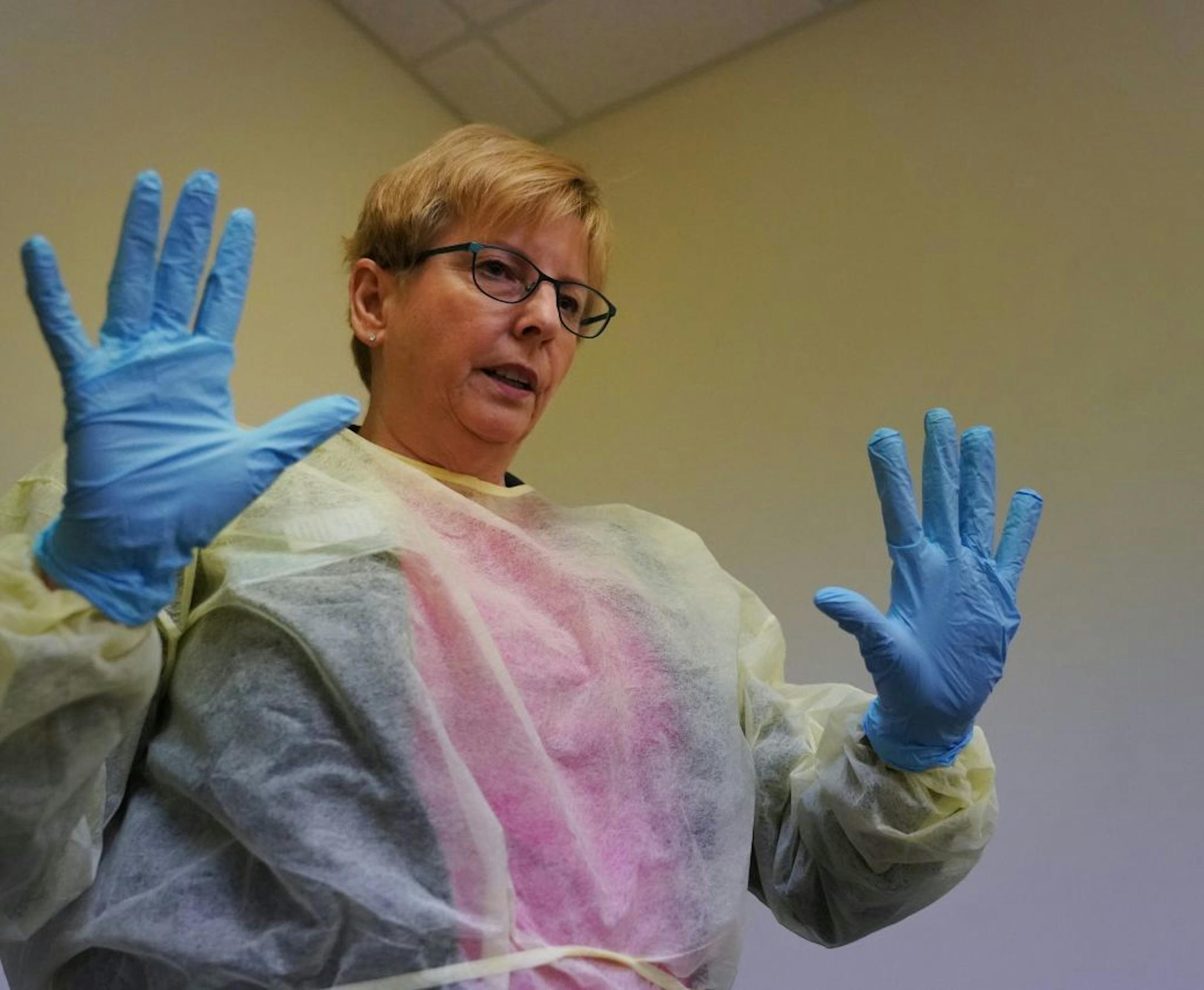
![Klae Moyer, TMA/RA and employee of Harmony River in Hutchinson, Minn., demonstrated the proper way to wash and dry your hands. ] Shari L. Gross • shari.gross@startribune.com Presbyterian Homes, one of Minnesota's largest operators of senior homes, held a class on infection control, in response to the coronavirus. The class is part of an annual eight-hour training employees undergo to stay on top of ways to prevent the spread of infection and disease.](https://arc.stimg.co/startribunemedia/4XWT6VO4KSEO3WLTR2RCKDAI6A.jpg?&w=1080)