

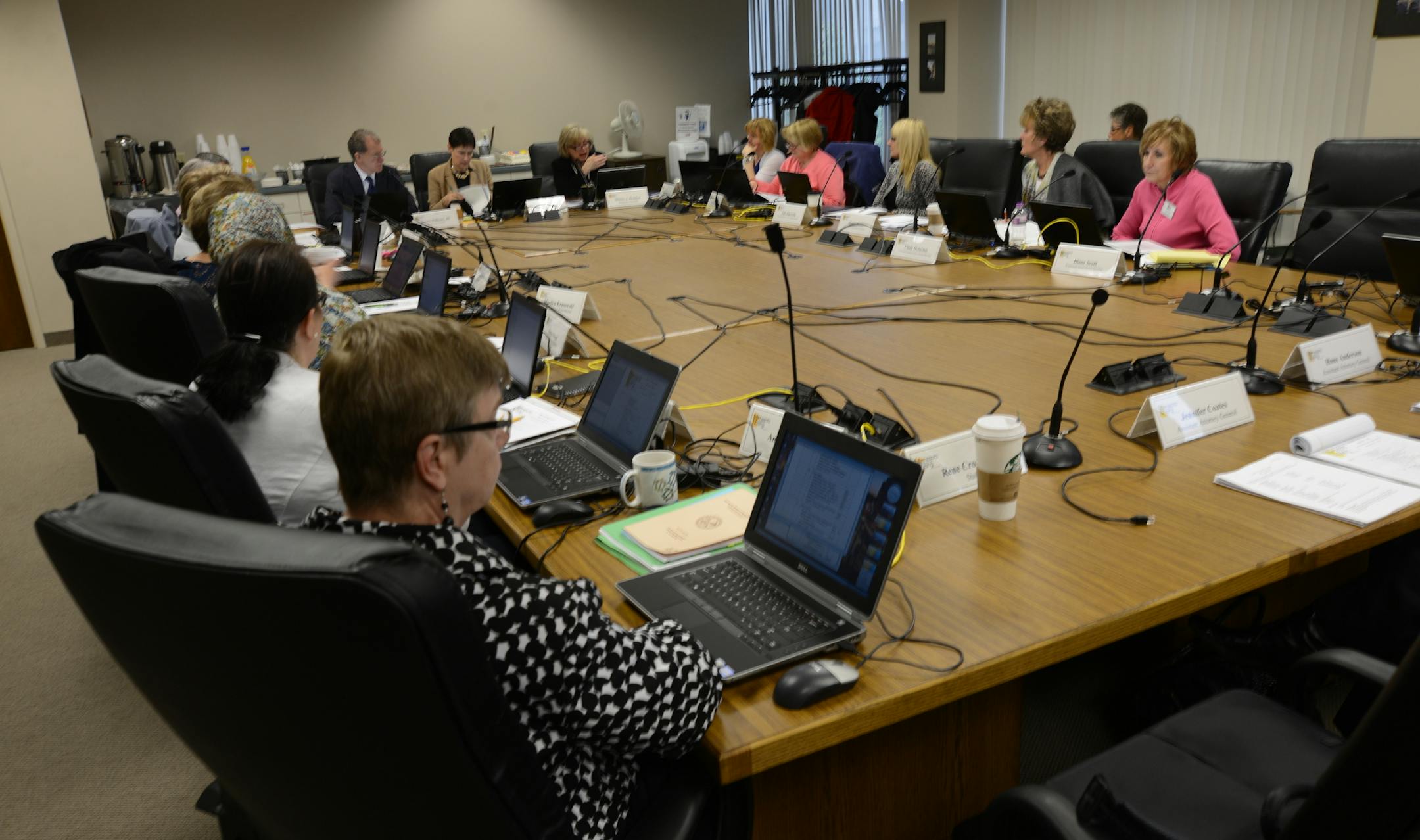
The Minnesota Board of Nursing took steps on Thursday to strengthen its oversight of problem nurses, voting to speed up its disciplinary process and to ask the Legislature for more authority to investigate and punish violations.
Meeting for the first time since the Star Tribune began publishing stories about its record of disciplining nurses, the Nursing Board identified at least 13 ways it could get tougher on nurses who harm patients, steal drugs or commit crimes.
Most of the discussion was focused on seeking new power, despite recent criticism from Gov. Mark Dayton that they are failing to use the authority they already have. The governor described the board as "asleep at the switch" after the Star Tribune stories revealed that some nurses who harmed patients, stole drugs or lied about their criminal histories are still allowed to practice.
Board members did not directly address that criticism Thursday, but Nursing Board President Deborah Haagenson said its members and staff "are committed to their mission" of protecting the public.
"Characterizations to the contrary are simply not accurate and certainly not helpful," she said.
The Minnesota Board of Nursing, the state's largest health licensing board, has 16 members, 12 of them nurses, all of whom are appointed by the governor to oversee the licenses of more than 115,000 nurses.
On Thursday, the Nursing Board voted unanimously to meet almost every month to consider disciplinary cases, up from every other month, in an effort to shorten the time it takes to sanction nurses.
Among the new laws it will seek, the board wants the authority to sanction a nurse who has failed a state monitoring program for health care professionals with substance abuse or mental problems. Currently, the board has to prove that a nurse discharged from that program has returned to substance abuse before it can take disciplinary action, according to Nursing Board Executive Director Shirley Brekken.


