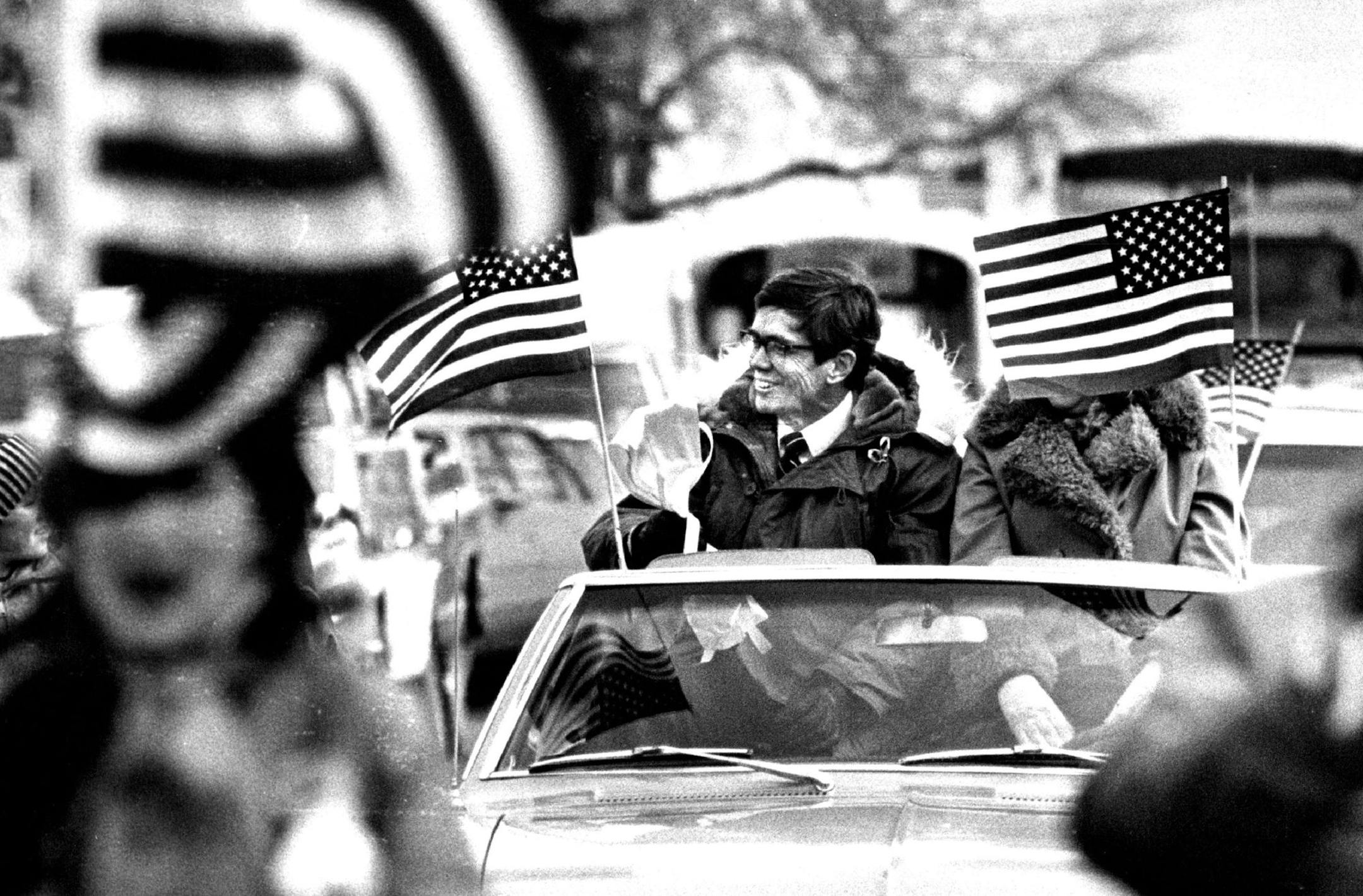
After being held hostage in Iran for 444 days, Bruce Laingen and 51 other Americans safely returned to the United States amid celebrations and parades.
But all Laingen, the top U.S. diplomat in Iran, wanted back in January 1981 was to reconnect with the small farming community in southern Minnesota where his heart was rooted.
"He was a big-shot diplomat, but he was always more comfortable being on the farm, baling hay in a place where no one made a fuss about you," Laingen's son, Chip, recalled Tuesday. "He wanted to embrace where he came from and the people who meant the most to him."
Laingen, who lived most of his adult life in Bethesda, Md., died Monday at age 96. Memorial services will be held later this summer in his hometown of Odin, about 125 miles southwest of Minneapolis. Although his career in the foreign service spanned 38 years, many Minnesotans best remember Laingen as one of the Americans taken hostage when radical Iranian students took over the U.S. embassy in Tehran in 1979.
Laingen had first served in the U.S. consulate in Mashhad, Iran, in the 1950s. Then in June 1979, he returned to Iran when President Jimmy Carter appointed him U.S. chargé d'affaires.
Months before the embassy takeover and amid rising tensions, Laingen warned U.S. officials not to allow Iran's deposed shah to enter the United States for medical treatment.
"When President Jimmy Carter authorized that, it was the final straw for the radical students who believed the U.S. was really the devil," said Laingen's son.
Americans were gripped by nightly reports of the high-stakes hostage standoff. Laingen's wife, Penne, tied a yellow ribbon around the oak tree in the front yard of their Bethesda home.