

For two years, this page has repeatedly asked whether the state of Minnesota has overpaid some of its biggest vendors — the private, nonprofit managed-care firms paid nearly $4 billion a year to run taxpayer-funded medical assistance programs for the poor.
An embarrassing new report from an independent auditing firm, albeit one containing preliminary findings, strongly suggests that not only is the answer to that question "yes" but that overpayment occurred consistently over nearly a decade — from 2003 to 2011. At least $162 million, perhaps much more, appears to have been spent needlessly when state officials failed to adequately question high year-over-year cost increases and why plans' profits off these programs repeatedly exceeded targeted levels.
State officials also inexplicably failed to exercise their authority when health plans declined to provide the detailed cost data the state needed to more accurately set payment rates.
Even though the report from Georgia-based Segal Co. is still being finalized, it's clear that Minnesota, a state that pioneered managed care for Medicaid enrollees, deserves to also be held up as a national case study for why strong oversight is absolutely critical when public health programs are outsourced to private firms. This is an increasingly urgent issue as Medicaid expands under the Affordable Care Act and many states move public patients into private managed-care plans in hopes of saving money. (Traditionally, state agencies just paid enrollees' bills, a method called "fee for service." Managed-care contracts typically involve the state paying private health plans a set amount to cover enrollees.)
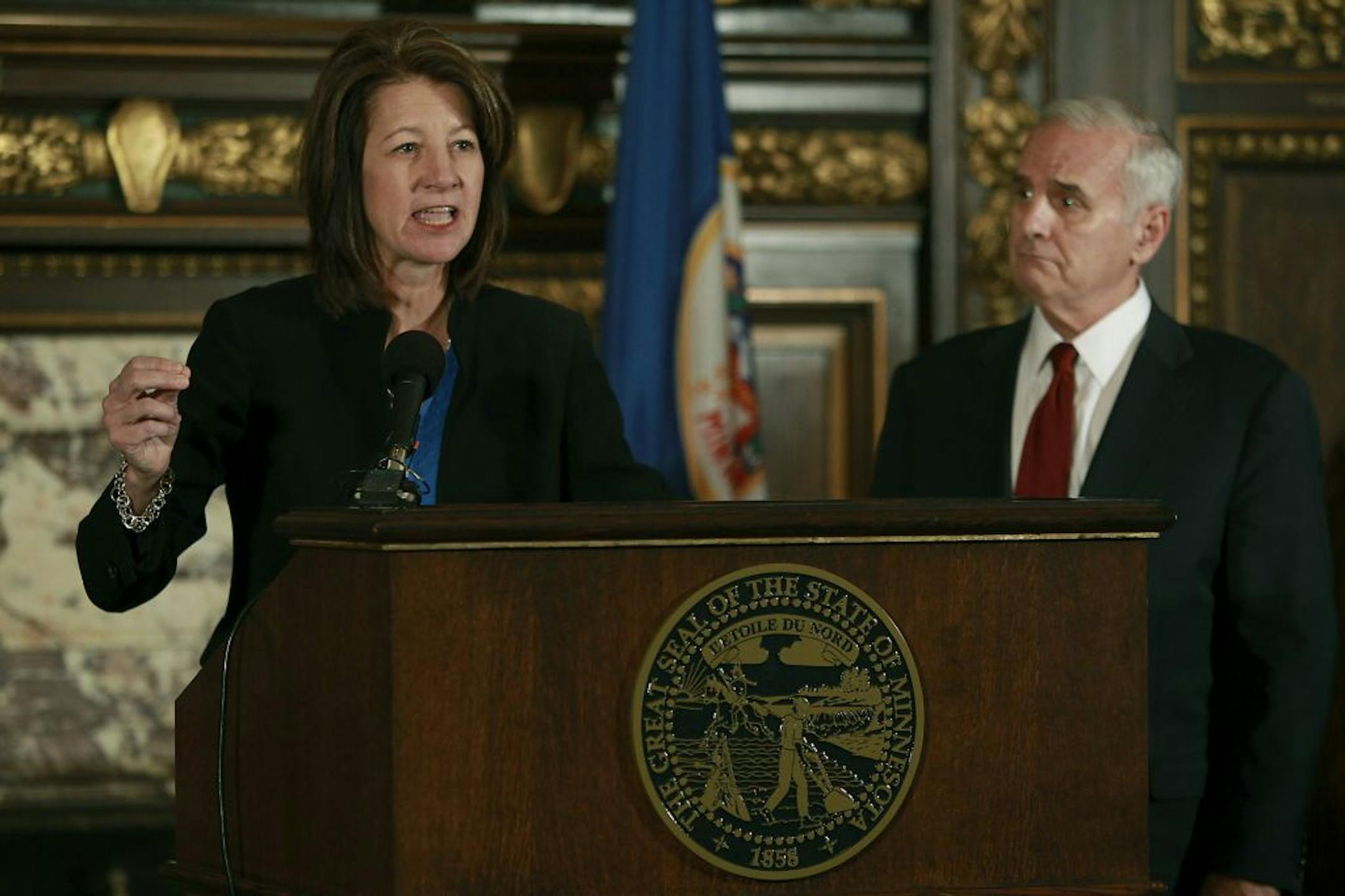
Minnesota has made admirable strides recently to drive a harder bargain with the health plans, thanks to aggressive reforms pushed by Gov. Mark Dayton's administration and Republican state lawmakers. "In the 2012-2013 biennial budget, bipartisan legislative reforms capped the growth in managed care contracts and in 2013, the Department was able to negotiate contracts significantly below these caps,'' said Human Services Commissioner Lucinda Jesson in a March 1 memo. "These reforms, along with others, have saved taxpayers over a billion dollars compared to pre-reform projections.''
Jesson and the Dayton administration also have recouped $73 million from state plans after an out-of-the-blue $30 million voluntary giveback to the state in 2011 by one of them — UCare — raised questions about the plans' earnings. The U.S. Office of Inspector General (OIG) is conducting an audit of the state Medicaid program.
Ensuring that the contracting process for this sprawling, expensive program has been set right — and restoring public trust in it — requires understanding what may have gone amiss in the past. That's why the editorial board pushed for the retrospective Segal audit, which the Dayton administration ordered last summer.
Segal auditors essentially found a Medicaid contracting program that had been on autopilot during Gov. Tim Pawlenty's administration, with actuarially sound but significantly high annual rate increases ranging from 6 percent to 9 percent. The plans also made a 2.4 percent profit on $18.2 billion in premiums for two programs over the time period studied — well above the 1.4 percent average targeted level for the review period. They may have made significantly more when investment income derived from plans' reserves are factored in.


