

Uh-oh.
Just when one-party domination looked safe again in Minnesota, the St. Paul scandal that dare not speak its name has reared its ugly head. And it involves a veritable who's who of Democratic icons apparently accustomed to manipulating the legal system for political gain.
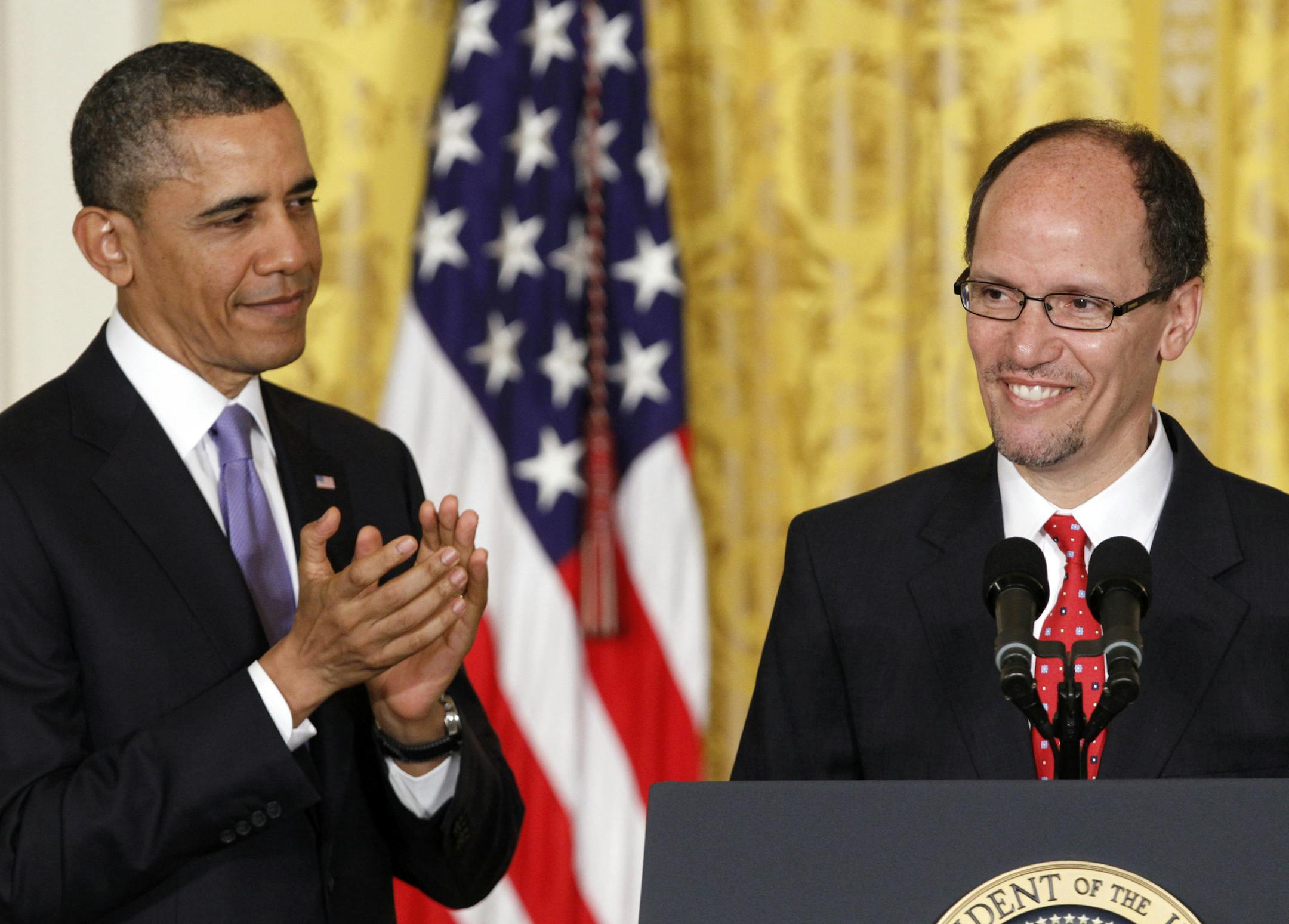
The nomination of civil-rights attorney Thomas Perez for labor secretary has raised more than a few eyebrows in the nation's capital. Perez, who perfected the art of filing lawsuits using "disparate impact" analysis in his post as assistant attorney general at the Justice Department, has been busy explaining a particularly unctuous quid pro quo with the city of St. Paul.
Just this week, U.S. Senate Democrats were forced to postpone a confirmation vote in the Health, Education and Labor Committee.
First things first. Prior to the landmark 1971 ruling in Griggs vs. Duke Power, most cases of discrimination required actual intent. That is, a business policy that is racially neutral on its face would not be prohibited. However, in Griggs, the U.S. Supreme Court found that "even where an employer is not motivated by discriminatory intent," he or she could still be held liable for damages if such a policy results in an 'unequal' impact.
The opinion, of course, ignored the fact that every rule (or law) is bound to have a disproportionate effect on someone. Consequently, one legal absurdity that followed was a federal appeals court decision overturning legislation in Washington state that denied imprisoned felons the right to vote — allegedly due to the law's "disparate impact" on minorities who were disproportionately represented in correction institutions.
The case was eventually reversed en banc, but you get the point. And so apparently did the highest court in the land. By most accounts, the justices were poised to rule for St. Paul in a pivotal case, Magner vs. Gallagher, challenging its housing inspections on the basis of statistical disparities.
According to the U.S. House Committee on Oversight and Government Reform, "Slumlords had sued the city to prevent it from enforcing its housing code on the grounds that it disproportionately decreased the amount of housing available to minorities. The City argued that the Fair Housing Act of 1968 (FHA) prohibits only intentional discrimination, not neutral practices like code enforcement that happen to impact particular groups disproportionately." Sound familiar?


