

 1:03
1:03Minnesota lawmakers kicked off their legislative session Tuesday with minimal conflict but the promise of much to come, as charged debates over taxes, local control and infrastructure spending play out against the backdrop of a high-stakes election year.
At the top of the agenda is a coming debate over the state's tax code. That began first thing Tuesday in a packed, windowless hearing room in the State Office Building, where the House Taxes Committee deliberated over how to adapt the state's tax code to the major federal tax overhaul while avoiding tax increases on large groups of Minnesotans.
In the Senate, the opening floor session got an added dose of drama after Lt. Gov. Michelle Fischbach, also the Republican president of the Senate, gaveled in the proceedings at noon.
Minutes later, Sen. Ron Latz, DFL-St. Louis Park, noted his objection to Fischbach serving in the Senate while also holding the lieutenant governor's post, which is already the subject of a legal challenge. Control of the Senate potentially rests on what ends up happening to Fischbach, but DFLers opted against trying to force the issue amid opening-day pomp.
"Today kind of feels like the first day back in school," Senate Minority Leader Tom Bakk, DFL-Cook, said shortly after Latz aired his protest. "It's not the day to pick a partisan fight."
But partisan fights loom, and not just over Fischbach or taxes. The Legislature's Republican majorities promptly resurrected one of last year's most contentious issues: the proposal known as "pre-emption," which would prohibit cities like Minneapolis, St. Paul or others from setting their own minimum wages or labor standards, such as sick-leave ordinances.
"Many of our employers across the state are finding regulatory burdens trying to keep track of all these different municipalities' regulations," said House Speaker Kurt Daudt, R-Crown. "And we want them to be able to focus on doing the job they do and their business and employing Minnesotans and let them enjoy their success."
The Legislature passed a pre-emption bill last year, but DFL Gov. Mark Dayton vetoed it. Republicans also brought back another high-profile measure that didn't advance last year, a bill that would restrict the use of luxury suites at U.S. Bank Stadium.
![Three minutes after 12 noon call of the chair Lt. Gov. Michelle Fischbach waited for the DFL Senate members to come into the Senate Chamber. ] GLEN STUBBE • glen.stubbe@startribune.com Tuesday, February 20, 2018 The 2018 legislative session convenes in St. Paul with House and Senate convening at 12 noon. Biggest possible drama is in the Senate, where uncertainty around the status of Lt. Gov. Michelle Fischbach who is trying to simultaneously hold her Senate session.](https://arc.stimg.co/startribunemedia/AABFNQL63FK5XXW6IZS7MDDM5Q.jpg?&w=1080)
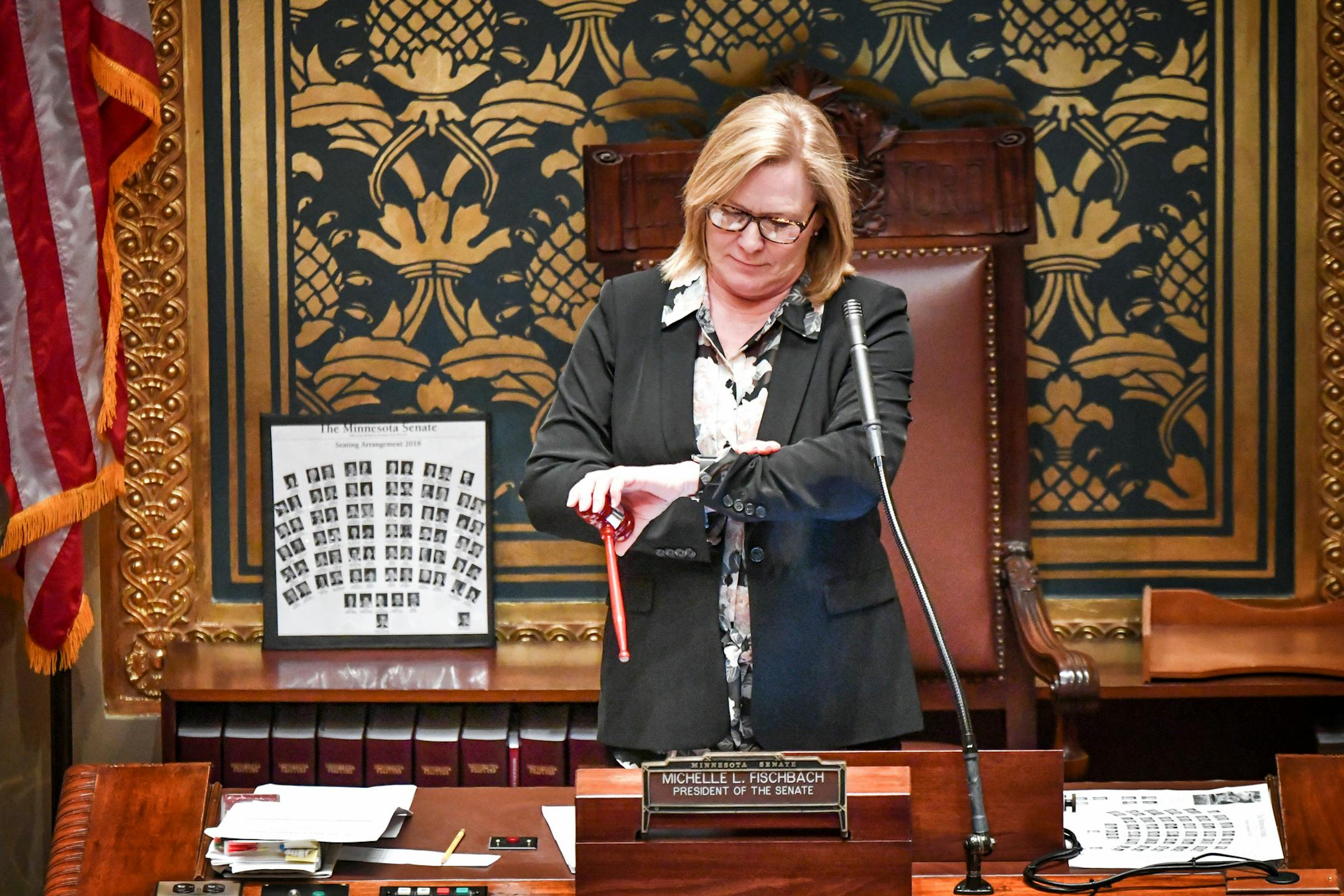
![At 12:05 Lt. Gov. Michelle Fischbach gaveled the Senate into session. Ten minutes later Senator Ron Latz, DFL-St. Louis Park, maintained that Lt. Governor Fishbach presiding over the Senate is in conflict with the state constitution. ] GLEN STUBBE • glen.stubbe@startribune.com Tuesday, February 20, 2018 The 2018 legislative session convenes in St. Paul with House and Senate convening at 12 noon. Biggest possible drama is in the Senate, where uncertainty around the status of Lt. Gov. Miche](https://arc.stimg.co/startribunemedia/S5W4MNC7EZ4RXBSF3FWUZB2HXM.jpg?&w=1080)


