

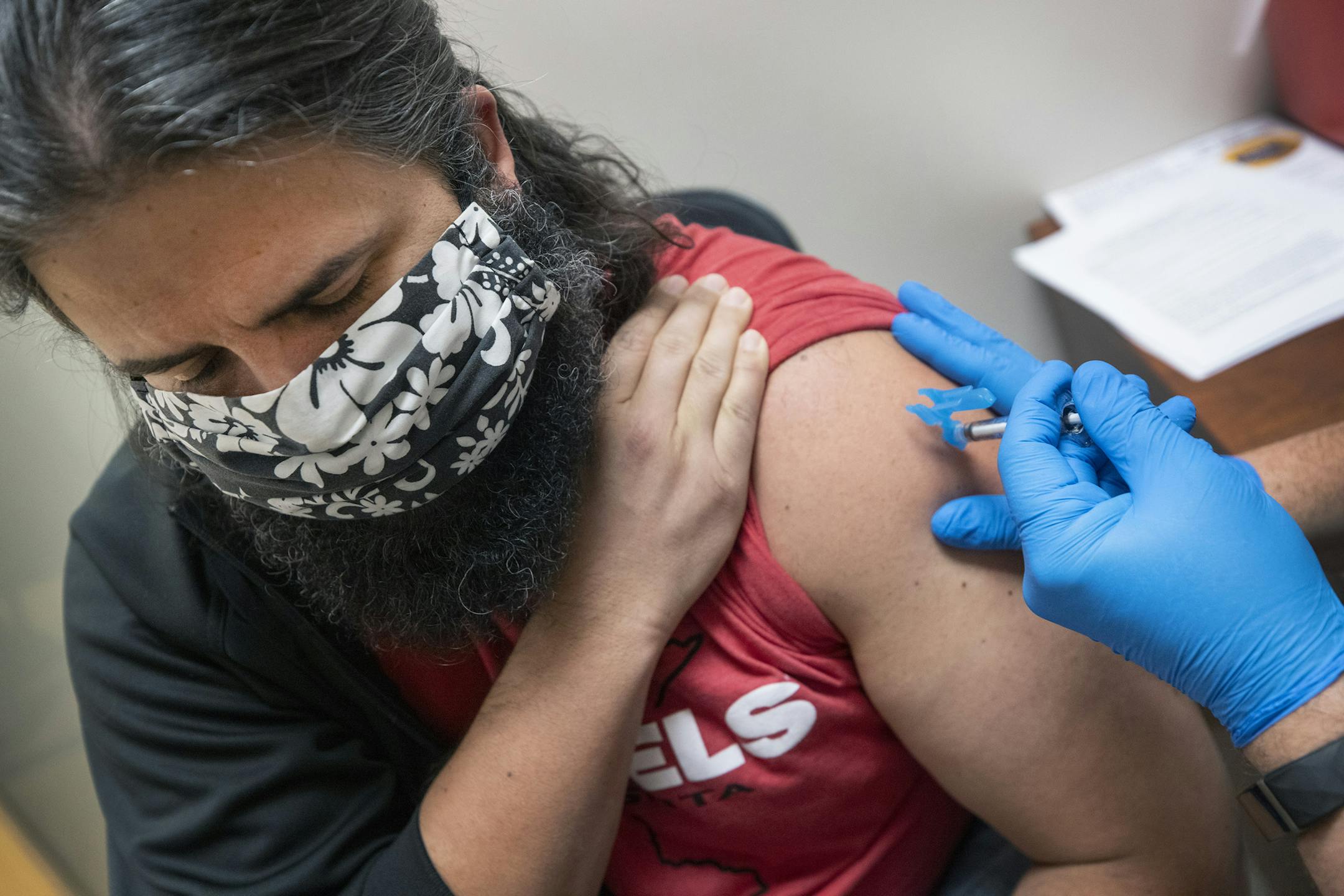
Declines in COVID-19 hospitalizations and Minnesota's reported test positivity rate offered hope Wednesday that a third pandemic wave in the state is peaking.
Both key benchmarks of pandemic activity had been steadily increasing since early March, with the positivity rate rising from 3.4% on March 2 to 7.4% on April 11 before falling back slightly to 7.3%. The 676 COVID-19 cases in Minnesota hospital inpatient beds on Tuesday also tripled the recent low of 210 on March 6. That number declined slightly from 686 on Monday.
State health and hospital officials cautioned that it is too soon to conclude that the worst of the wave is over in this pandemic — which in total has caused 7,044 COVID-19 deaths and 560,450 known infections in Minnesota. That includes 13 deaths and 1,611 infections reported Wednesday.
"Most of the models for us are showing peak at some point in these next one to two weeks with declining need for hospital beds thereafter, which has been our main pinch point," said Dr. Mark Sannes, a leader of the COVID-19 response for Bloomington-based HealthPartners and Regions Hospital in St. Paul. "So I think that there is cause for optimism in that regard. At the same time, that is all dependent upon individual behavior, 15 months into the pandemic."
State Health Commissioner Jan Malcolm urged eligible people 16 and older to seek COVID-19 vaccine, and everyone to continue the basic precautions of mask-wearing and social distancing in public. Between COVID-19 cases and all other patients, Minnesota hospitals have been as full in April as they were during the second pandemic wave in December.
"The focus on getting everybody vaccinated is absolutely critical right now," she said.
The state on Wednesday reported that more than 2.3 million people had at least received a first dose of COVID-19 vaccine and that more than 1.6 million had completed the one- or two-dose series. That means 52.7% of the eligible population has received vaccine and 37.4% have completed the series.
Vaccine providers have reported some slowdown in the filling of appointments, more so in rural areas, but said that doses aren't sitting unused.


