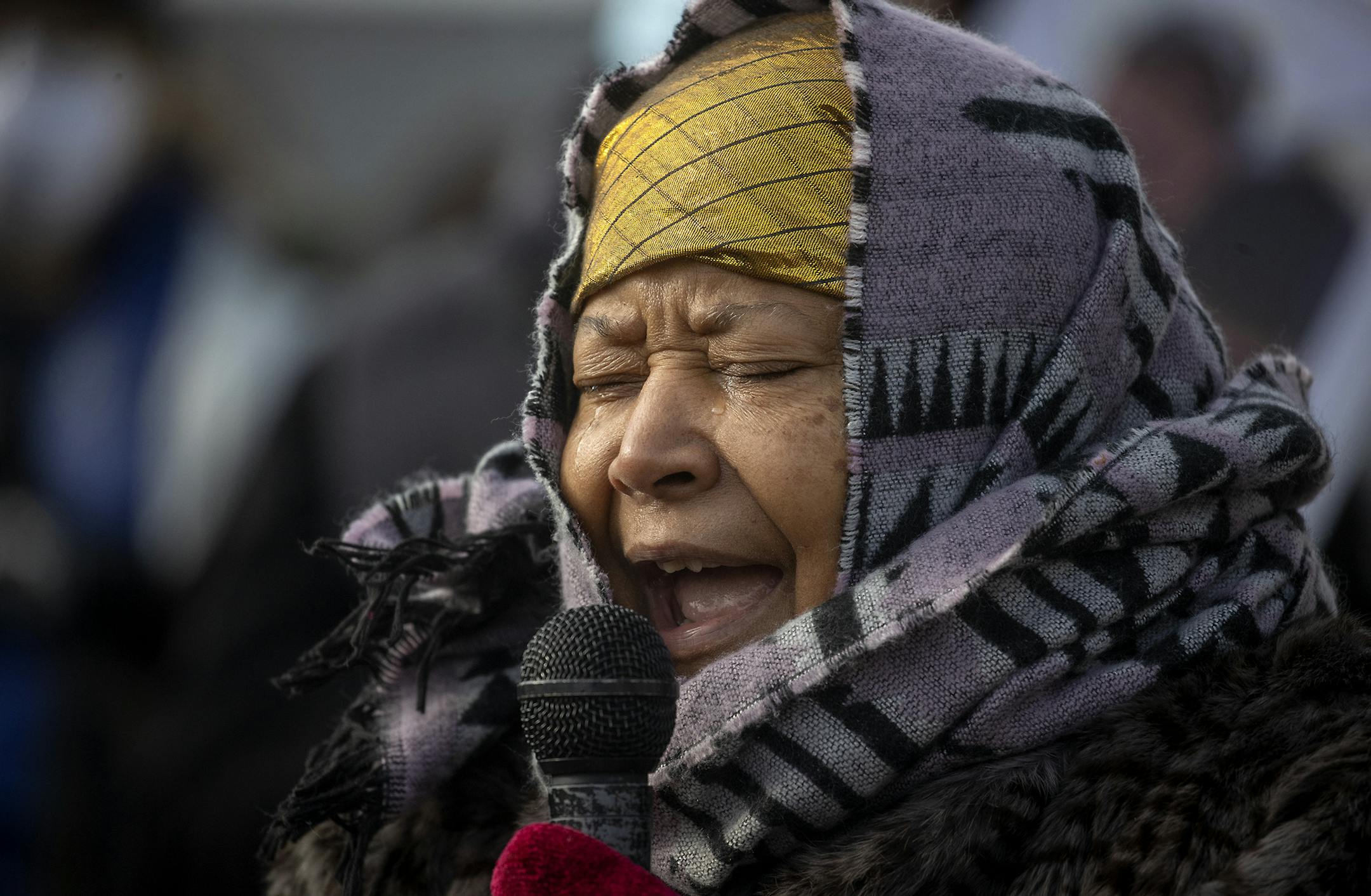
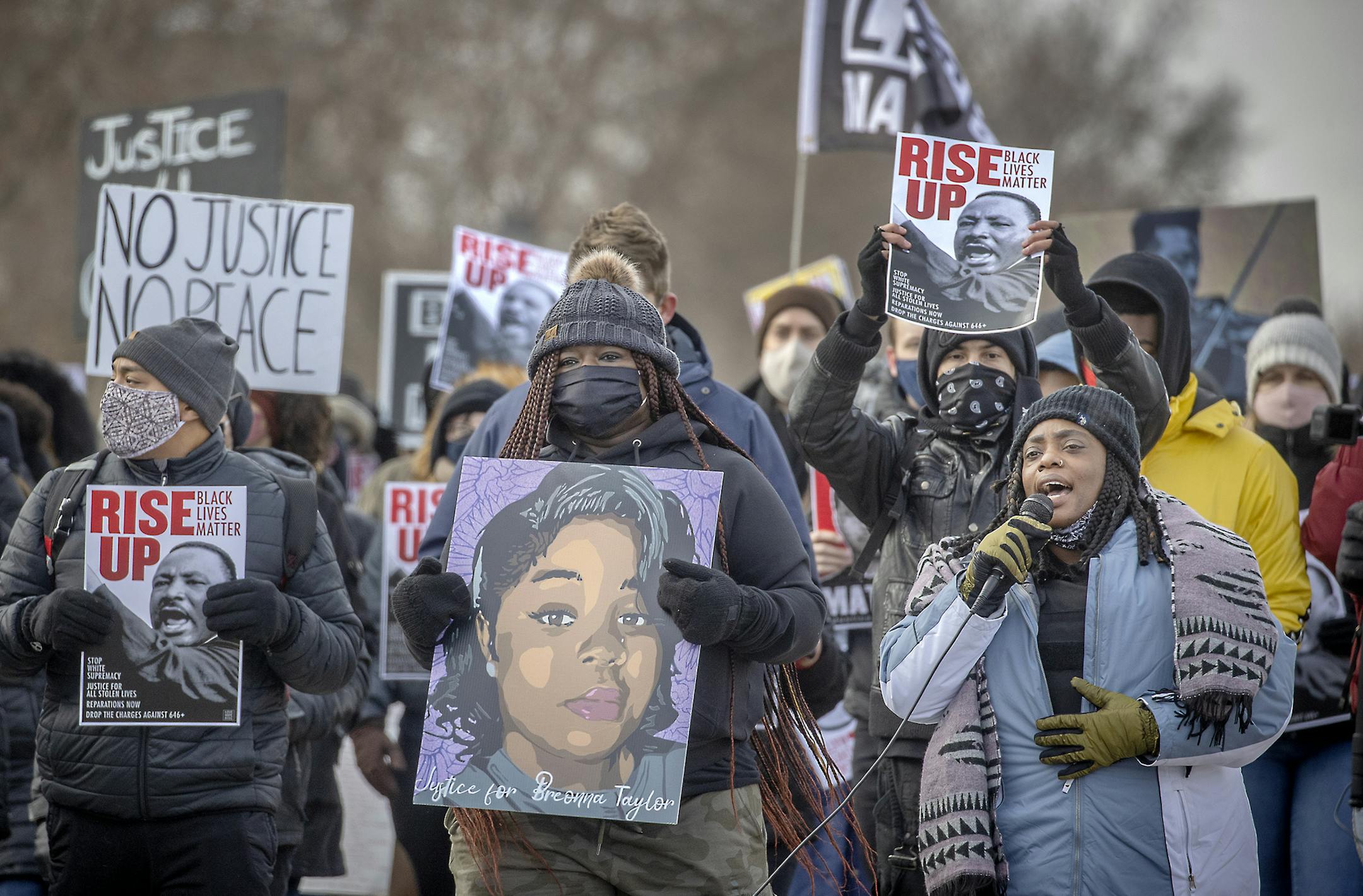
"When I say 'doctor' you say 'King'!" an activist shouted.
The crowd chanted the name as it marched up Lexington Parkway in St. Paul. Then, the activist continued, "When I say 'Black lives' you say 'matter!' "
Racial justice leaders evoked the legacy of Martin Luther King Jr. on Monday as they linked his civil rights struggles of the 1950s and 1960s to the modern movement for Black lives. On the first King holiday since the police killing of George Floyd ignited a global reckoning about racism and police brutality, organizers, politicians and business leaders reflected on the work left to be done almost 53 years after King was assassinated in Memphis.
"We cannot rest because as Dr. King said, 'Injustice anywhere is a threat to justice everywhere,' " said Chris Majors, a director of food safety and quality at General Mills.
He chaired the 31st annual Dr. Martin Luther King Holiday Breakfast, an event organized by General Mills and the United Negro College Fund, held virtually this year under the theme "Our Rising Voices: A Call for Bold Social Action."
Among the speakers was Bernice King, who was 5 when her father, Martin Luther King Jr., was killed.
She said she hoped the pandemic would bring about what her father called for in his book "Where Do We Go From Here?" — a revolution of values and a reordering of priorities toward people and away from materialism. Bernice King called for educating people to adopt a "nonviolent way of living."
"You don't attack people," she said. "You don't destroy people. You stay focused on the issue. ... At the end off the day, you're trying to find a win-win pathway and win people over instead of win over them."