

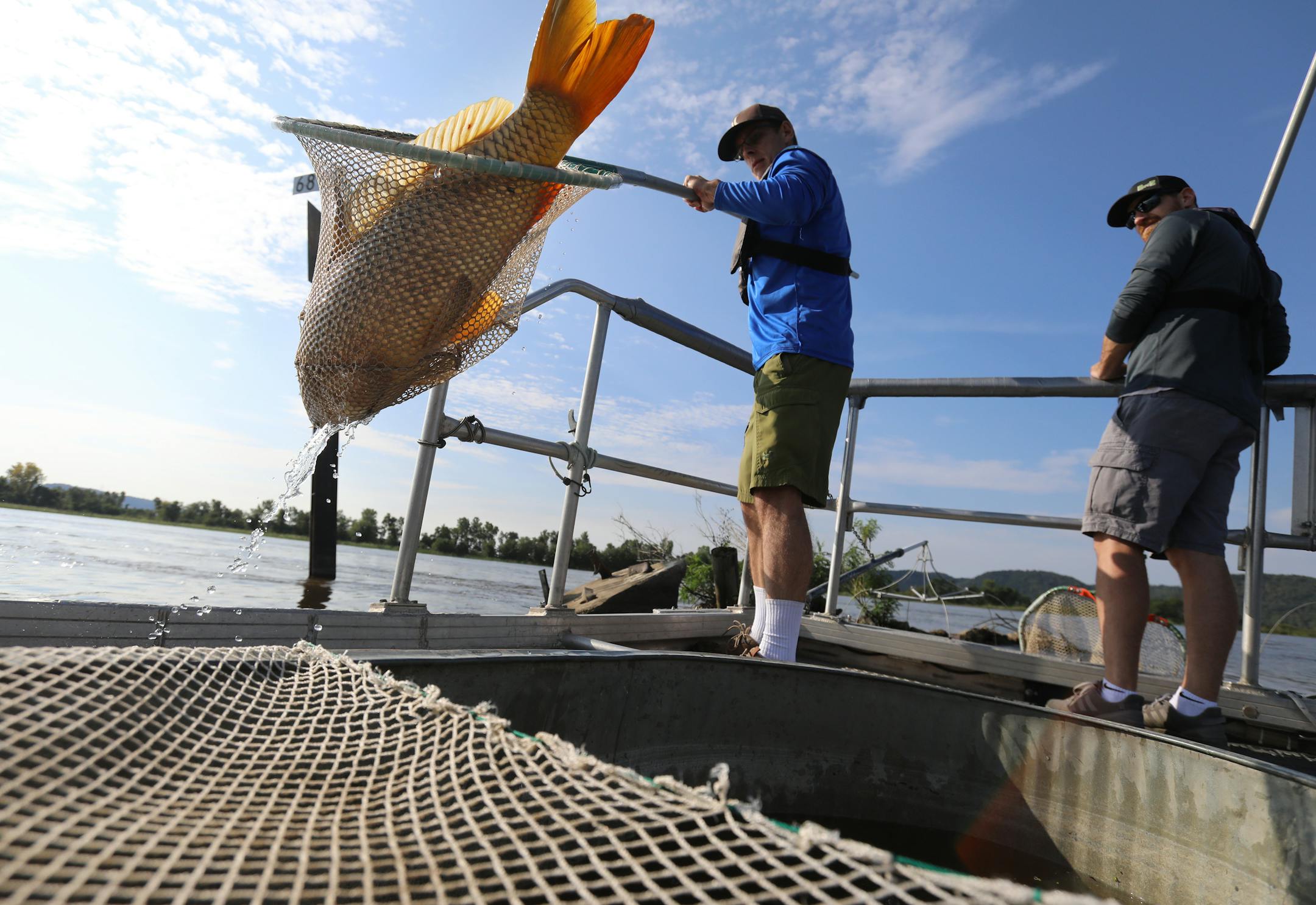
A bipartisan group of lawmakers wants to ask voters to extend the life of a lottery-funded environmental program that has paid for fighting invasive species, protecting Minnesota waters and restoring habitat. But they may have to overcome opposition from other legislators who want to use that money to pay for wastewater treatment upgrades and other infrastructure.
A constitutional amendment that requires the Legislature to use at least 40% of money raised from lottery ticket sales on the environmental fund expires in 2024.
State Senators Carrie Ruud, R-Breezy Point, and Foung Hawj, DFL-St. Paul, would ask voters to extend that constitutional mandate to 2050. Their proposal would also increase the fund's cut to 50% of lottery revenue — providing an additional estimated $12 million a year. It would also prohibit lawmakers from using any of the money to build or upgrade wastewater treatment plants, a contentious point in recent years that has delayed and threatened the spending.
"This is such a jewel, a gem," Ruud said. "It attracts people from all over the country to come because they know we have these research dollars."
Since 77% of Minnesota voters approved the creation of the fund in 1988, it has raised about $700 million for a wide swath of programs and research. It's been used to create research centers housed at the University of Minnesota to combat invasive carp, zebra mussels, buckthorn, weeds and other pests. The money helped start a prion research center to contain the spread of chronic wasting disease in the state's deer. It's helped restore hiking trails and reduce pollution seeping into drinking water.
As lottery and scratch-off ticket sales have grown to record highs over the last decade, so too has the environmental trust fund. It now gives between $65 million and $70 million each year to about 80 research and restoration projects.
The Senate proposal would also give the roughly $10 million in lottery winnings each year that goes unclaimed and uncollected by ticket buyers to the environmental fund. The total changes would boost the fund to about $92 million a year.
The environmental fund has long enjoyed bipartisan support. But how to spend it has often been a divisive question. In 2018, the Republican-controlled Legislature and former Gov. Mark Dayton agreed on a budget that would have used money from the fund to pay for wastewater treatment upgrades and hazardous waste cleanup. Eight environmental groups sued, saying it was a misuse. Gov. Tim Walz and lawmakers reached a deal in 2019, restoring the money to the trust fund.


