

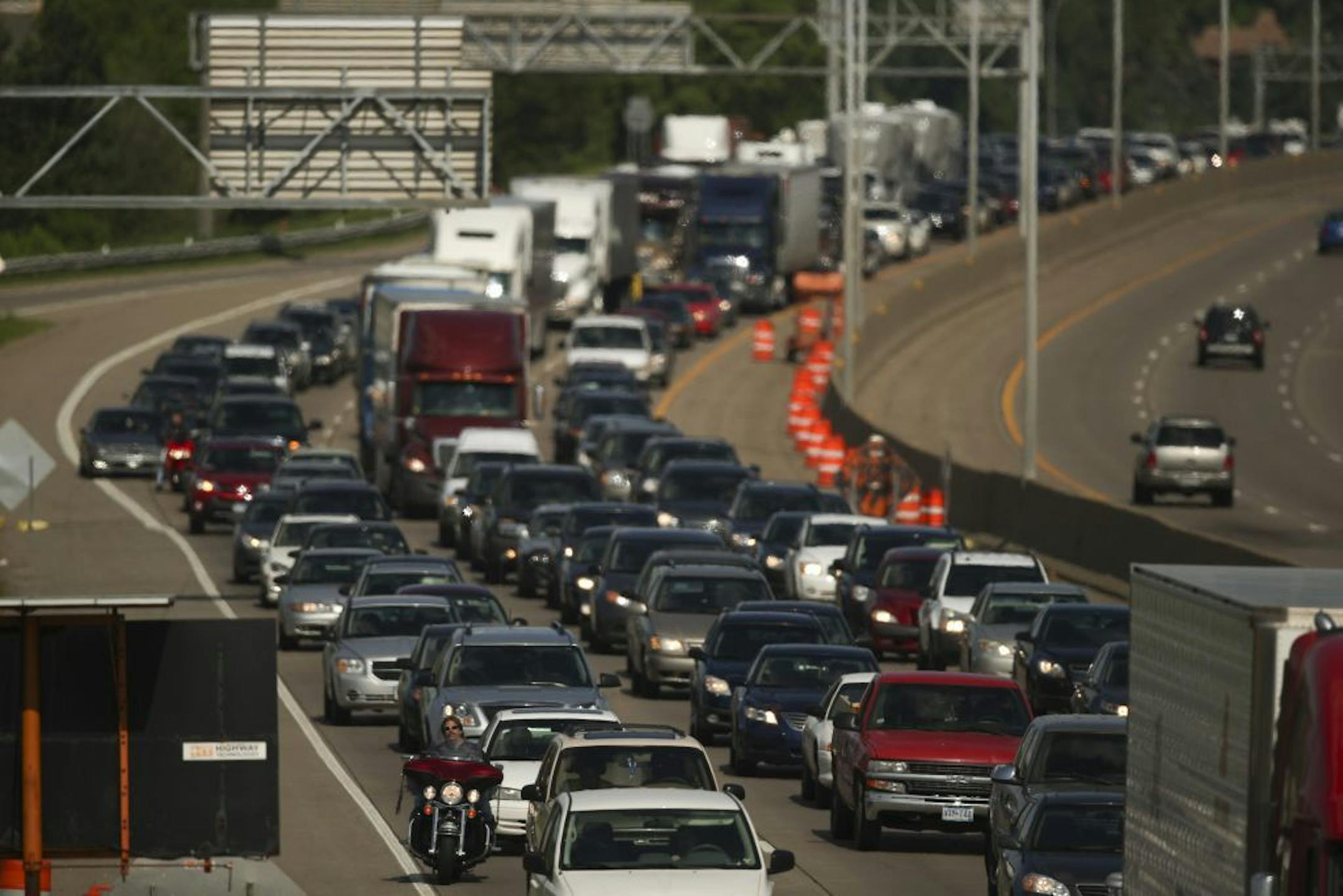
ST. PAUL, Minn. — If Minnesota lawmakers can come up with the green, drivers will be seeing many more orange cones in years to come.
When Gov. Mark Dayton and the Legislature return to work next month, few issues will be more central and more vexing than the search for the first substantial transportation funding plan since 2008. That year it took a veto override to enact a gas-tax increase, a quarter-cent metropolitan area sales tax bump and other fee hikes to pay for new or refurbished roads, bridges and mass transit projects.
Not even a decade later, state officials warn that buying power has diminished due to pricier materials, labor costs and land acquisition. They say they'll need to come up with at least $6 billion in the next two decades to prevent serious deterioration of existing roads and to add new options in places with congestion or safety concerns. And with population growth, especially around big cities, supporters of commuter trains and dedicated bus routes argue it would be a mistake to leave transit behind.
Margaret Donahoe, co-chair of the Move MN coalition advocating for a large-scale funding package, said pledges of a transportation fix came from both political parties during the just-finished campaign and "there will be pressure" on lawmakers to deliver. The group of road builders, transit backers, labor unions, businesses and local officials will put its own ideas on the table in January.
Lawmakers have talked up transportation before only to settle on temporary patches even when Democrats had complete statehouse control. With power split between Democrats and Republicans, it's natural to wonder about chances for a deal this session.
But Senate Transportation and Public Safety Committee Chairman Scott Dibble, a Minneapolis Democrat, is optimistic.
"It takes a number of years to build the case and to build the political will," Dibble said. "It just feels like all the work over the past two years has brought us to the point where we have a real likelihood and prospect of passage."
He'll be at the debate's forefront along with Rep. Tim Kelly, the Red Wing Republican atop the House panel. The pair has a friendly relationship formed when they worked together in a group that opposed a constitutional ban on gay marriage.


