

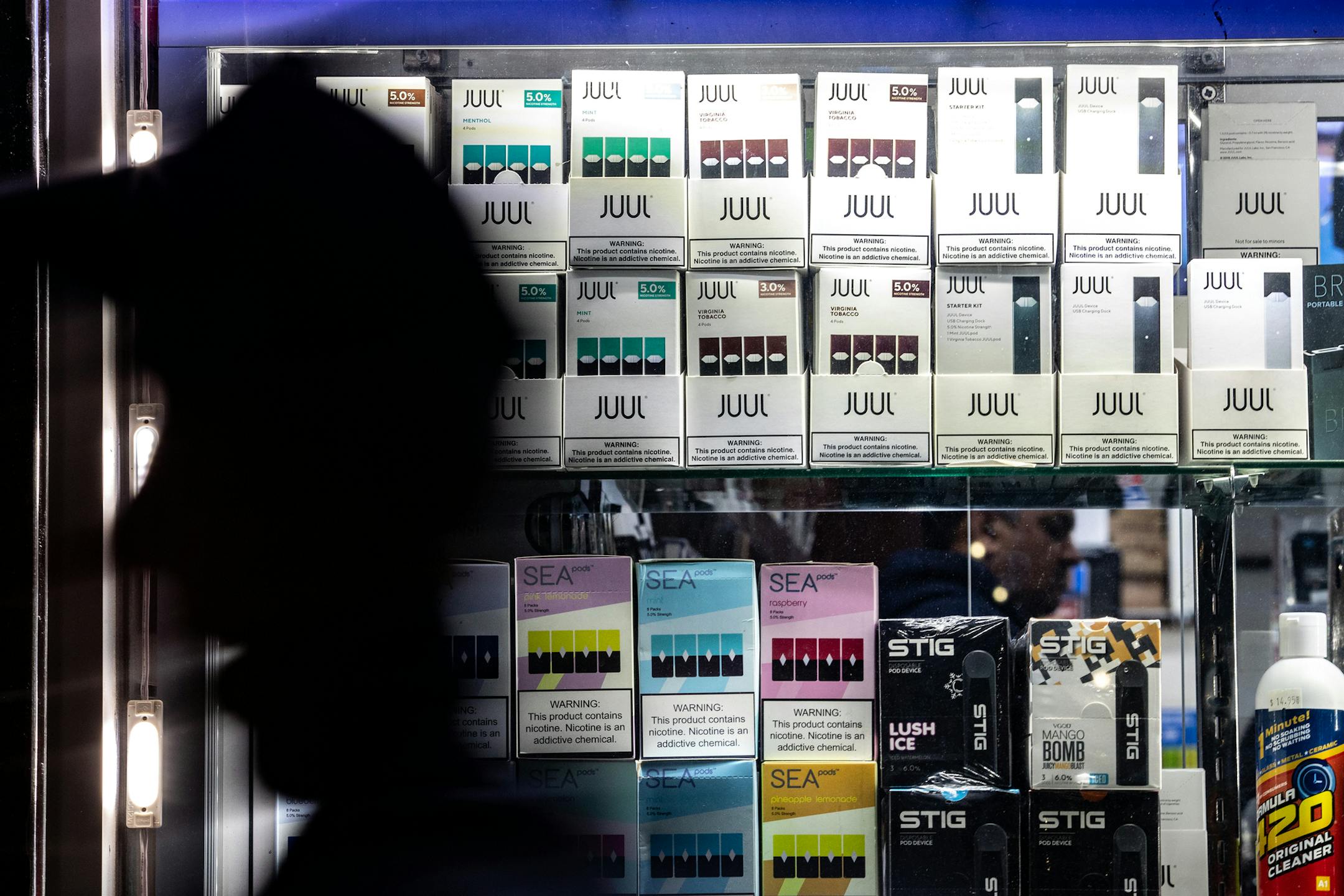
Twenty years after it brought Big Tobacco to heel, Minnesota is moving this time to take on its offshoot — an e-cigarette manufacturer that it says is using deceptive marketing and other appeals to lure underage youths into using their highly addictive product.
Attorney General Keith Ellison, backed by Gov. Tim Walz, said Wednesday that the state is suing Juul Labs, a giant in the e-cig market, for "deceptive, fraudulent and unlawful practices" that have jeopardized the health and safety of young Minnesotans.
It's a fight worth taking on, against an irresponsible actor whose highly addictive product has already eroded a decade's worth of gains this state made against underage smoking. Some may contend that vaping has a place as a way for adults to wean themselves off cigarettes. That is possible, although e-cigarettes have never been federally approved as a smoking cessation aid. However, there is still strong reason to go after Juul in particular.
Unlike other manufacturers, Juul products pack a nicotine punch that is proving exceptionally harmful to its young users. You wouldn't know from the ads, but each Juul "pod" contains an extraordinary amount of nicotine, equal to a full pack — or even two — of cigarettes. Using a special production process and candy-like flavors, Juul has found a way to mask effects that otherwise would stop someone from consuming such high concentrations of nicotine. And in the U.S., unlike the European Union, there are no federal limits on nicotine levels. The result has been young users who find themselves in the grips of a substance that has been compared to heroin for the power of its addiction.
Claire Hering, a junior at Hopkins High School, told those gathered at the news conference announcing the suit that when she started vaping — as a freshman — she was told it was safer than cigarettes. "It was so easy for me to get it," she said. Soon she was hooked. Ironically, she found she was unable to buy approved smoking cessation aids, such as patches or gum, because she was underage.
Vaping has developed almost without regulation in this country. It wasn't until a rash of severe lung injuries among vapers that there was widespread attention to the pervasiveness of vaping among high schoolers and middle-school students. In Minnesota, a recent state survey showed that one-fourth of high schoolers had vaped in the previous month, while usage rates among middle-school students had doubled.
New York and California filed lawsuits against Juul in November, and the American Medical Association has urged a sweeping nationwide ban on vaping products. The Food and Drug Administration is investigating Juul's marketing practices and recently sent the company a warning letter to stop marketing itself as a safer alternative to cigarettes.
The Minnesota lawsuit claims that Juul is responsible for "creating a public nuisance" and violating the state's consumer protection laws. The suit, which will also seek damages of an unspecified amount, seeks to bar Juul from marketing to youths and force the firm to fund cessation programs and a public education program on the dangers of youth vaping.


