

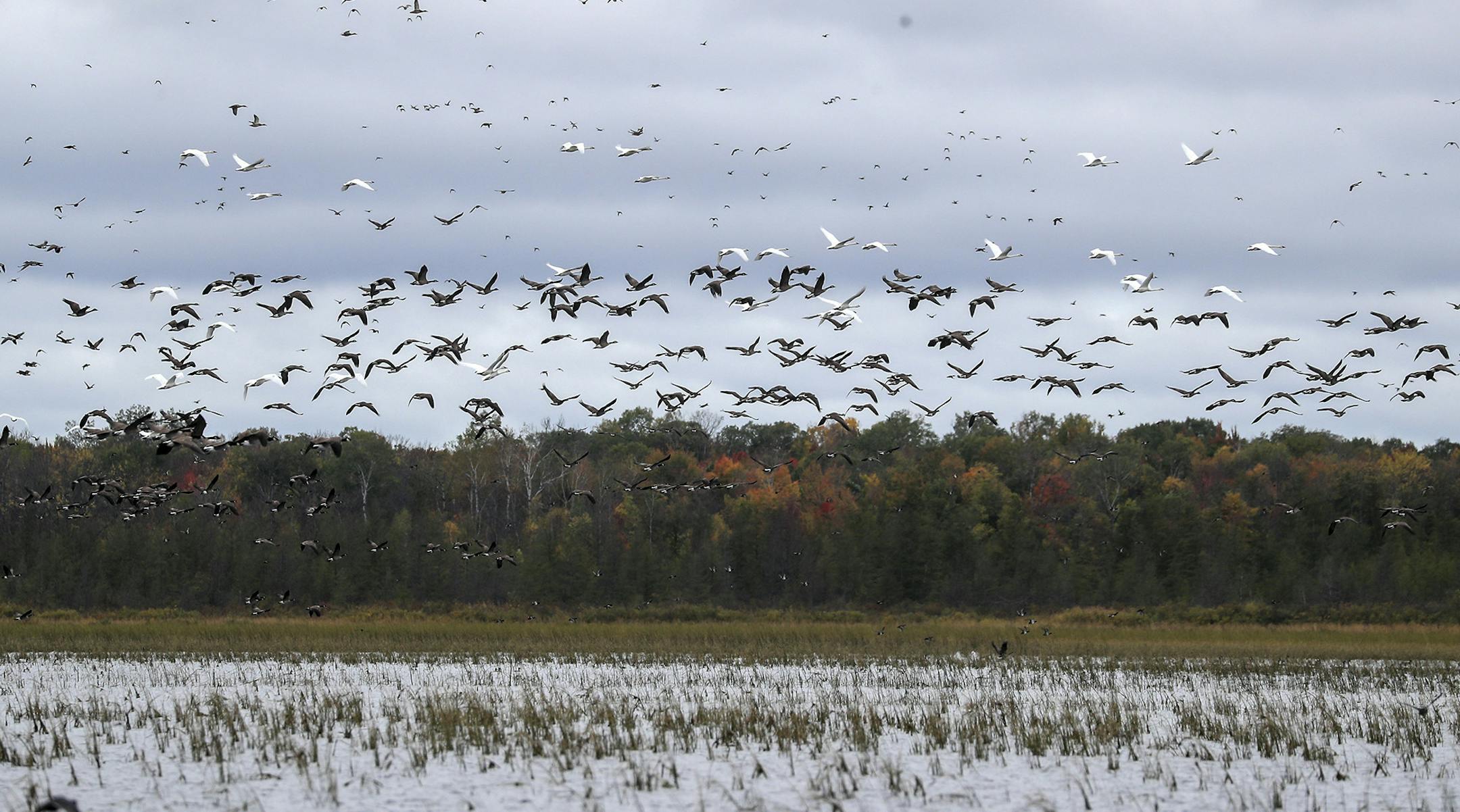
I wrote a column a few weeks back questioning waterfowl managers' spring population surveys that suggest ducks are relatively abundant. As one hard-to-believe example, given how few ducks seem to exist in Minnesota, mallards and other wildfowl counted this spring in the U.S. and Canada were 10% above the 1955-2018 population average, according to the Fish and Wildlife Service.
In my column I also advocated for a later start date to the Minnesota duck season; an extension of the 4 p.m. closing time; the elimination of Youth Waterfowl Weekend due to its early September scheduling; and an end to overwater hunting during the early goose season.
Each, in my view, would be a common-sense response to Minnesota's duck "problem." But waterfowlers who disagree with these proposals needn't worry. The Department of Natural Resources seems content to watch duck hunting swing slowly in the wind in Minnesota.
Consider: In the 1970s, the DNR licensed an average of 140,000 waterfowl hunters per year. By 2017, that number had fallen to 83,340, down 4% from 2016. Last year,, the number was 82,165 — and this year it's 79,856.
I didn't solicit responses to my column from readers. But a lot of people wrote. Below is a sample of e-mails I received.
Tom Owczarzak, Marine on St. Croix
I have hunted ducks since 1964. My first hunt was with my dad when I was 8 years old. I have never missed a Minnesota opener and have had the opportunity to hunt in Canada. The quality of hunting and the opportunity to see numerous birds in the air migrating has greatly diminished over the years.
I took a road trip by myself starting Oct. 7. I drove from the Twin Cities through North Dakota and entered Saskatchewan. I scouted the southern part of the province for three days and found, in my opinion, not a lot of birds. I then drove north about four hours east of Yorktown. Again, not much for major bird action in fields or staging lakes.


