

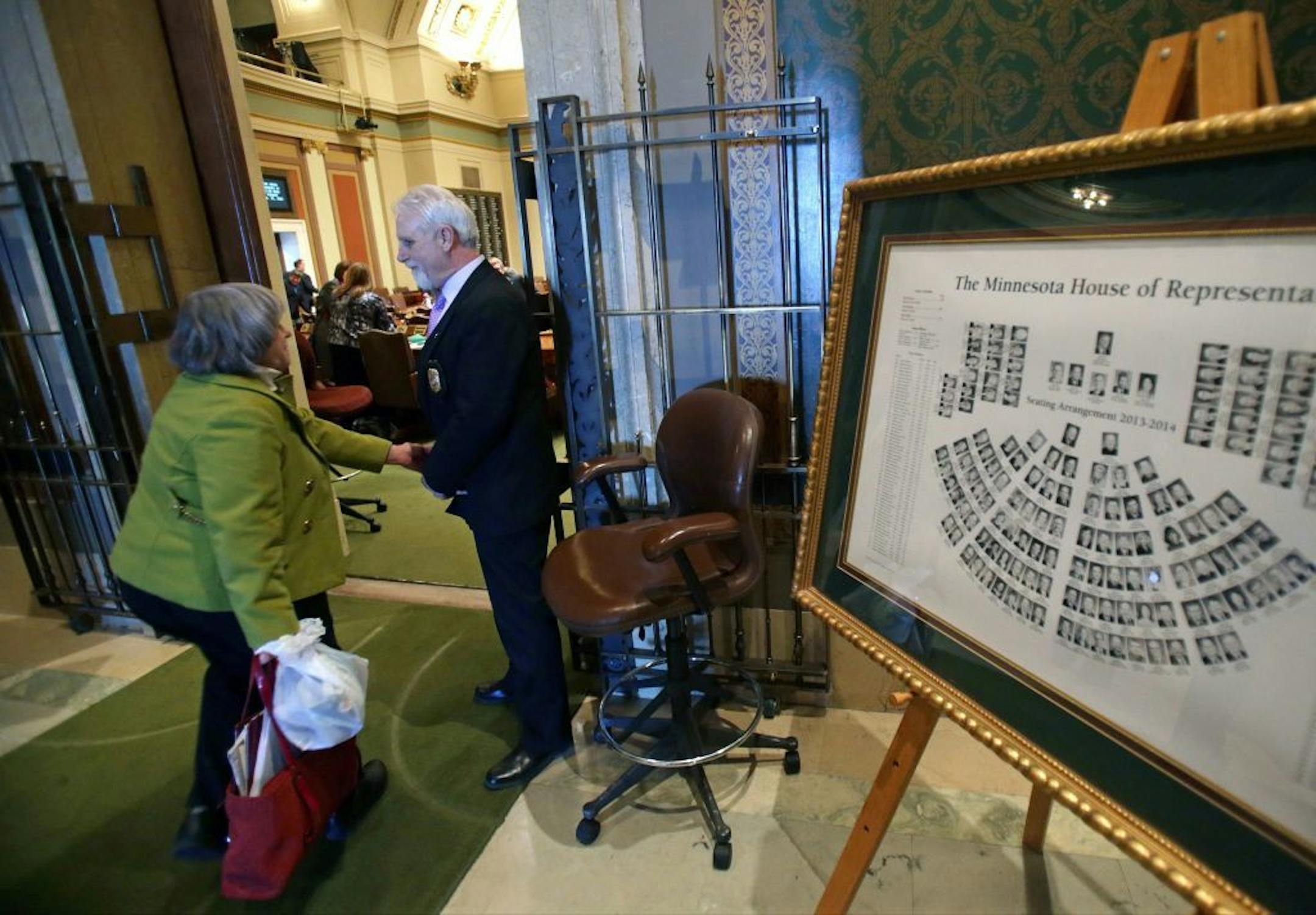
ST. PAUL, Minn. — The next chief sergeant-at-arms of the Minnesota House will have something most recent predecessors lacked: A law enforcement background.
It's a requirement in a retooled job description that also seeks someone skilled in "crisis intervention techniques." The change in scope for the top chamber doorman, enforcer of public decorum and key legislative administrator is part nod to security and part desire to move away from the patronage approach that rewarded majority-party allegiants.
Despite the muscular title, the job in Minnesota and many other places is more coordinator and hall monitor than Capitol cop. The shining moment for the Minnesota House sergeant-at-arms is announcing the entrance of dignitaries and the governor before the State of the State address.
But there can be brushes with danger: In October, the chief sergeant for the Canadian Parliament gunned down a man who stormed the building after killing a soldier outside the Ottawa seat of government.
House Speaker-designate Kurt Daudt, R-Crown, said converting the chief sergeant job to a nonpartisan post should bring more stability to a role that long shifted with the political winds. And in an age of enhanced security concern, Daudt said the new chief will have a louder voice in building safety. The sergeant's team works with Capitol Security and the State Patrol, which both have a uniformed presence.
"It's someone who can assess if there is a risk or a threat and who knows what to do if there is a threat," Daudt said, adding, "We always have to be alert. It's not just about us. It's about the public as well."
Minnesota's Capitol is among the most open in the nation. Visitors don't pass through metal detectors. They can walk within feet of legislative chamber entrances, approaching lawmakers with ease. Those with proper permits can carry firearms into the building with minimal notification.
Position qualifications call for a present or former licensed peace officer with at least 10 years of experience. Candidates with police service at a supervisory level — someone who held the rank of sergeant or higher — get preference.


