

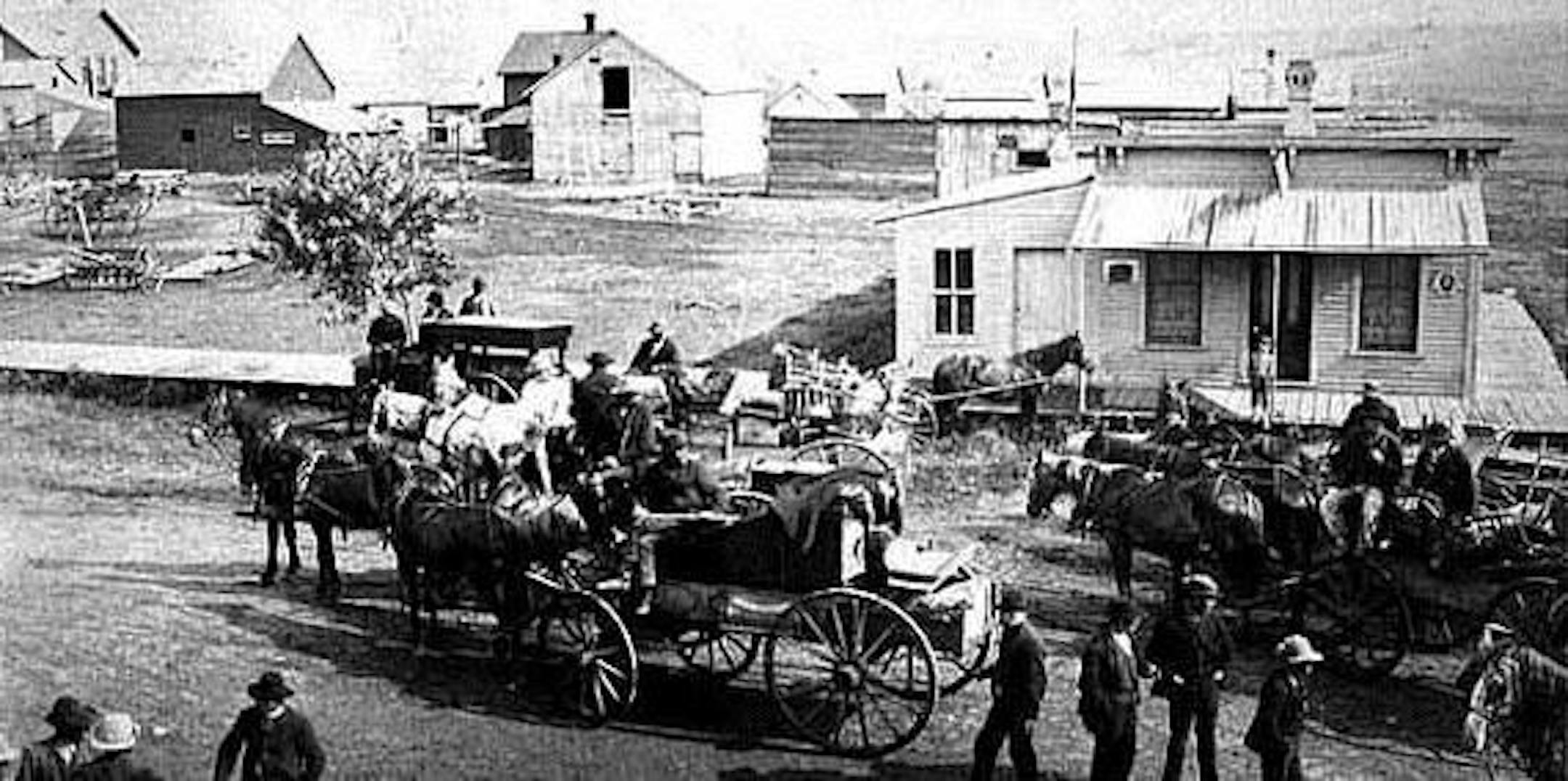
With fewer than 4,000 residents, Traverse County ranks dead last in population among Minnesota's 87 counties. But it's No. 1 in my book when it comes to the drama that played out while placing the county seat in Wheaton in the late 1880s.
They actually called it the Traverse County Seat War, although only one shot was fired and no one was hurt.
First some background: Formed by the westward bump in the state line on the South Dakota border, Traverse County was established in 1862. People, of course, had been living far longer than that along Lake Traverse.
A skeleton unearthed in a gravel pit in 1933 — dubbed Browns Valley Man by archaeologists — was estimated to be 10,000 years old. Sisseton and Wahpeton bands of the Dakota thrived in the area centuries after that.
Joseph R. Brown and his son, Samuel, both key players in the U.S.-Dakota War of 1862, became the area's first white settlers. The village that formed around Joe's fur post on the southern tip of the lake became known as Browns Valley.
Four years after Minnesota became the nation's 32nd state, 568 square miles on its western edge became a county. It was first called Breckenridge County after Vice President John C. Breckinridge (James Buchanan's running mate), despite the misspelling.
The vice president was a pro-slavery Kentuckian who was considered a traitor when he offered his services to the Confederacy — no one after whom to name a county. So Traverse, the name of the county's defining lake, became its moniker.
Despite a population of only 40 people in the 1870s, Gov. C.K. Davis named Sam Brown county commissioner, and in 1881 the Legislature formally organized the county, with Browns Valley as its seat.


