

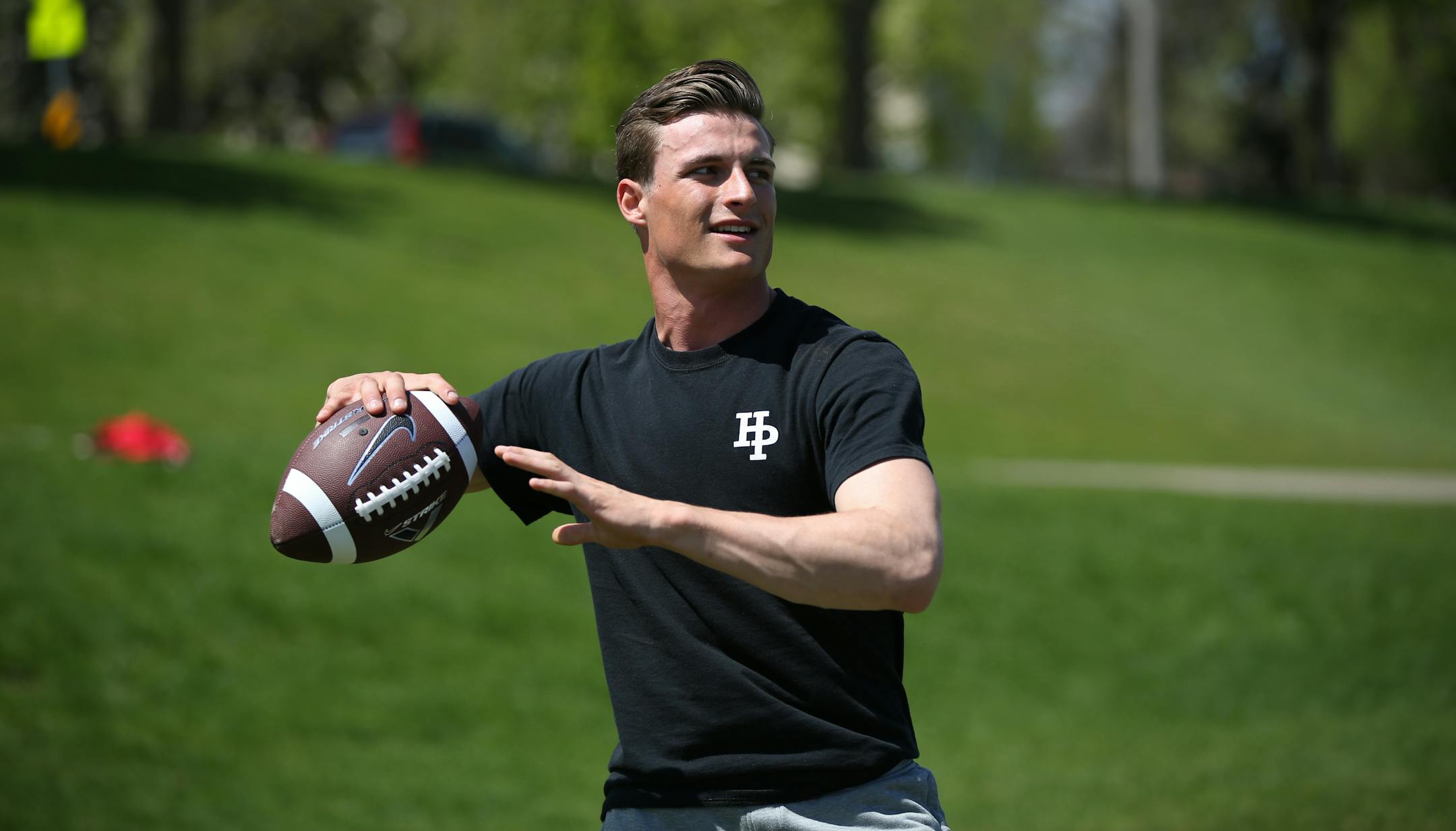
Josh Aune's dream always has been to play college football at a Division I program. The St. Paul Highland Park junior believes he has the necessary skill set — size, speed, football instincts, ball skills — to be a safety at the highest level of the collegiate game.
The problem was getting noticed. Highland Park isn't necessarily a must-stop for big-time football recruiters.
So Aune the football player became Aune the self-promoter. He put together the requisite highlight video, traveled around the state and country attending junior camps and combines, and spent huge chunks of free time honing his football skills lest they become dull.
"My spring has been incredibly hectic," said Aune, who also plays baseball and competes in track and field. "I don't have much time for a social life."
Busy or not, it's working so far. North Dakota and Northern Iowa have made offers to the 6-1, 205-pound Aune, with more expected.
"I absolutely want to play football in college, but I didn't know it would be this rigorous," he said.
Years ago, springtime for potential college football players meant going out for track and field and lifting a barbell or two, with the expectation that recruiters would find them.
No more. The showcasing of high school football players has become big business. While other sports have offseason club programs and tournaments that help gauge talent, the small sample size of a high school football season often is not enough to tell a complete story. Combines and collegiate camps have proliferated over the past decade and have become must-do stops for most potential college football players.
![Going into his senior year at Highland Park High School, Josh Aune has already received two scholarship offers to play football in college. That doesn't stop him from continuing to work out to improve in the offseason. Aune is hoping to attend the University of Minnesota. ] Shari L. Gross ï sgross@startribune.com Senior high school football players are making themselves known at camps and in other ways as they seek to improve their chances of a landing a top college football commitment. Jos](https://arc.stimg.co/startribunemedia/4VNLC7AB33NBBCSHXTKMS2N5YA.jpg?&w=1080)


