

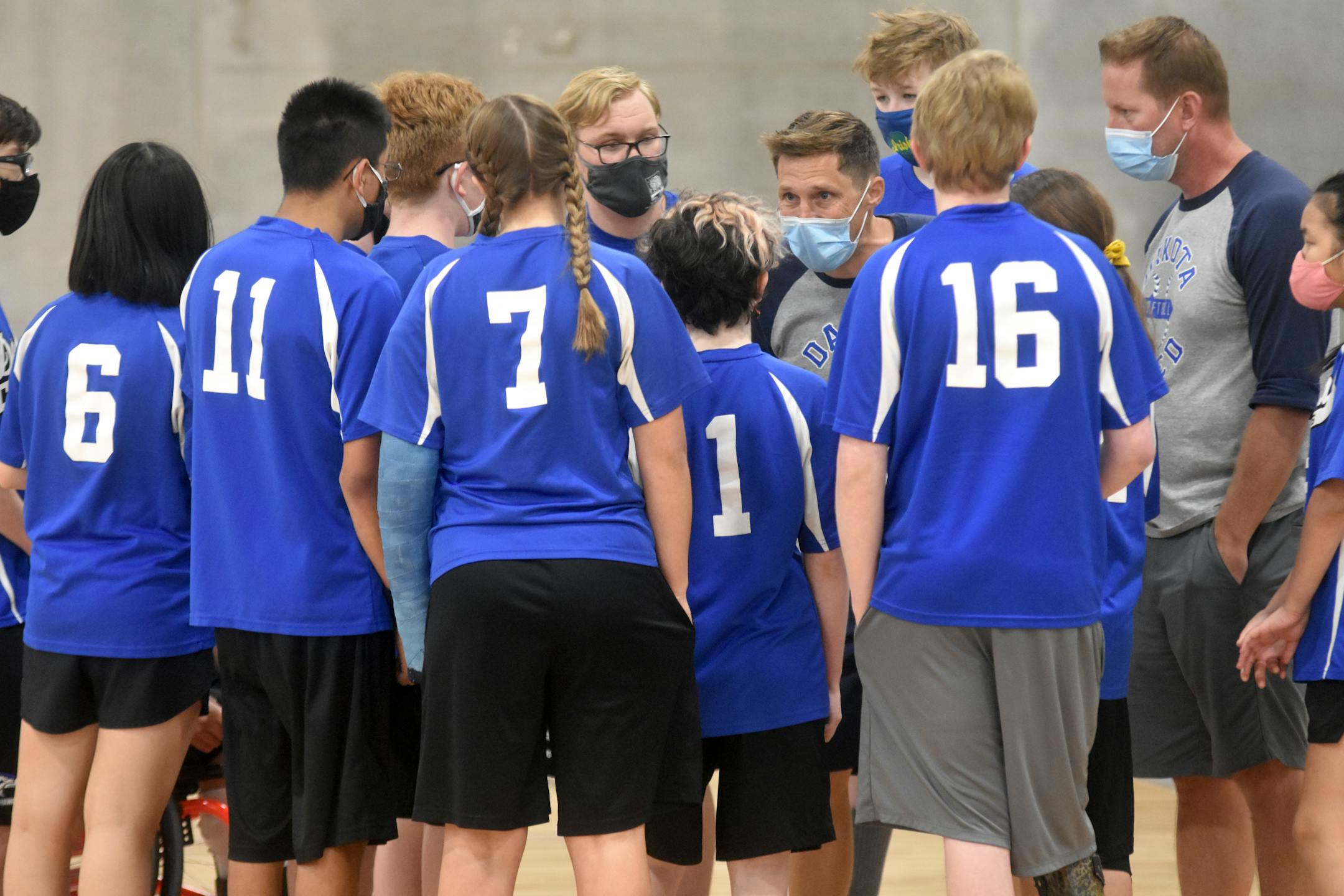
Anoka-Hennepin coach Pete Kutches savored various elements of his adapted softball team's victory earlier this month in Rochester, an emotional bookend to the lost 2020 season.
The Mustangs were out of town. Playing an opposing team. Heck, just playing a game period.
These once-common occurrences, along with state tournaments, were wiped out by the coronavirus pandemic last spring. While other sports returned to more regular competition more quickly, adapted sports leaders held extra concern for their athletes in the physically- and cognitively impaired divisions, some of whom are more vulnerable to medical complications.
Kutches wondered how the competitive layoff would affect his team.
"We were rusty because it had been a while since a lot of kids had any reps," said Kutches, the Mustangs' PI Division softball coach. "So, for us to take a two-hour trip to Rochester and win in extra innings was awesome. We celebrated the fact that we have all come a long way from last year. There was a sense that we are coming out of this."
Normalcy returned in stages this school year. Fall soccer practices were allowed. Marcus Onsum, longtime coach of Robbinsdale/Hopkins/Mound Westonka, said "When we met outside on the turf at Armstrong, there was this sense of gratitude that we got to be together."
A one-day tournament followed the winter floor hockey season. Spring brought a smaller-scale competitive softball regular season that ends Saturday without postseason play.
State tournaments, canceled just before the 2020 floor hockey event, finally returned in May with a virtual adapted bowling event. Onsum expects another step forward for adapted sports in the approaching 2021-22 school year.


