

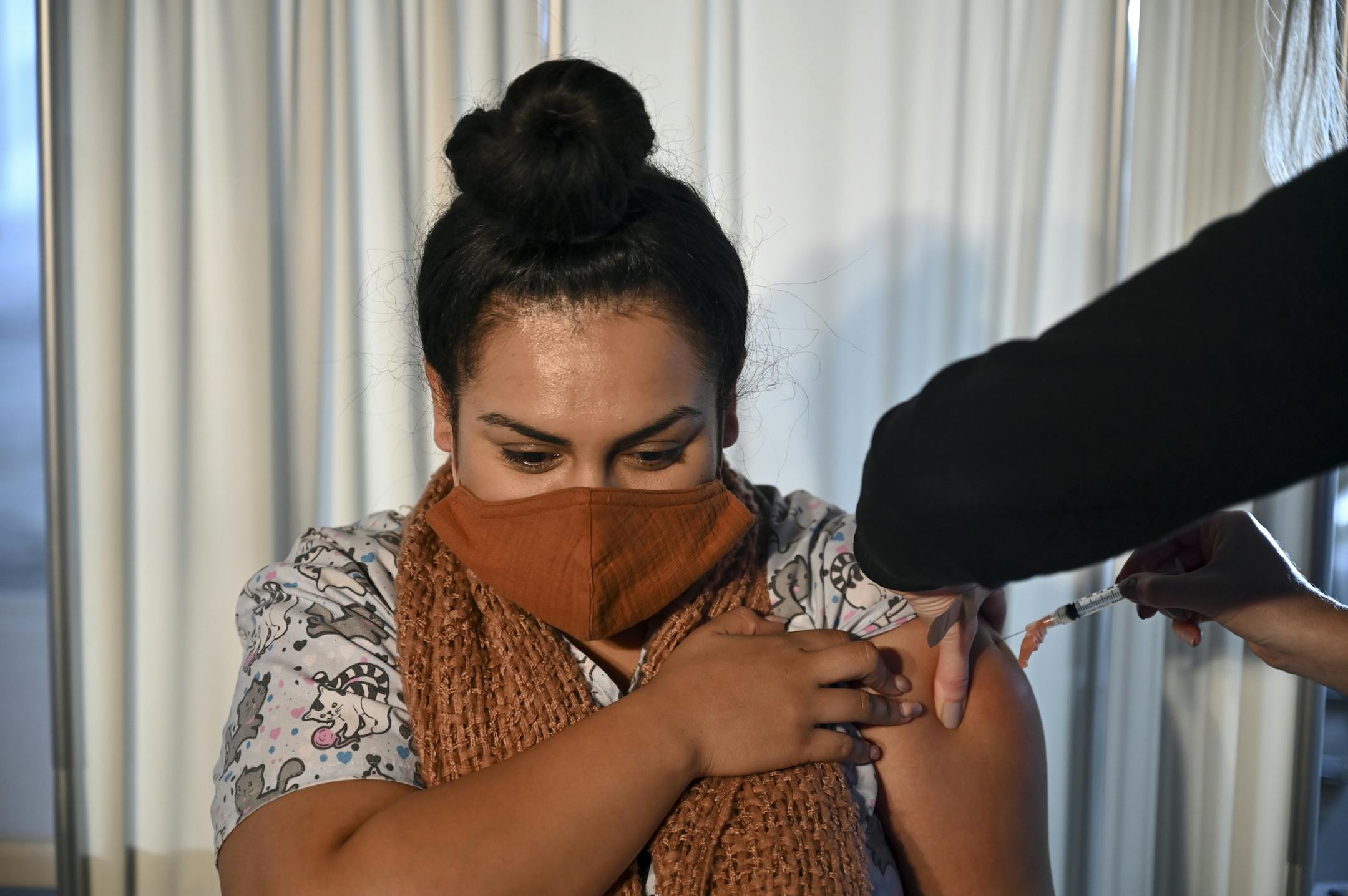
People with health conditions that make them susceptible to COVID-19 complications most likely will be contacted by their health care provider when it's their turn to get the shot.
"We'll use our electronic medical record as well the expertise of our clinicians to help identify patients," said Dr. John Misa, interim chief medical officer for the Allina Health Group.
Once 70% of the state's seniors are vaccinated, perhaps by the end of March, the state's rollout plan calls for the medically vulnerable and essential workers to become the next priority groups.
As health care providers prepare to vaccinate an estimated 1.3 million Minnesotans with qualifying health conditions, new questions were raised Monday by a federal vaccine advisory panel that some states were defining eligibility too narrowly, resulting in differing policies.
For instance, at least 35 states, including Minnesota, consider Type 2 diabetes to be a qualifying condition, while 22 states — but not Minnesota — make the vaccine available to people with Type 1 diabetes, according to the Kaiser Family Foundation.
Hospitals and clinics are already playing a role in distribution, reaching out to their patients 65 and older who are in the current priority group. But each health system is approaching it differently, with some focusing first on those at or older than 70 or 75 first.
It is unclear whether they will do the same for the underlying disease groups, which include common chronic conditions like obesity and Type 2 diabetes, but as the pool gets wider it may be difficult to pick who should go first based on severity of underlying illness.
"At some point it won't be helpful to risk stratify," Misa said. "It will be easier for us to move to broader populations."


