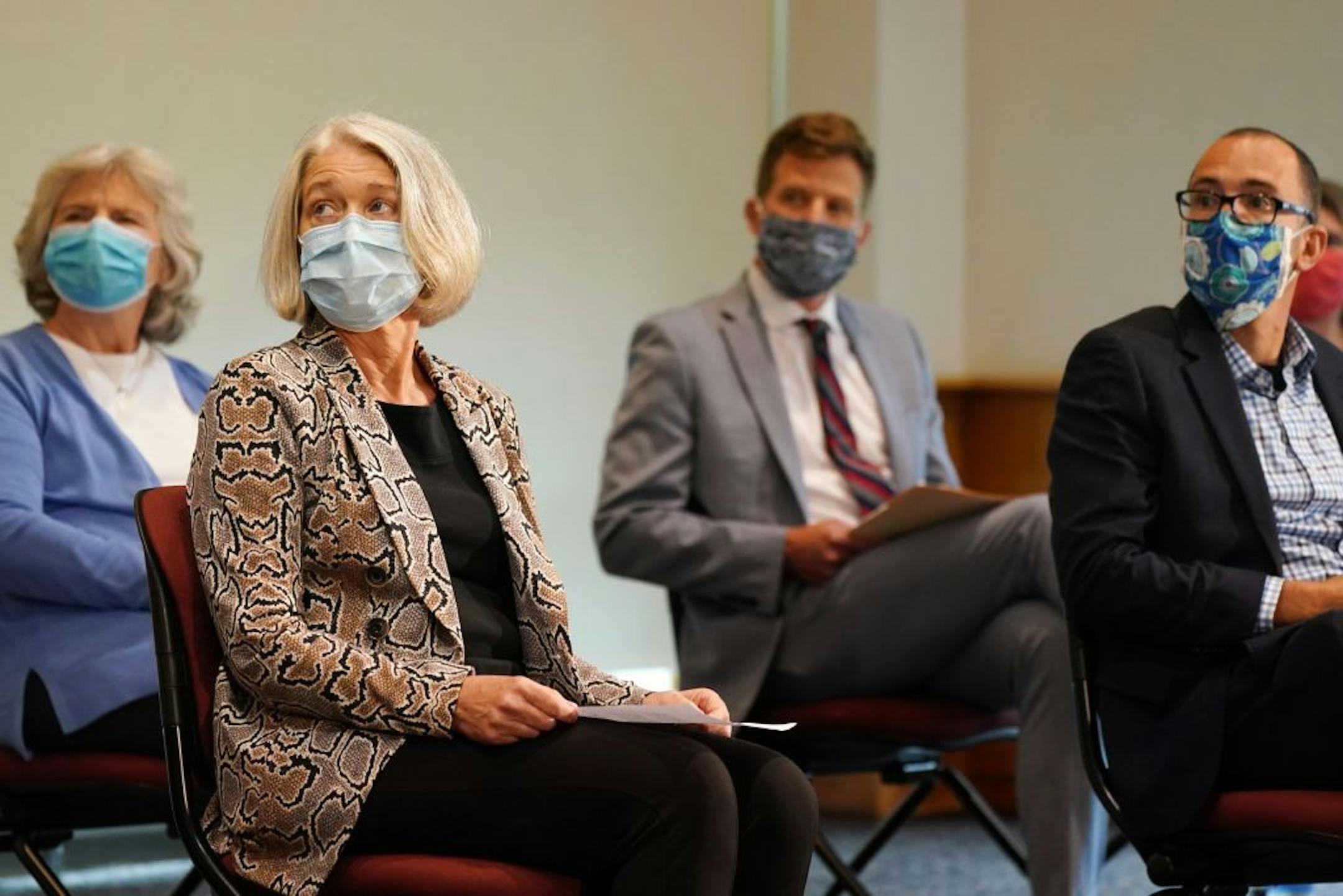
State health officials hope a sobering week of COVID-19 growth in Minnesota will shake people out of the "mitigation fatigue" that has some people ditching masks, gathering close for happy hour, and increasing their risk of viral transmission.
In the seven-day period ending Friday, the state Department of Health reported more than 8,500 new lab-confirmed infections and a tally of 91 COVID-19 deaths — a mortality figure the state hasn't seen since the end of the pandemic's first surge in June.
People have taken mask-wearing and social distancing seriously in stores and lately in bars and restaurants — where the pace of outbreaks has ebbed — but they are congregating in social gatherings and group events that are fueling viral transmission, said Kris Ehresmann, state infectious disease director.
"People are getting together for parties and happy hours and kids are hanging out," she said Saturday. "It's not the business part of life. It's the social part of life."
Tallies this past week included a single-day record of 2,297 infections reported on Friday and a single-day death total of 29 on Wednesday that was the highest since June 5. Cases are rising across Minnesota, rather than being concentrated in certain areas. The state on Friday also reported 484 beds in Minnesota hospitals being occupied by COVID-19 patients, a level not seen since early summer.
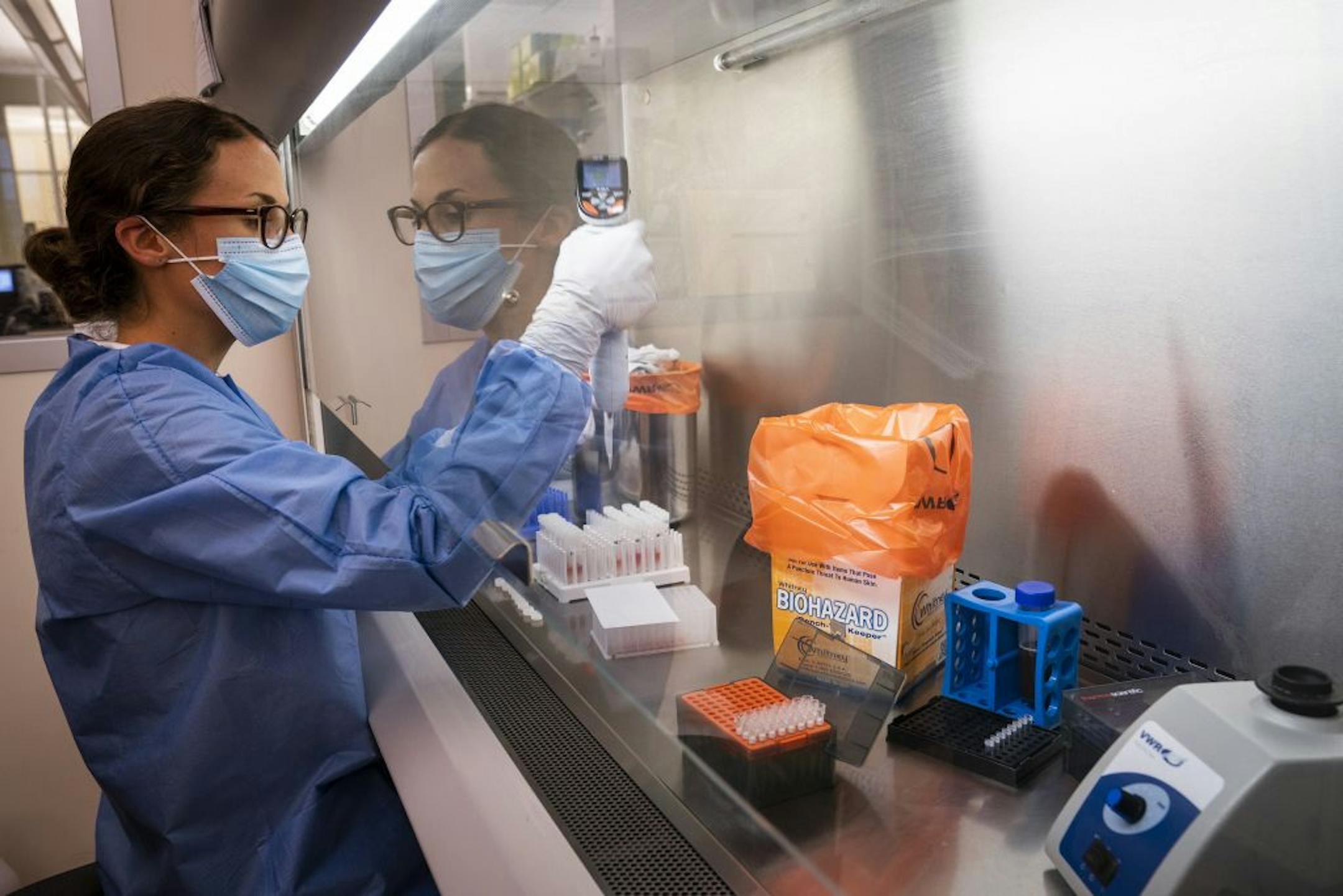
Infections have increased in lockstep with more molecular diagnostic testing; the state reported a record of more than 140,000 such tests at public and private labs in the past seven days. Numbers are expected to increase with the opening of three more free testing centers in Winona, Moorhead and Brooklyn Park, where people worried about COVID-19 can provide easier-to-donate saliva samples rather than undergo nasal or throat swabs.
While increased testing might be picking up more mild or asymptomatic cases that weren't detected earlier, health officials said the latest figures suggest an increase in viral spread.
Positivity rate still high
The key statistic is the positivity rate of tests, said Michael Osterholm, director of the University of Minnesota's Center for Infectious Disease Research and Policy.