

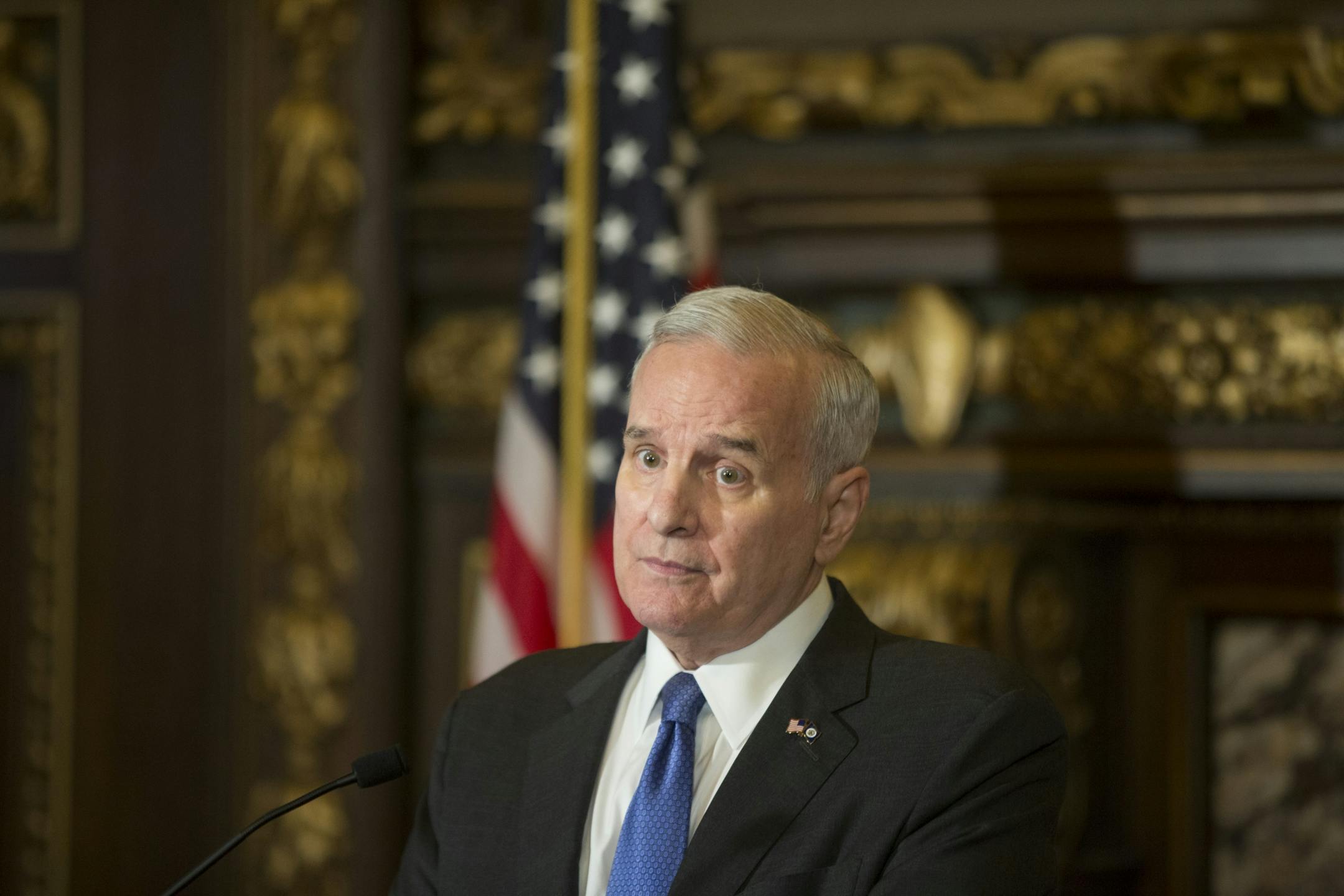
![The Minnesota State Capitol is largely quiet, Monday June 5, 2017 but major issues are still unresolved between the Republican legislature and DFL Governor. ] GLEN STUBBE ï glen.stubbe@startribune.com Monday June 5, 2017 EDS: Available for any use ORG XMIT: MIN1706051754160522 ORG XMIT: MIN1707271145096713 ORG XMIT: MIN1708111635502096](https://arc.stimg.co/startribunemedia/AA2745W27JDKP7V6J4AFM7WR6E.jpg?&w=1080)
New arguments filed Friday in the ongoing legal dispute between Gov. Mark Dayton and leaders of the Minnesota Legislature show the two sides remain deeply divided on a key question: whether the judicial branch has the right to order funding and keep other branches of government running.
Attorneys for the DFL governor and GOP legislative leaders offered up dueling arguments in response to an order from the Minnesota Supreme Court last week. While the state's high court weighed in on some of the questions raised by Dayton's veto of funding for the state House and Senate, it asked for more information before making a final ruling.
Among the requests were legal opinions from both sides on whether the court could order at least minimal levels of funding to keep the Legislature in business, should Dayton's veto stand.
The governor's response, in short: yes.
The Legislature's: no.
In a 23-page memo, Dayton's attorneys — led by retired Minnesota Supreme Court Justice Sam Hanson — argue that the state's courts have been a backstop for emergency funding in the past and that they can be again in this case. It notes that the court system ordered funding for itself in 2011 and 2001, when the Legislature failed to approve its budget. It did the same in 2011 for the legislative branch, amid a government shutdown.
"Where there is a conflict between a lack of funds and the constitutional rights of the people, the latter wins," the memo reads. "The Minnesota Constitution was drafted to effectuate the operation of government, and it empowers the Judiciary to order funding to achieve that end."
But in their own lengthy response, the Legislature's attorneys — led by former federal prosecutor Douglas Kelley — have a very different read on the question before the Supreme Court. They argue that the emergency funding decisions of the recent past were not constitutional. As a result, they say upholding Dayton's veto would effectively do away with the Legislature, because it would have no options to secure funding to pay 201 legislators and several hundred employees.
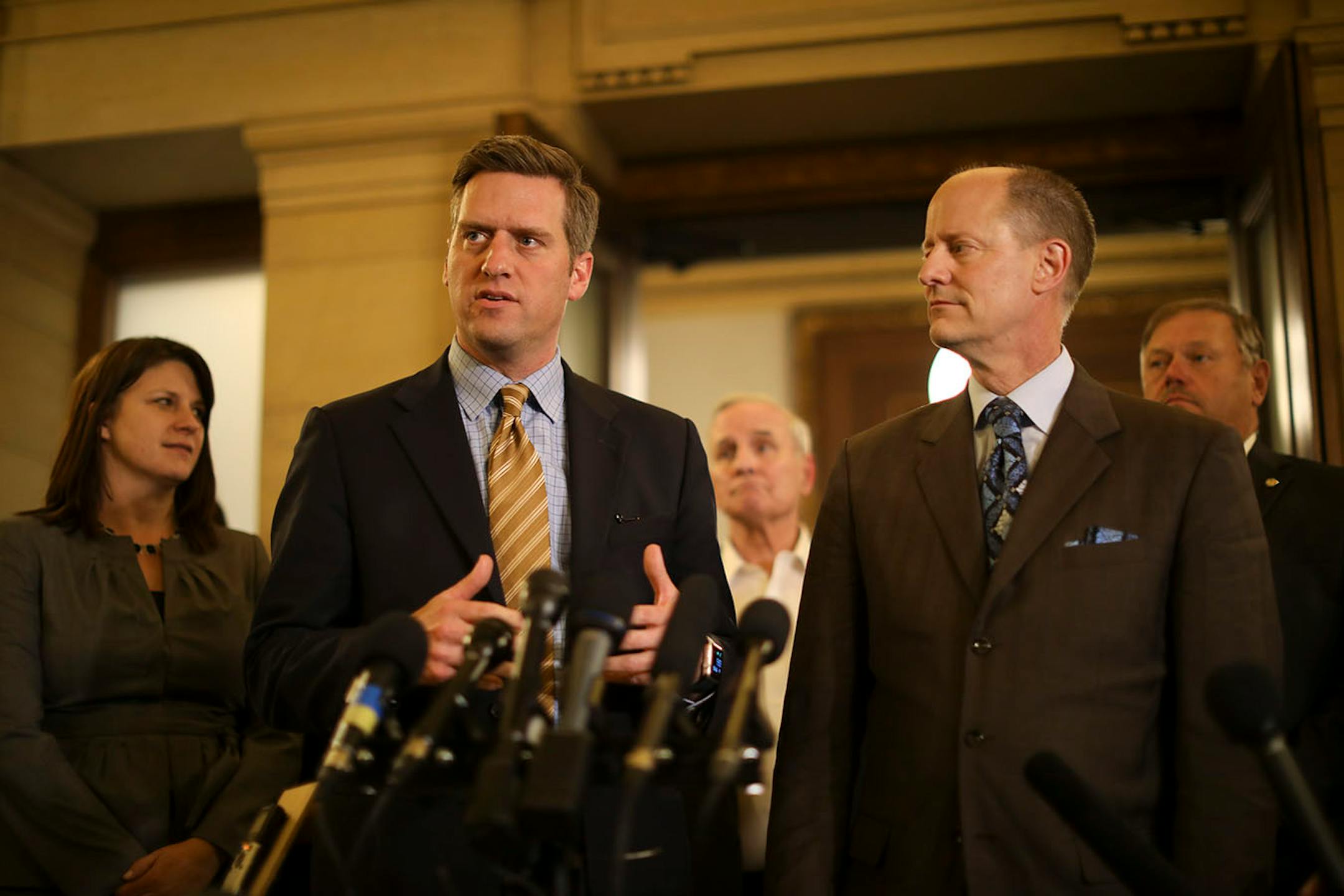
![Sam Hanson, the lawyer representing Gov. Mark Dayton, delivers his oral arguments before the Minnesota Supreme Court. ] LEILA NAVIDI ï leila.navidi@startribune.com BACKGROUND INFORMATION: The Minnesota Supreme Court hears oral arguments at the Capitol in St. Paul on Monday, August 28, 2017 in the appeals case after Gov. Mark Daytonís attempt to eliminate funding for the Minnesota Legislature resulting in the Legislature suing the Governor.](https://arc.stimg.co/startribunemedia/T6IVR4YI357QWFZLLU5CF7APFQ.jpg?&w=1080)


