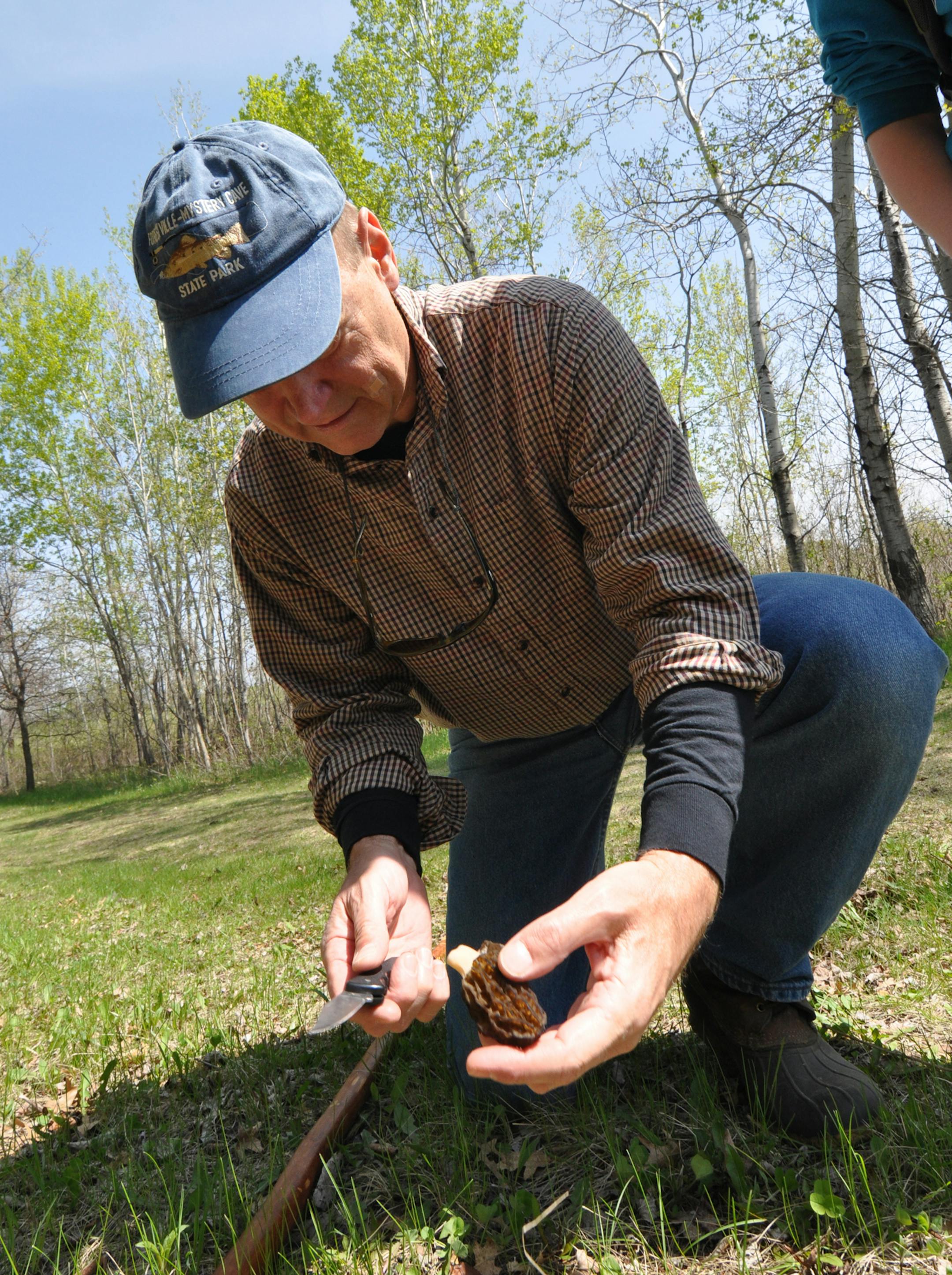
There's plenty of folk wisdom about when to start hunting morels. They are said to appear when the leaves on lilacs are just starting to bloom or when oak leaves are the size of a squirrel's ear.
But according to retired naturalist Dan Neubauer, of Apple Valley, who has been logging data on morels for the past 40 years, just when you think you've got it figured out, "nature has a way of proving you wrong."
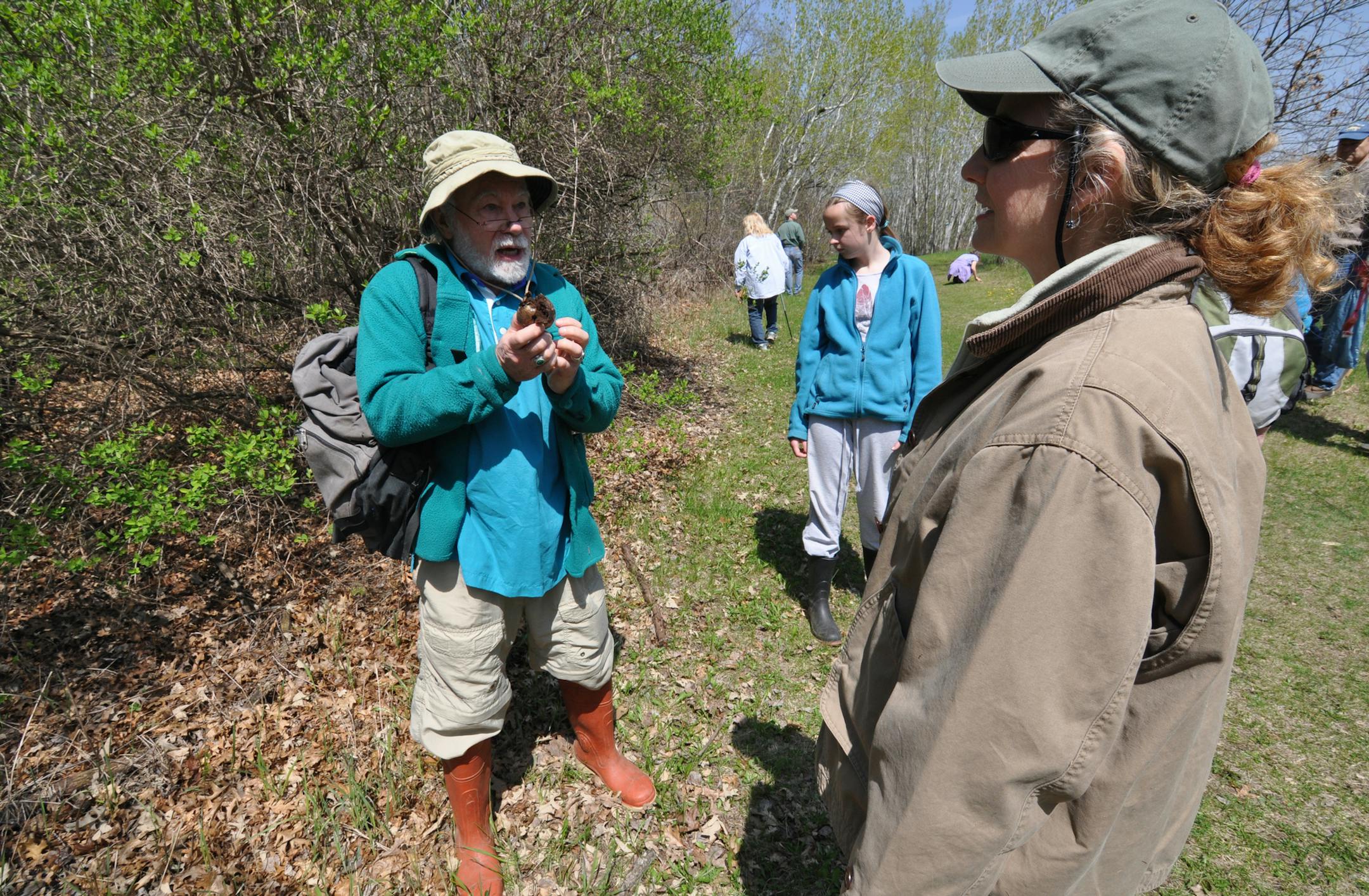
As he guided a group of foragers through Ritter Farm Park during a nature program last weekend, he admits that he tends to look for showy orchis blooming as a marker.
Regardless, it's clearly a late morel season this year. Because growth depends on the right mix of moisture and soil temperature, our cold spring has led to a delay in morel "popping." The group he led only found two, a bit of a bummer for them, but good news for those who still want to forage for the fungi.
"I think," Neubauer said, "unlcss we get a major heat wave, we'll be finding them, uncharacteristically, in June."
Where to look for the fungi? (And they are fungi and not technically mushrooms, as they don't have "gills") Some people swear by old apple orchards, and Neubauer advised his group to look for "dead but not too dead elms," (i.e. a deceased elm with the bark still attached), the theory being that morels use their rotting roots as a host plants.
Neubauer also shared his theory, as the foragers pushed through prickly ash and peered into webs of dry grass —you can only find morels once you have discovered, on your person, at least two wood ticks and three scratches.
"Morels only appear to you once you prove yourself worthy," he said.