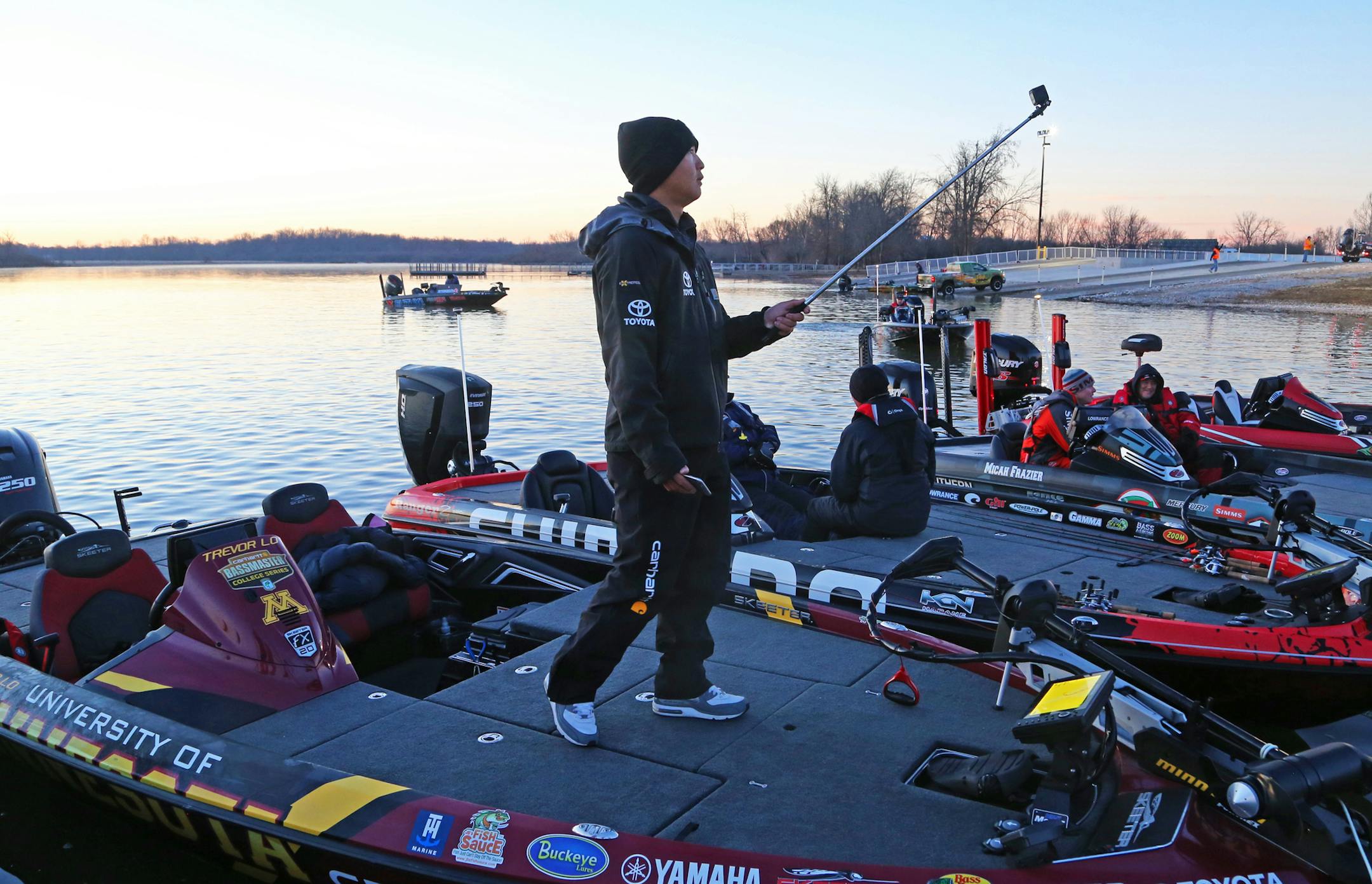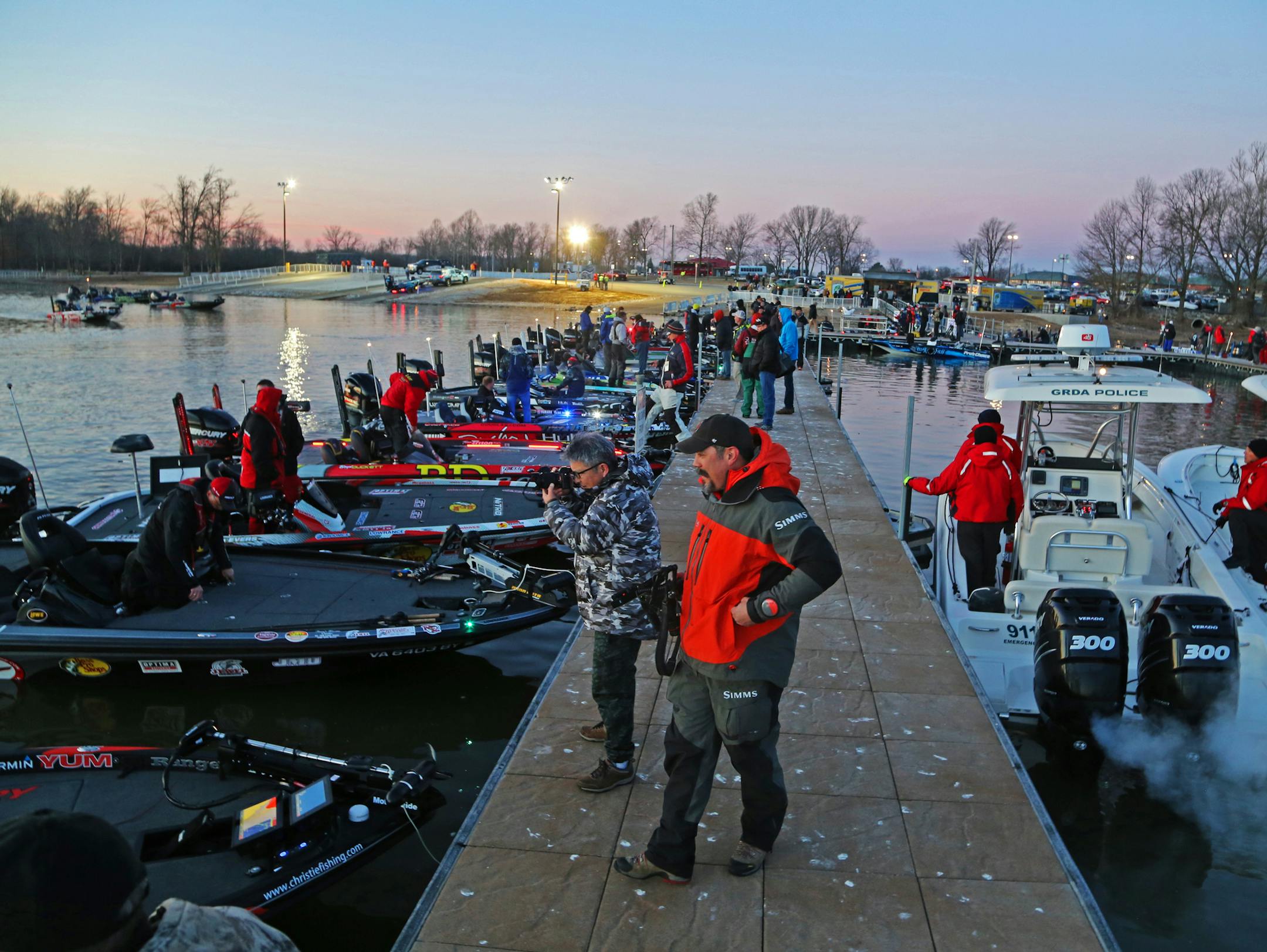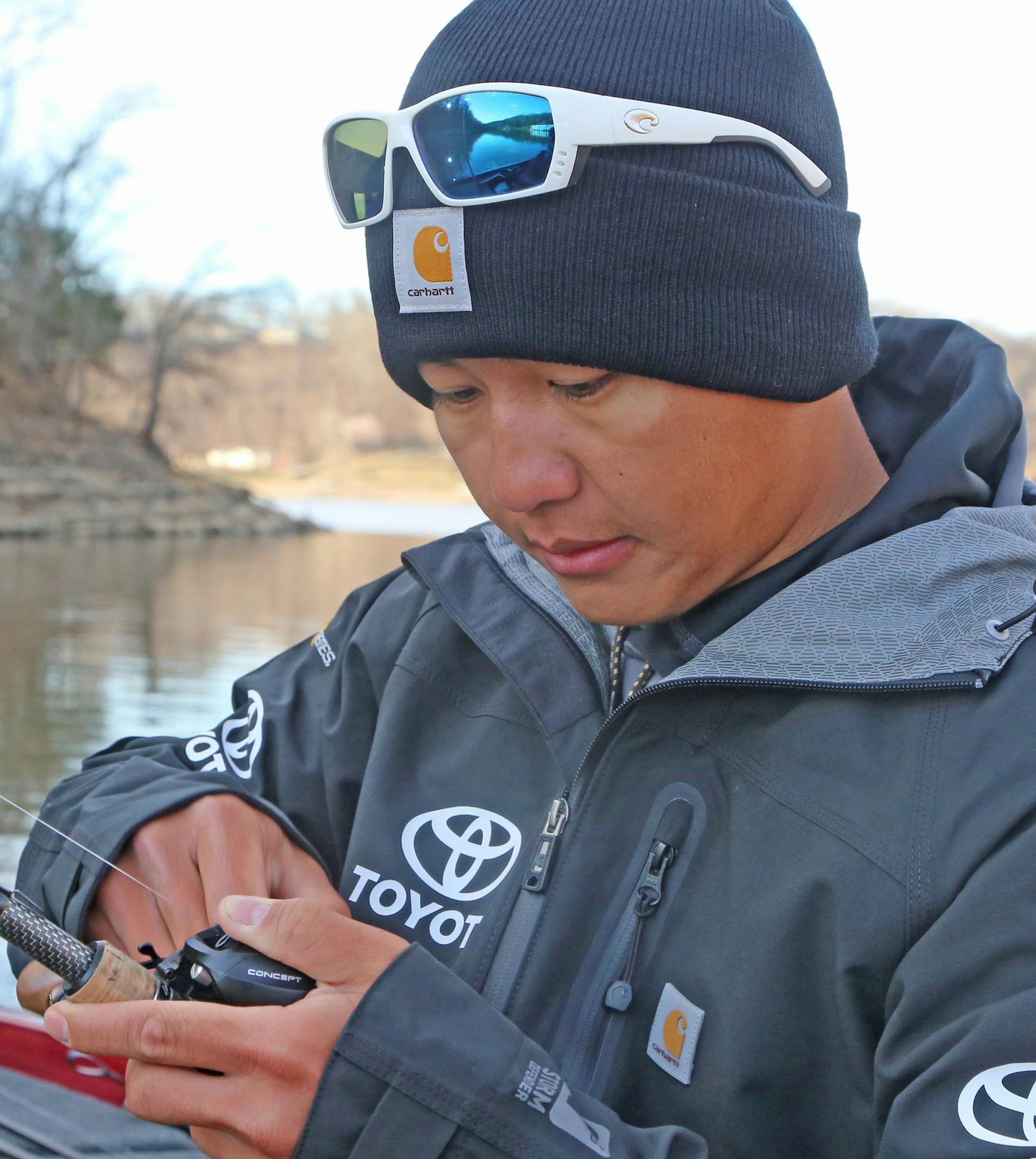
GRAND LAKE 'O THE CHEROKEES, OKLA. — Wednesday just before dawn, 21-year-old Trevor Lo seemed right at home. The morning had broken clear and chilly over this part of northeast Oklahoma and the big outboard on the transom of his boat idled smoothly, a low rumble. This was the final day of practice before this weekend's Bassmaster Classic, with its $300,000 first prize, and Lo was playing with the big boys.
The reigning national collegiate bass-fishing champion, the first-ever from Minnesota, Lo soon pulled on a space-age plastic mask to protect his face from the 35-degree cold.
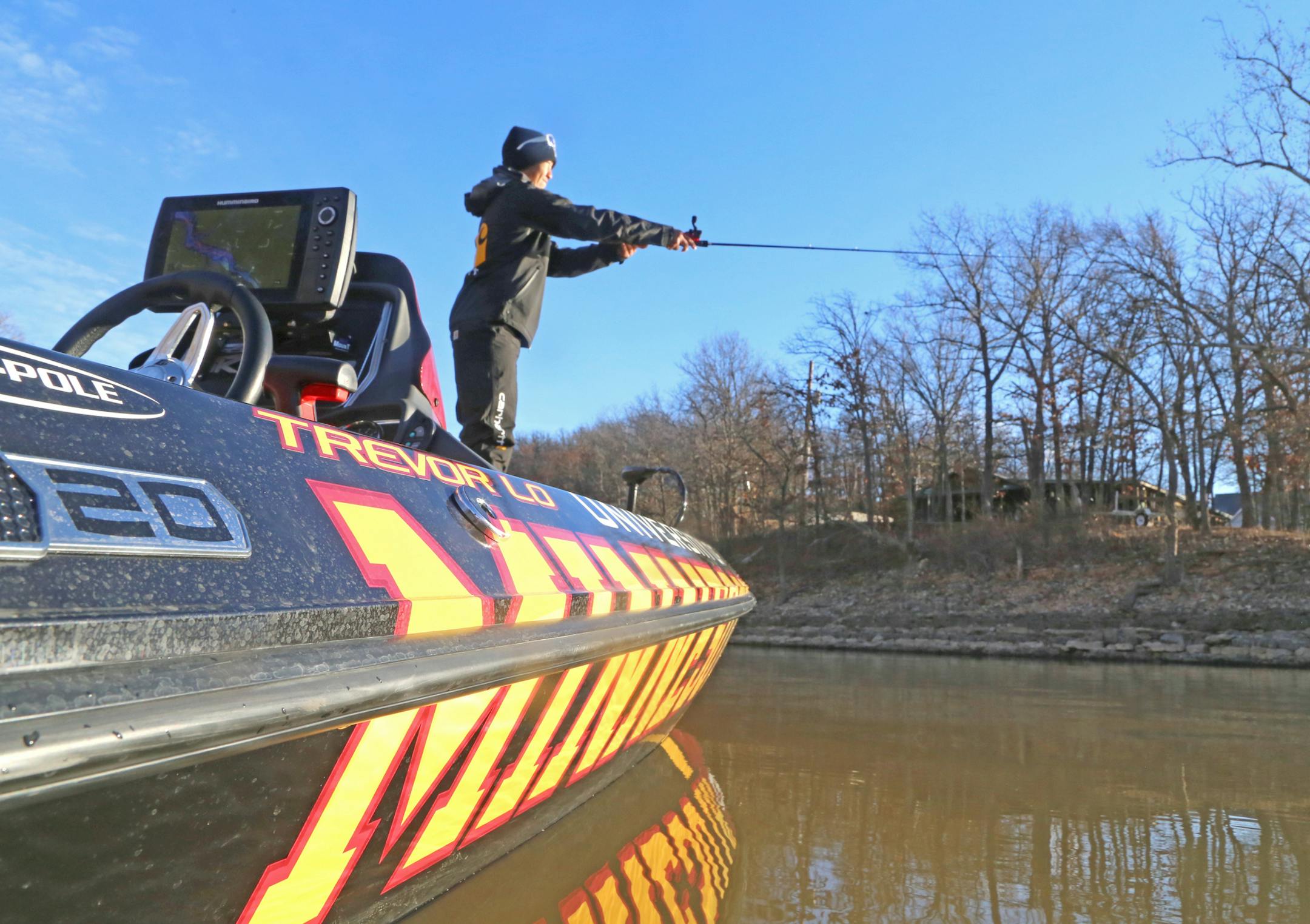
Then he pushed his 20-foot-long fiberglass boat away from a very crowded dock. Emblazoned in maroon and gold, port and starboard, with the words "University of Minnesota," the craft resembled a low-slung scimitar or, more precisely, a waterborne rocket ship. When Lo poured fuel to her, the boat instantly jumped on plane, the shoreline passing by in a heartbeat at 69.7 miles an hour, a blur.
Entry into the Bassmaster Classic is by merit, and Lo earned his spot in the prestigious event by out-fishing a raft of other collegians last summer on Lake Du Bay near Stevens Point, Wis.
With that victory came use for a year of a new boat and its 250-horsepower outboard, along with a new truck to pull it. Also included was a $7,500 stipend to cover fishing expenses, as well as entry into the "Classic," which, after the final largemouth bass is weighed Sunday, will award $10,000 even to the last place finisher among 55 entrants.
"I started fishing on the St. Croix with my father when I was a kid, in a canoe," Lo said. "We fished other local lakes also, many of them, and I liked it right from the start."
Competitive by nature, Lo graduated from Woodbury High School in 2012, where he kicked field goals on the football team. He is Hmong, and his parents, Cha and Anne, both emigrated from Thailand to Minnesota as children, his father when he was 13, his mother when she was 5.
"They were in a refugee camp," Lo said. "They and their parents didn't have relatives in Minnesota at the time, but they had sponsors here who helped out, churches and others."