

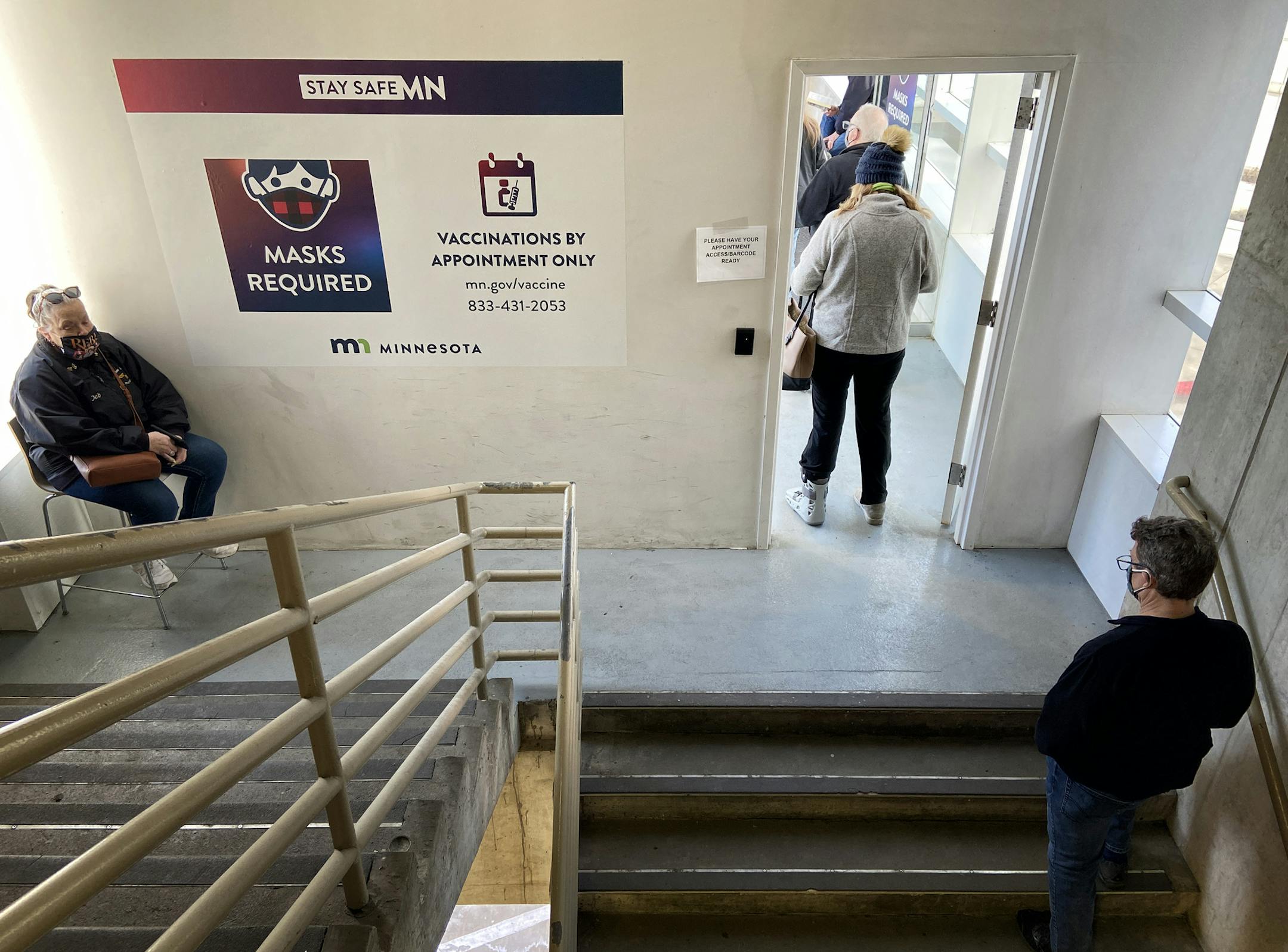
Laura Rede was turned away from a vaccine appointment Thursday because the clinic wouldn't accept the paperwork showing that Rede is a health care worker.
"They asked 'Do you have a badge?' " Rede said. "Well you don't have a badge if you work at home."
Rede is one of thousands of Minnesotans who care for a relative at home, in this case daughter Shanika who has Down syndrome, autism and other conditions that have been shown to make her vulnerable to COVID-19.
Caregivers are eligible to receive the vaccine under state guidelines, but some clinics and local public health agencies aren't aware that they are included in the highest priority group, which includes health care workers and long-term care residents.
Proving that those seeking shots fall under an eligible category could become more common as the vaccine rollout expands to more and more groups starting next month. While health systems know the medical conditions of their patients, a community vaccination site might not.
"At some point we are going to have to trust that people are presenting themselves as truthful," said Sarah Curfman, executive director of the Down Syndrome Association of Minnesota.
Curfman has been providing letters to parents of Down syndrome children that have helped some get vaccinated, and she's also been talking to pharmacies and local public health agencies to make them aware of the policy.
"They don't want to get turned away," she said. "Our families want to do the right thing, to get vaccinated so they can protect their children."


