

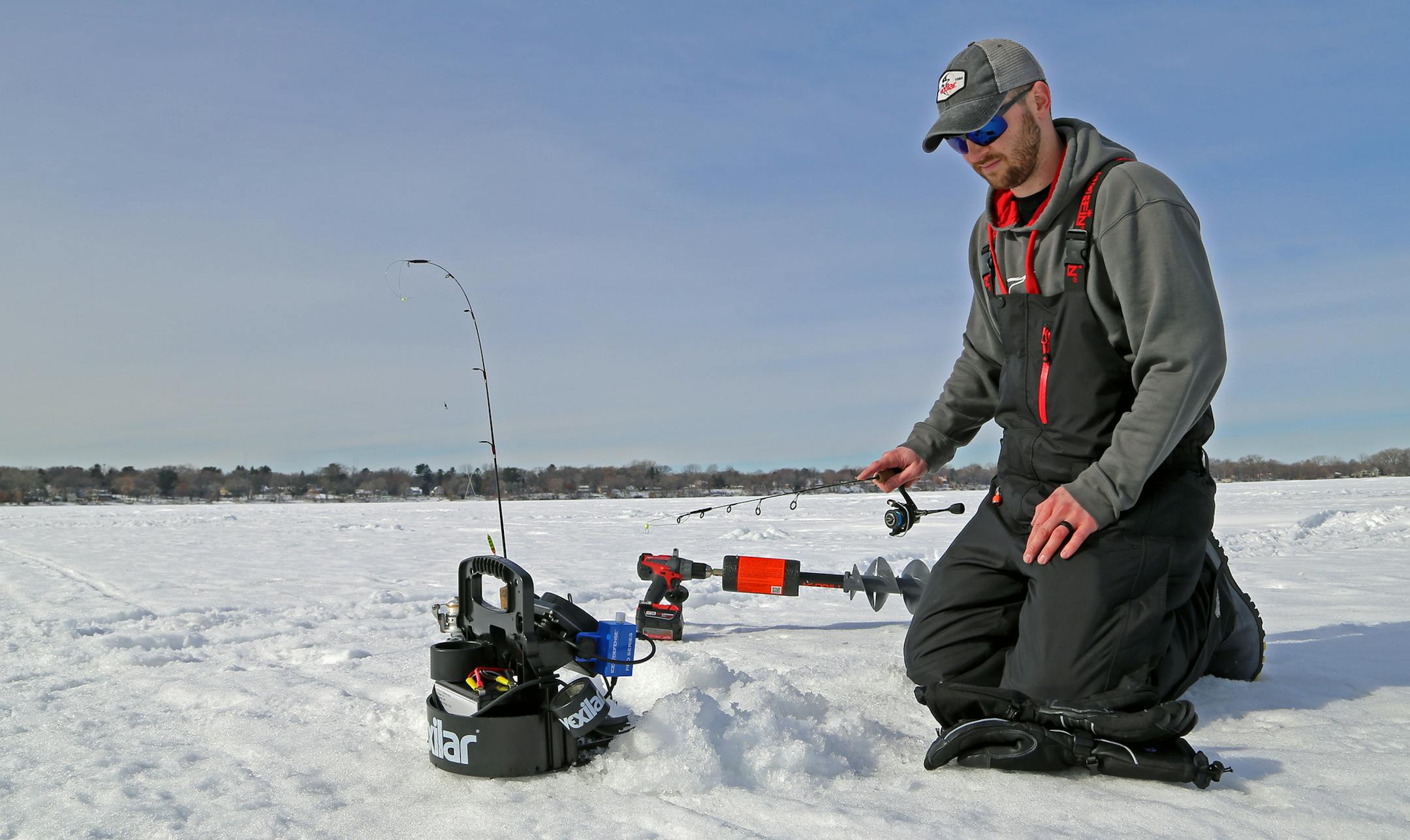
Like a lot of Minnesotans did last week, Dominic Schneider of St. Paul wandered onto an east metro lake looking for bluegills. Or sunfish. Generally, in Minnesota, they're considered one and the same.
Attractions for Schneider included a warm sun overhead, solid ice below and the prospect of putting one of the best-tasting fish in the world in a frying pan.
So tasty are bluegills and sunfish, and so fun to catch — and oftentimes so easy to catch — that more of them are landed by Minnesota anglers each year than any other fish, some 16 million, more or less.
The problem is that many of these fish are smaller than they once were, a dilemma that can be traced to anglers' (understandable) determination to keep the biggest bluegills and sunnies they can find. Culling this way, state Department of Natural Resources (DNR) fisheries biologists say, has led to a widespread stunting of these populations.
"The males of the species are the bigger fish, and when anglers take those fish out of a lake, it encourages the smaller males to move into a lake's primary breeding areas and put their energies into reproduction, rather than growing," said DNR area fisheries supervisor Dave Weitzel of Grand Rapids.
Attempting to develop a strategy to increase the average size of what are commonly called sunfish in Minnesota — including pumpkinseed, green sunfish and bluegills, among other species — the DNR in the past 10 years or so has drastically cut anglers' sunfish limits from 20 to 10 or five in about 60 lakes. (Daily and possession limits of fish are the same.)
The result, said Weitzel, is that sunnies and bluegills in these experimental lakes at least maintained their sizes in lakes with 10-sunnie limits and generally increased their average sizes in lakes with five-fish limits.
Together with a citizens working group, DNR fisheries managers in recent years have considered the biological information affecting sunfish and bluegill sizes and the angling public's tolerance for significant limit changes for these fish.


