

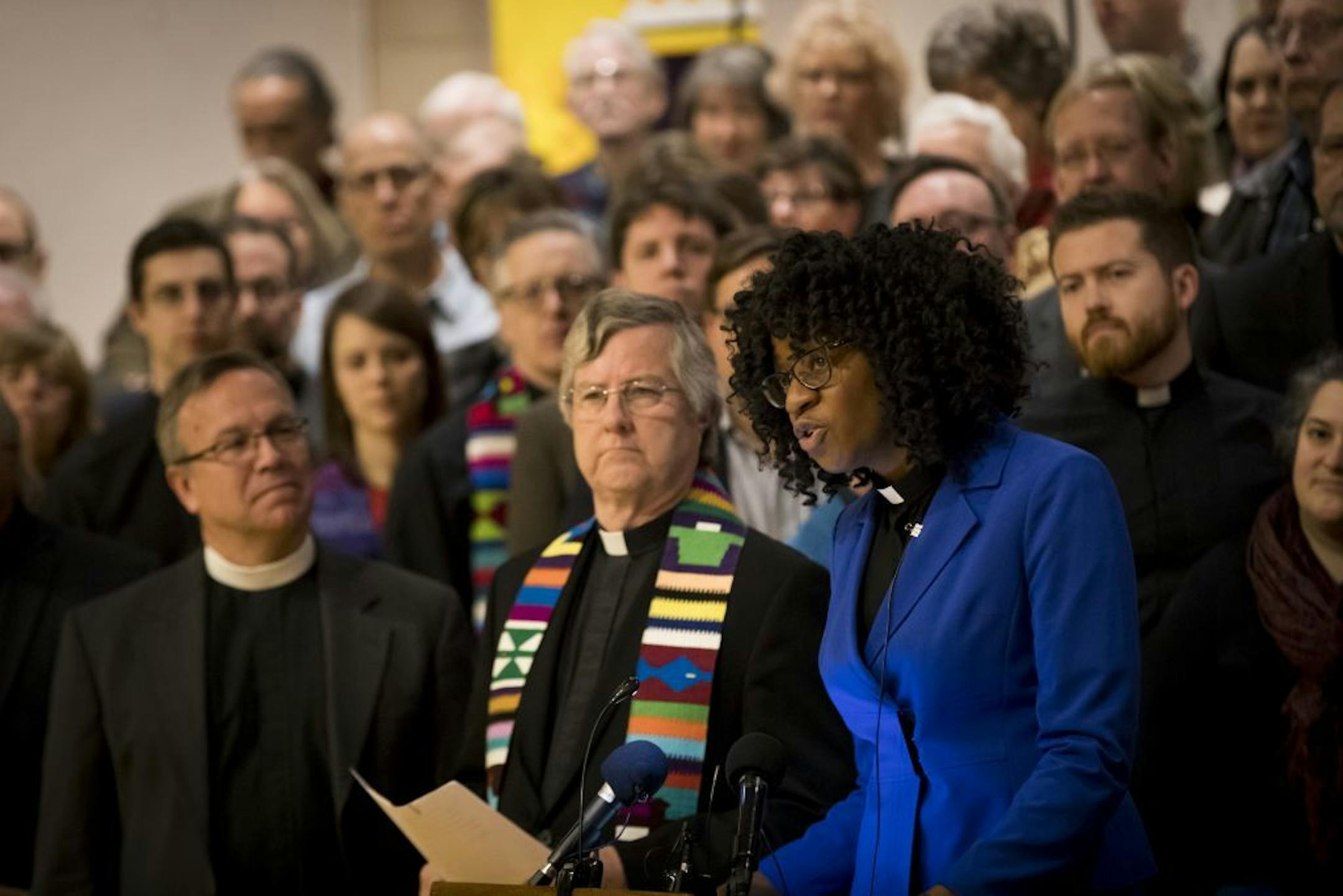
Clergy from more than 30 congregations in the Twin Cities and throughout Minnesota vowed Tuesday to shelter immigrants facing deportation or to support other churches that do.
Church leaders said they are forming a new network of sanctuary places of worship in response to President-elect Donald Trump's pledge to step up deportations when he takes office in January. Organizers with the group ISAIAH said 13 churches have committed to shelter and feed immigrants in defiance of immigration authorities. About 20 additional congregations will provide financial and other support.
"We will not let politics come before the sacredness of people," said JaNae' Bates, a United Church of Christ minister and communications director for ISAIAH. "As a human being, you are sacred so you should be safe in our sacred space."
The news conference, at St. Paul's Lutheran Church of the Redeemer, came amid a larger debate about what's become known as the sanctuary movement. Minneapolis and other sanctuary cities — which generally prohibit local law enforcement from asking about a person's immigration status and only collaborate with immigration authorities in limited cases — have also struck a defiant note. Efforts are underway to declare local colleges and universities as sanctuary campuses.
Meanwhile, opponents of the sanctuary movement have trained a spotlight on high-profile crimes committed by immigrants in the country illegally who had previous convictions; they have cheered Trump's campaign promise to work with Congress to block federal funding to cities that do not fully cooperate with immigration authorities.
State Rep. Steve Drazkowski, R-Mazeppa, who has called for a tougher stance on immigration enforcement, said he is troubled by the church announcement.
"We have this thing that guides us in the United States called the rule of law," he said. "When we have organizations defying the rule of law, it undermines our democracy and weakens our state."
Since his election, Trump has scaled back a campaign trail pledge to deport all immigrants in the country illegally. He has said that, at least initially, he would focus on removing immigrants with criminal convictions. Some sanctuary congregations could find themselves grappling with whether to extend a welcome to immigrants who have completed sentences for serious offenses — decisions that Bates said each congregation would make independently.
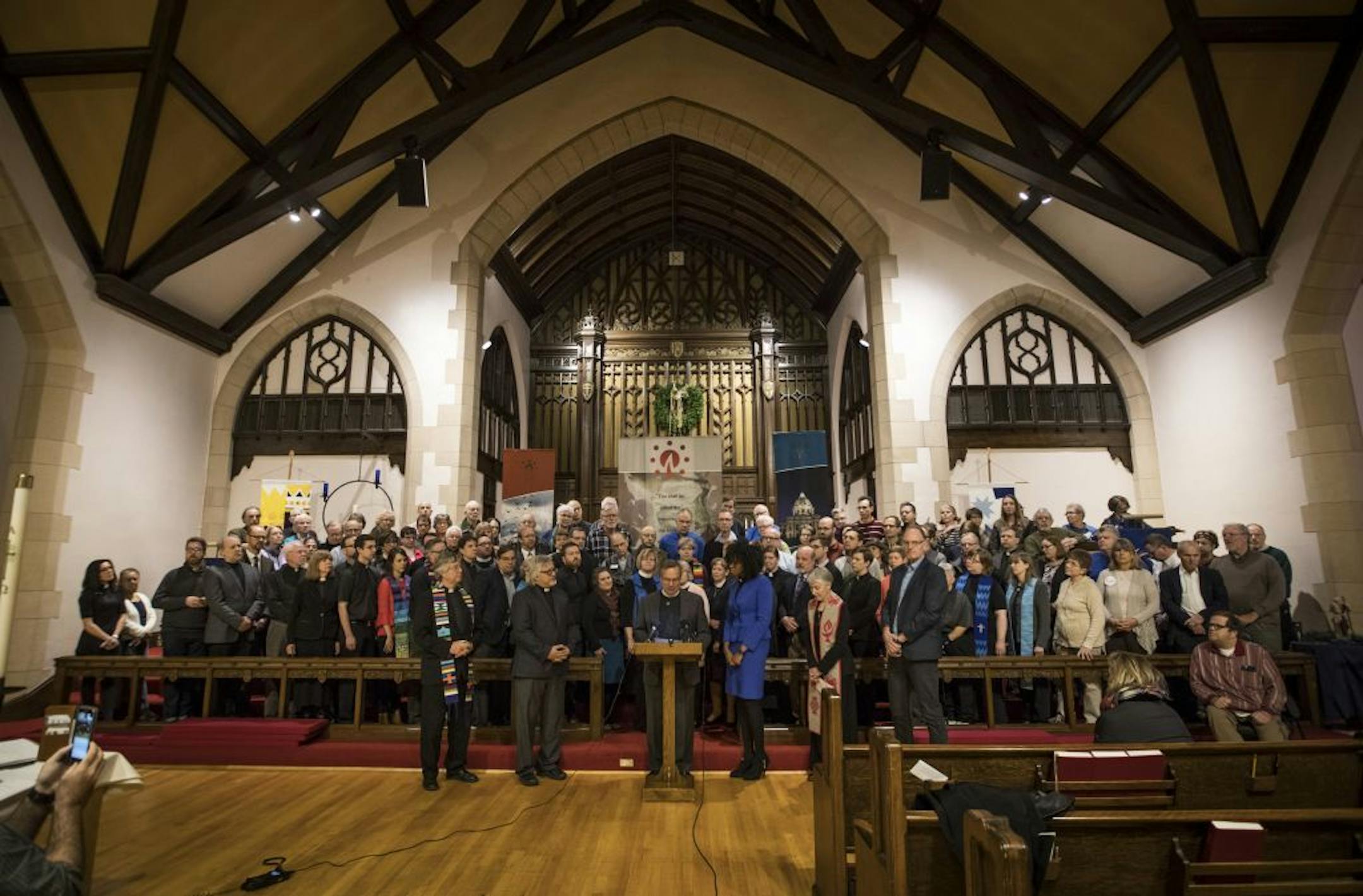
![Pastor Eric Hoffer, of Prince of Peace Lutheran Church in St. Louis Park, raised his fist in solidarity after local pastors express their support in being sanctuary and supporting churches for people who are at risk of deportation, Photographed at Lutheran Church of the Redeemer on Tuesday, December 6, 2016, in St. Paul, Minn. ] RENEE JONES SCHNEIDER • renee.jones@startribune.com](https://arc.stimg.co/startribunemedia/GGPN6EKCNXCUJD25J7N2OQQL2E.jpg?&w=1080)


